Today, I’ll write about first area in permanent exhibition.
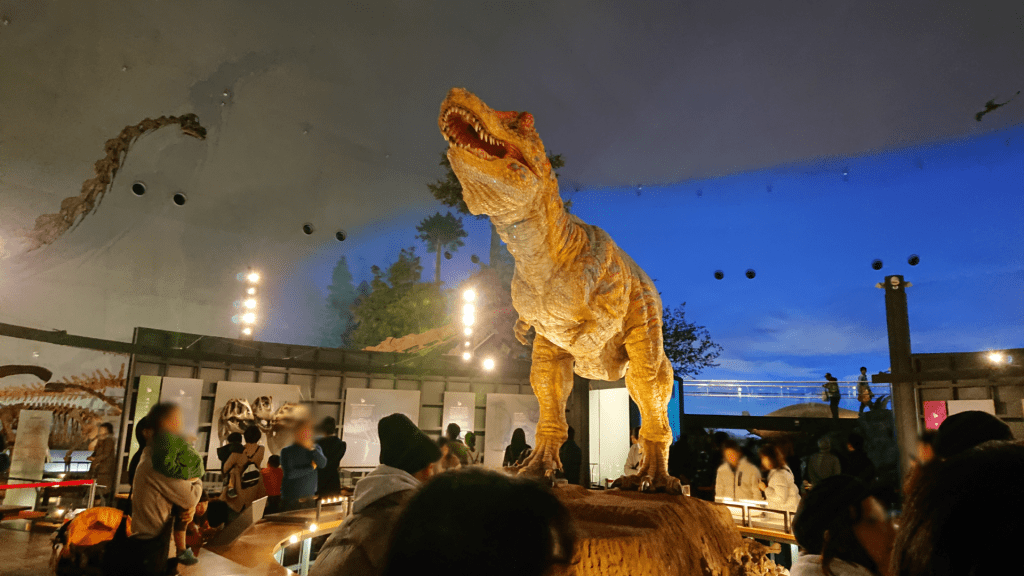
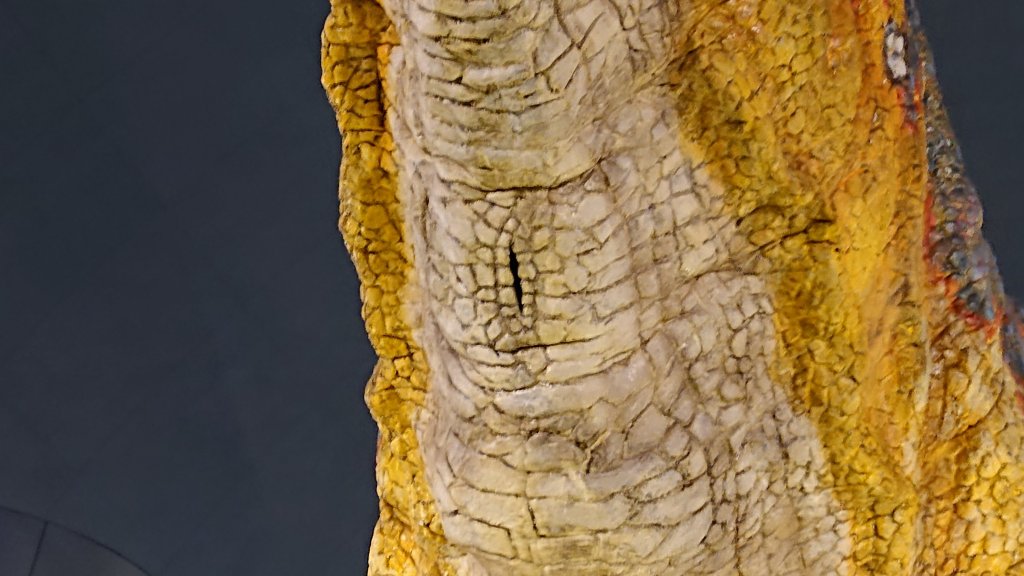
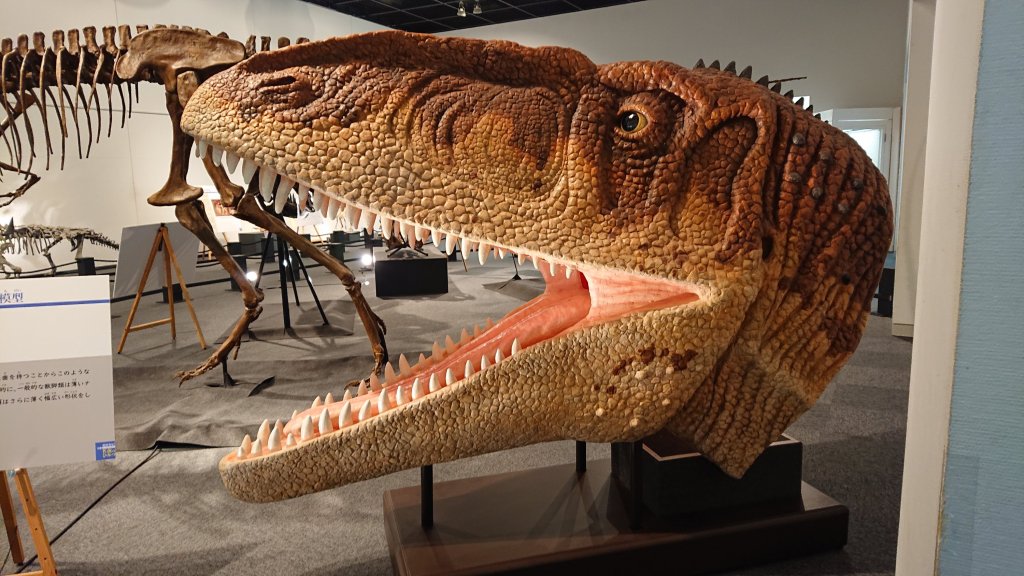
The animatronic Tyrannosaurus rex.The cloaca of animatronic Tyrannosaurus rex.
This animatronic Tyrannosaurus rex is the best animatronic T. rex I have ever seen. Not only its skin, but also cloaca was made.
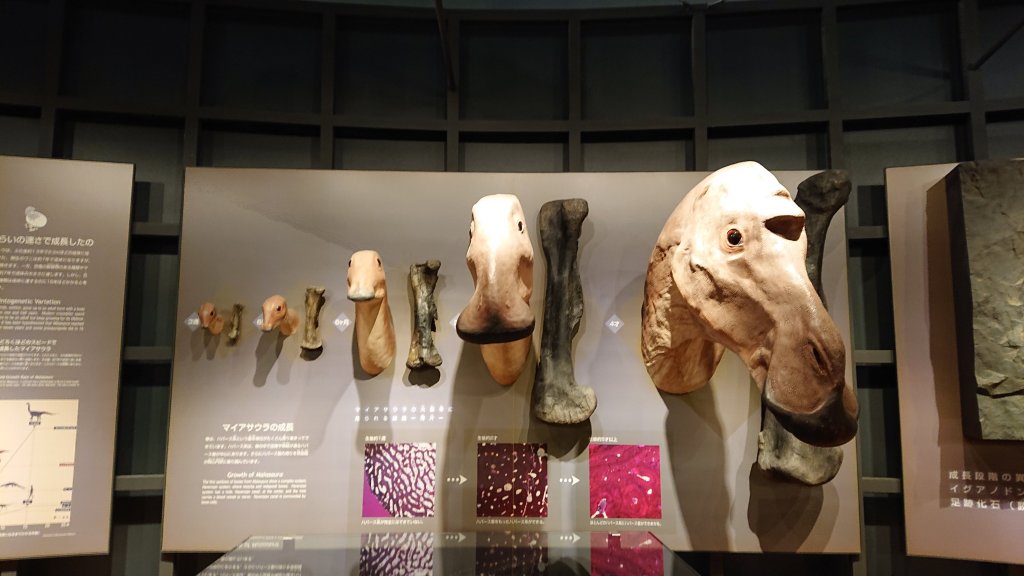
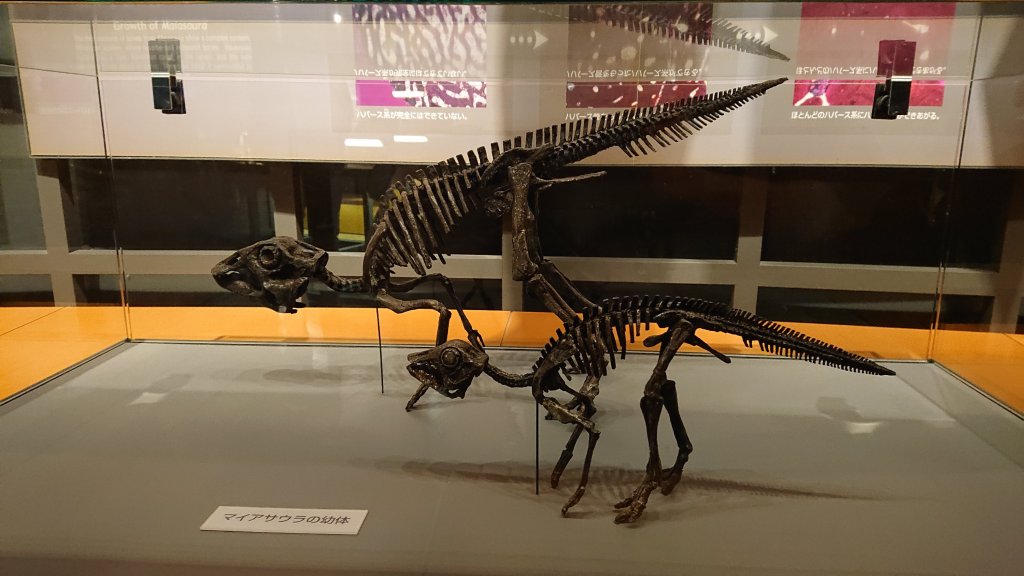
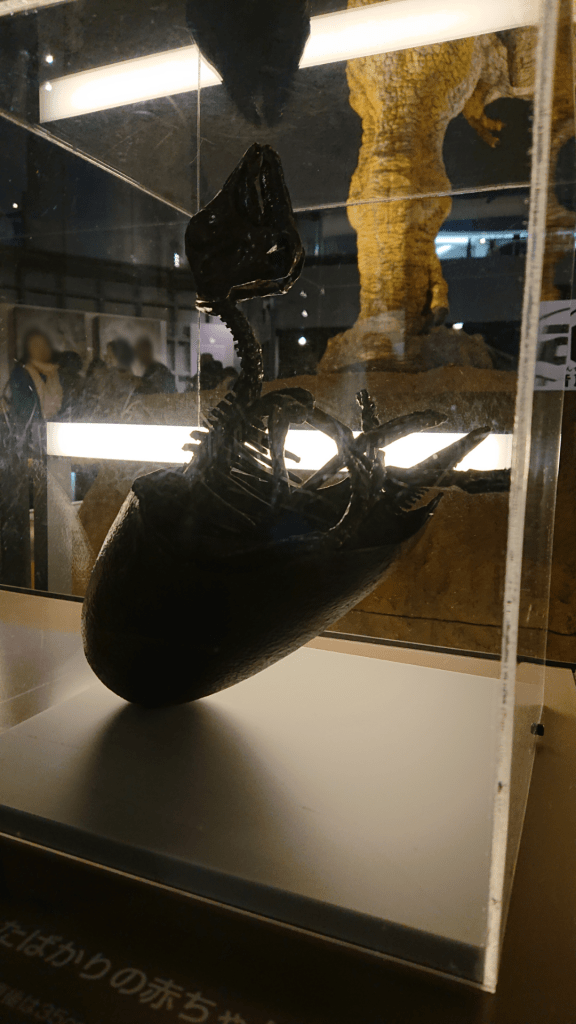
Each year of femurs and life restoration models of heads of Maiasaura peeblesorum.Reconstructed skeleton of hatchling and juvenile Maiasaura peeblesorum.Reconstructed skeleton of hatching Maiasaura peeblesorum.
Small hatchling Maiasaura peeblesorum grew much bigger for only 4 years.
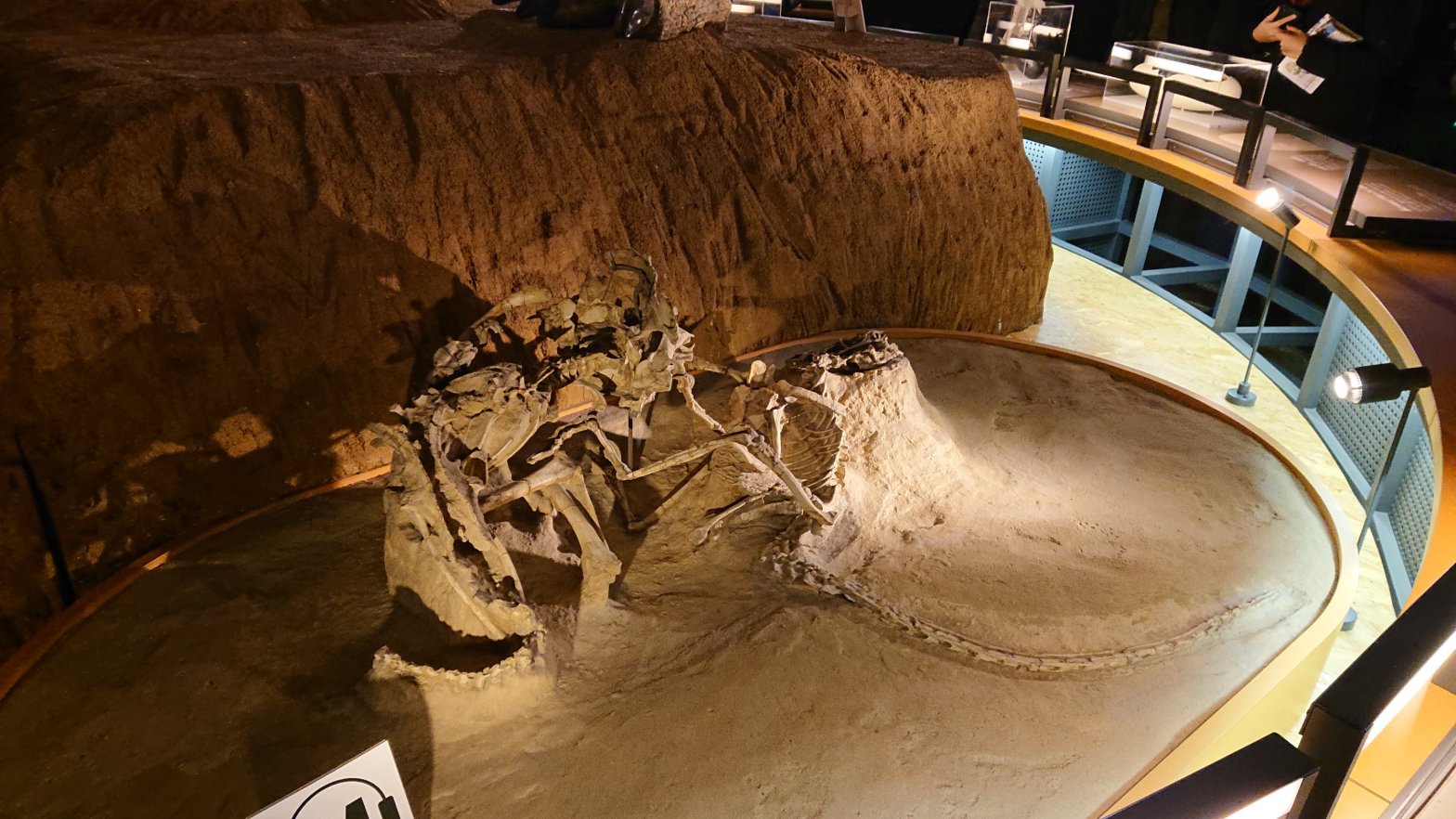
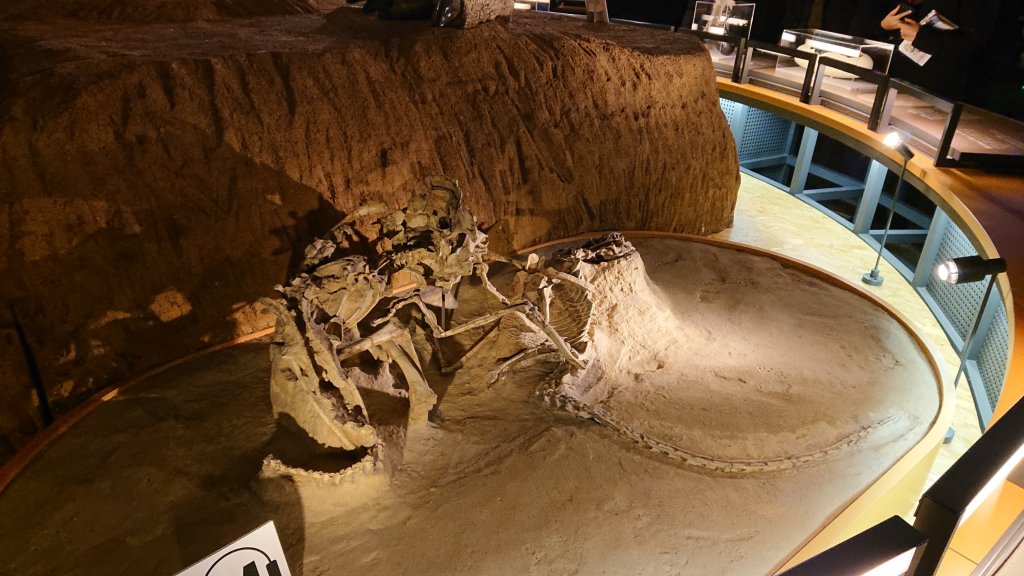
The cast of The Fighting Dinosaurs.
The Fighting Dinosaurs is the greatest fossil ever known. I have never seen a fossil more wonderful than it.
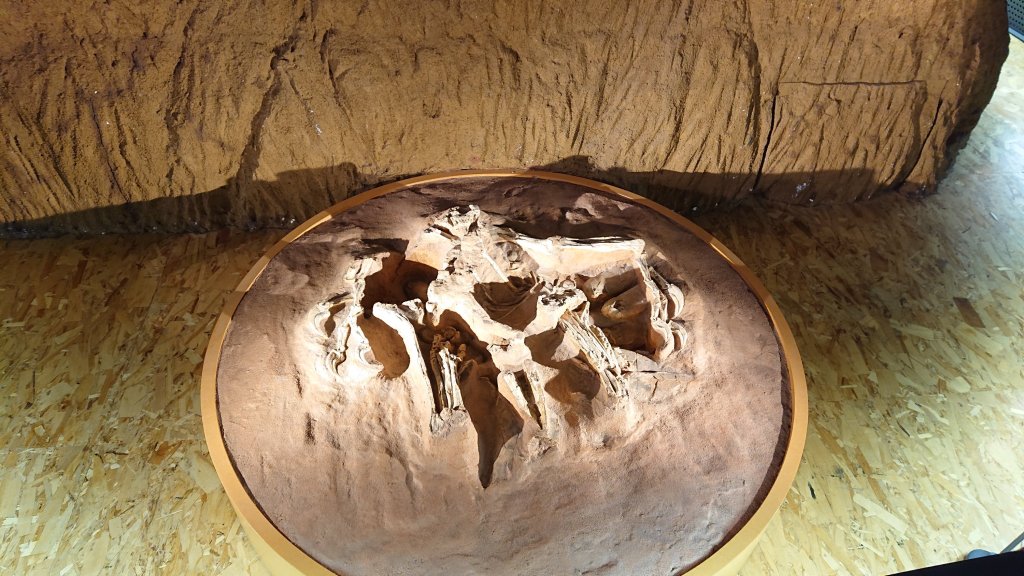
The cast of nesting Citipati osmolskae.
This nesting Citipati osmolskae is also great fossil. This specimen is called “Big Mamma”, but for research, it might be male.
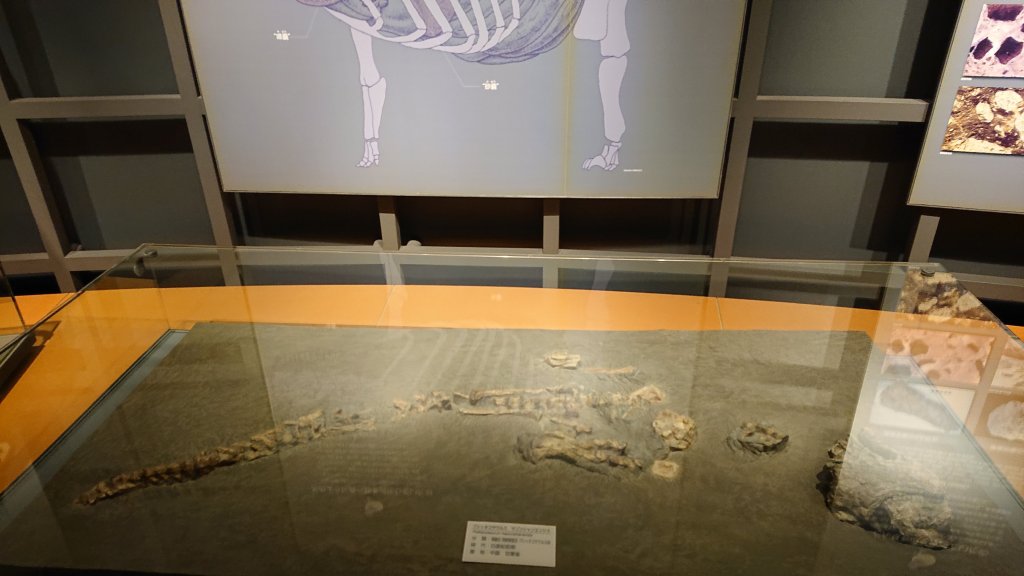
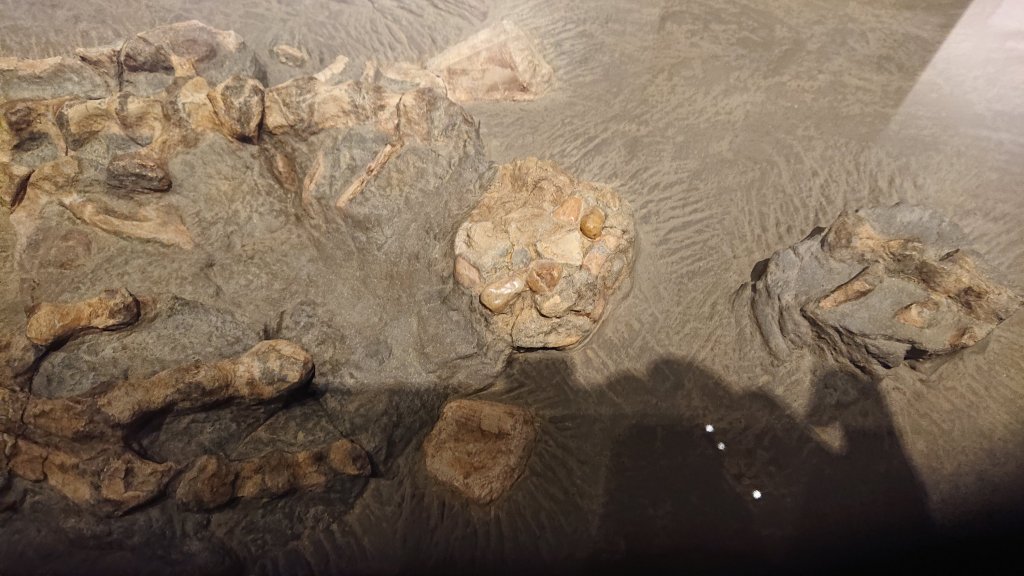
Psittacosaurus mazongshanensis showinggastroliths.Gastroliths in Psittacosaurus mazongshanensis.
This Psittacosaurus mazongshanensis has gastroliths in its stomach. They helped digesting.
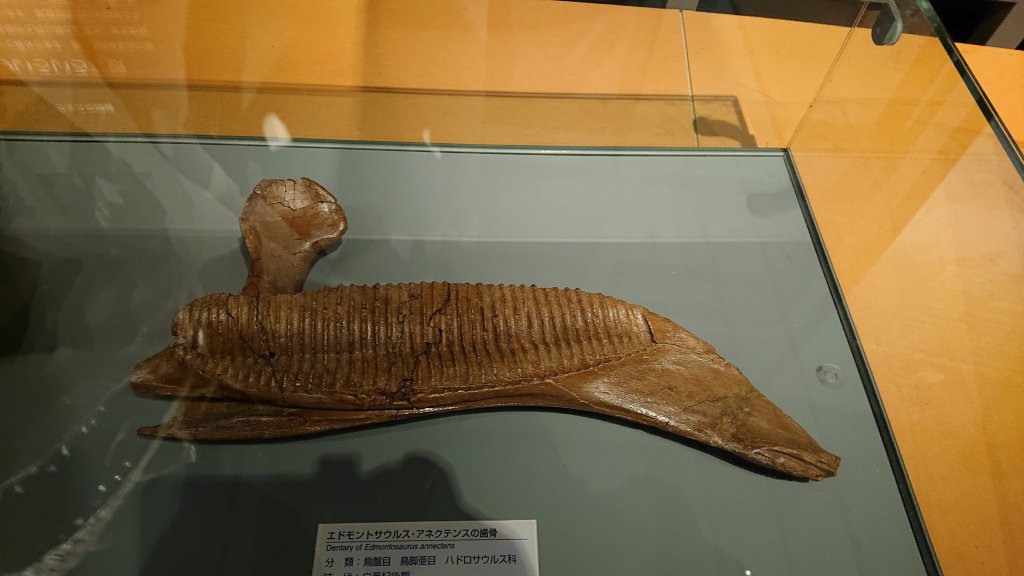
Dentary of Edmontosaurus annectens.
Edmontosaurus annectens has great dental battery. It was the best teeth for mashing plants ever lived
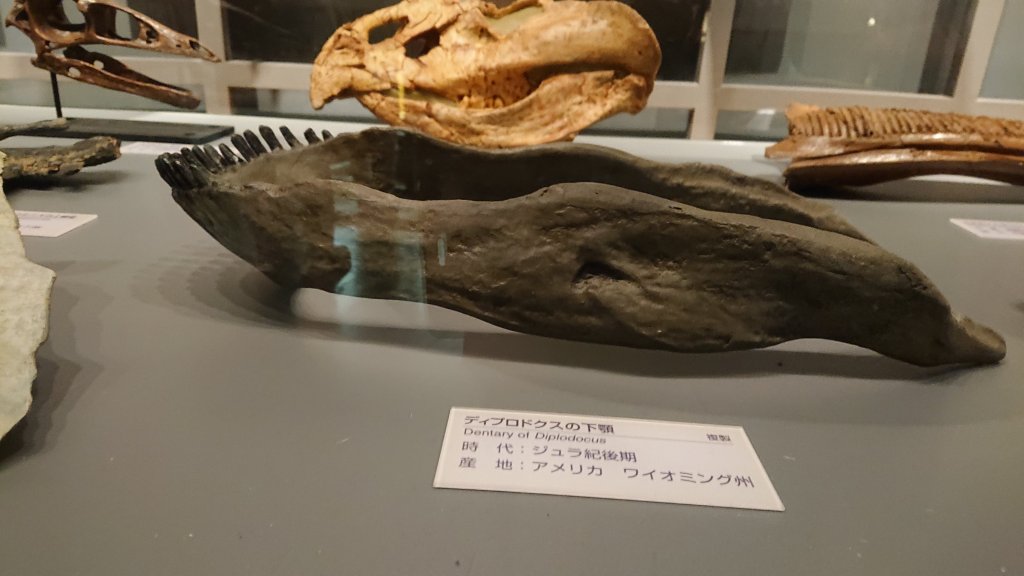
Dentary of Diplodocus.
Diplodocus has teeth like pencils. It was good for stripping leaves from branch.
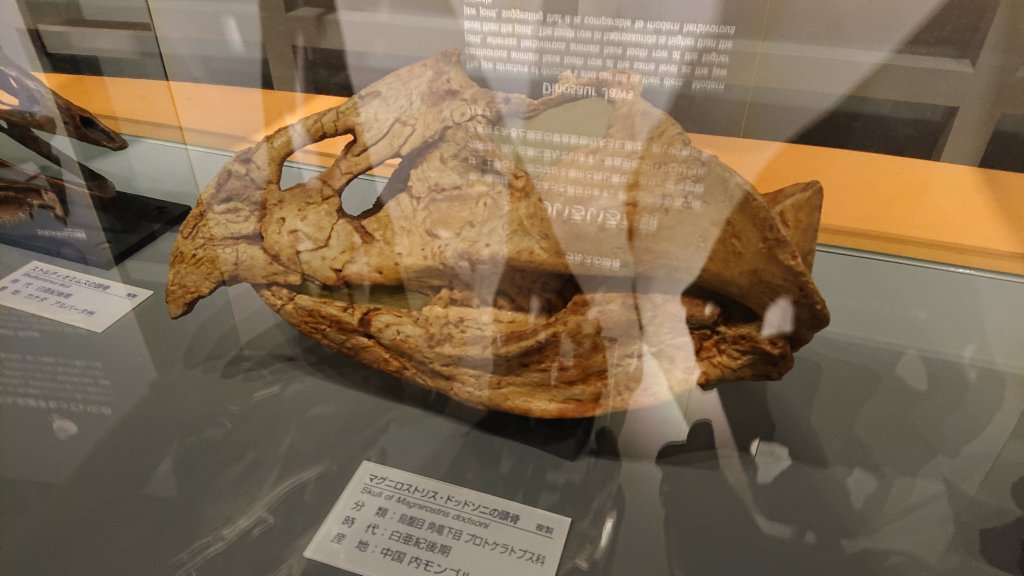
Skull of Magnirostris dodsoni.
Magnirostris dodsoni had strong jaws. They must be good for not only feeding but also weapons.
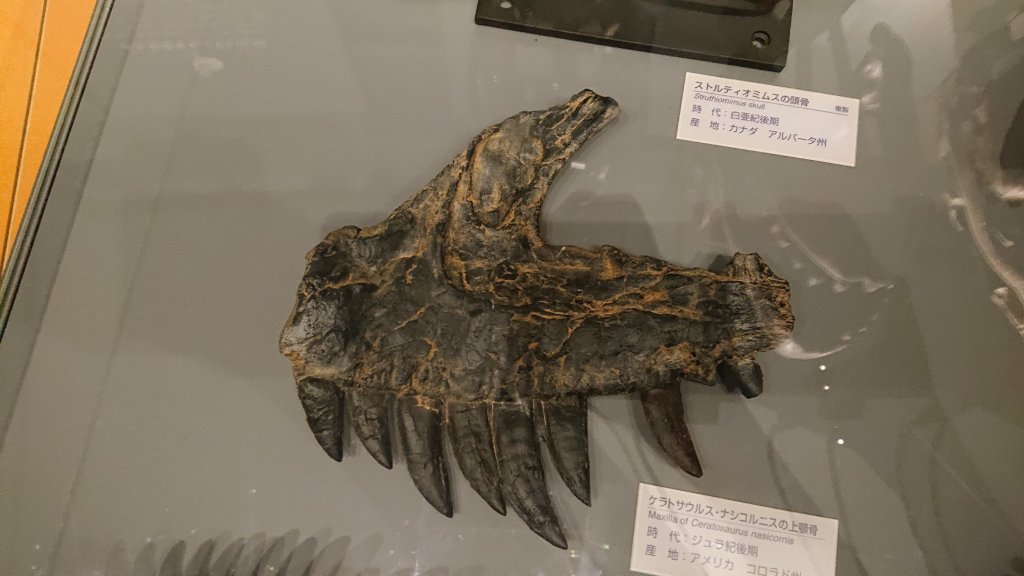
Maxilla of Ceratosaurus nasicornis.
Ceratosaurus nasicornis is not big as theropod, but it has long teeth. It might prey bigger animal.
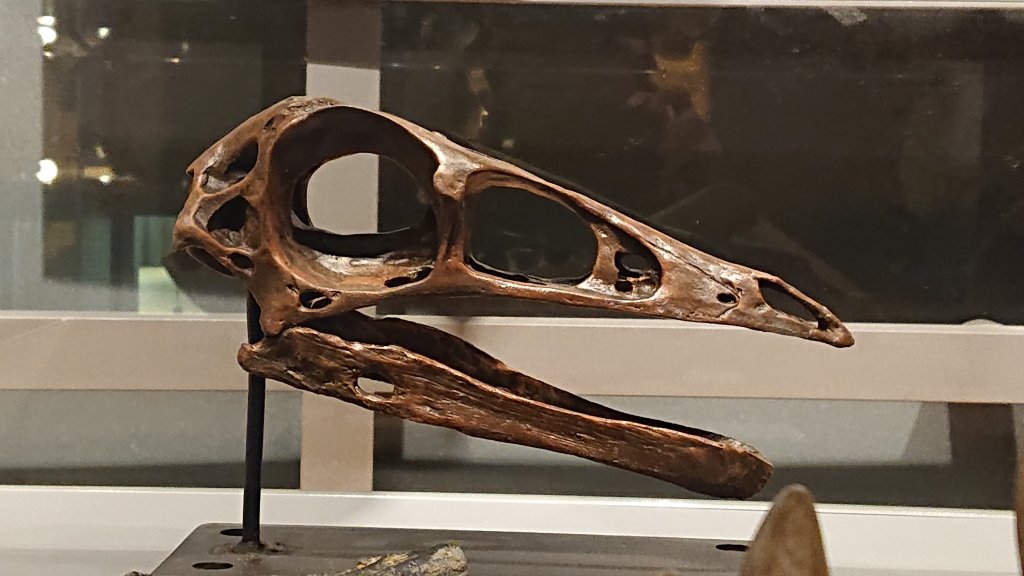
Skull of Struthiomimis altus.
Struthiomimis altus has no teeth, so it isn’t uncertain what it ate. What do you think?
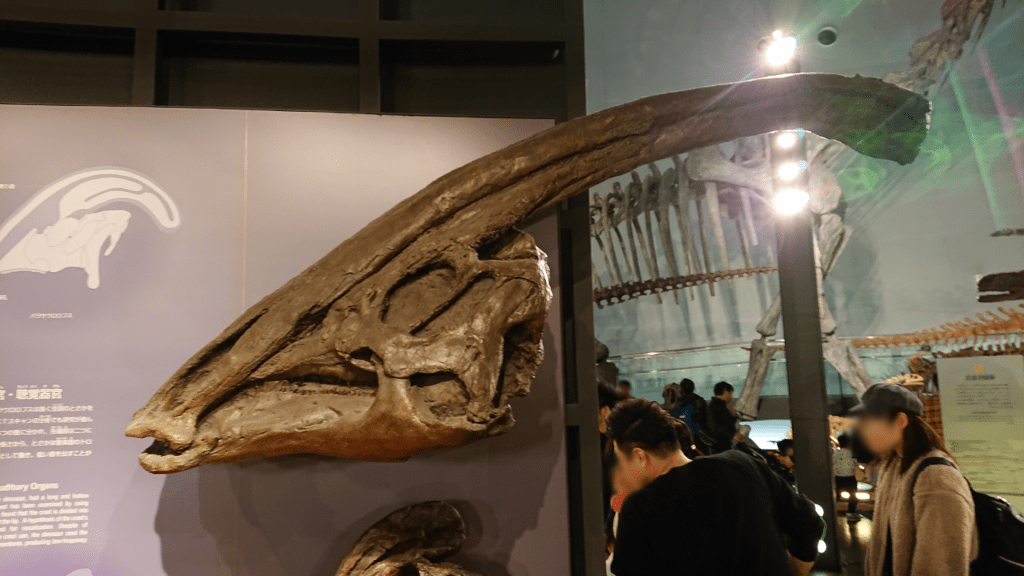
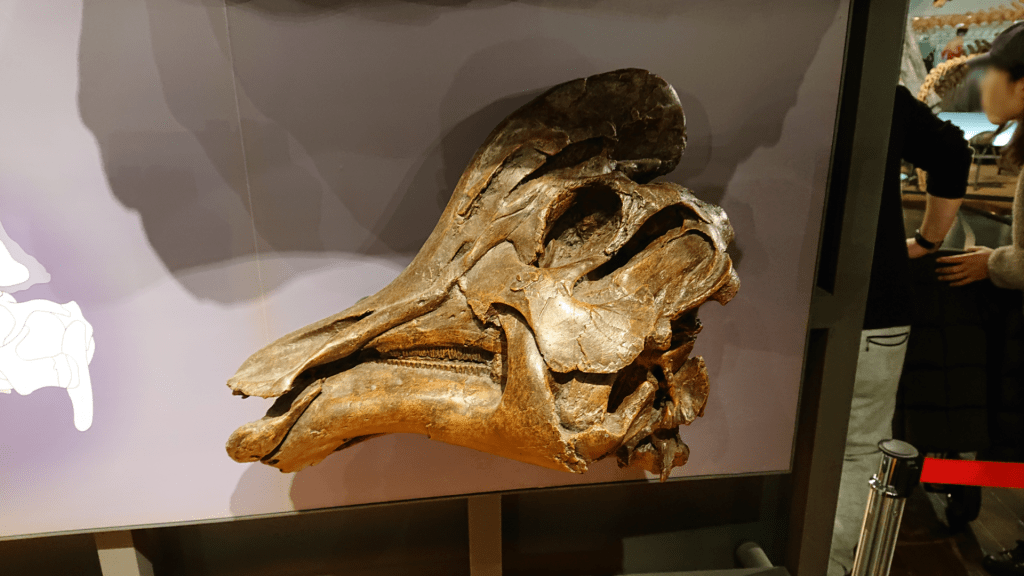
Skull of Parasaurolophus walkeri.Skull of Corythosaurus.
Both Parasaurolophus walkeri and Corythosaurus has tube from nose in crest. It was used for blown like wind instruments.
Thanks for reading! Next time, I’ll write about theropods.
I’m sorry to be late. On December 30th, I visited Fukui Prefectural Dinosaur Museum (FPDM). I’ll write about there from today. Today, I’ll write about the special exhibition “Discovering New Species!! The Mystery of Dinosaur Name”.
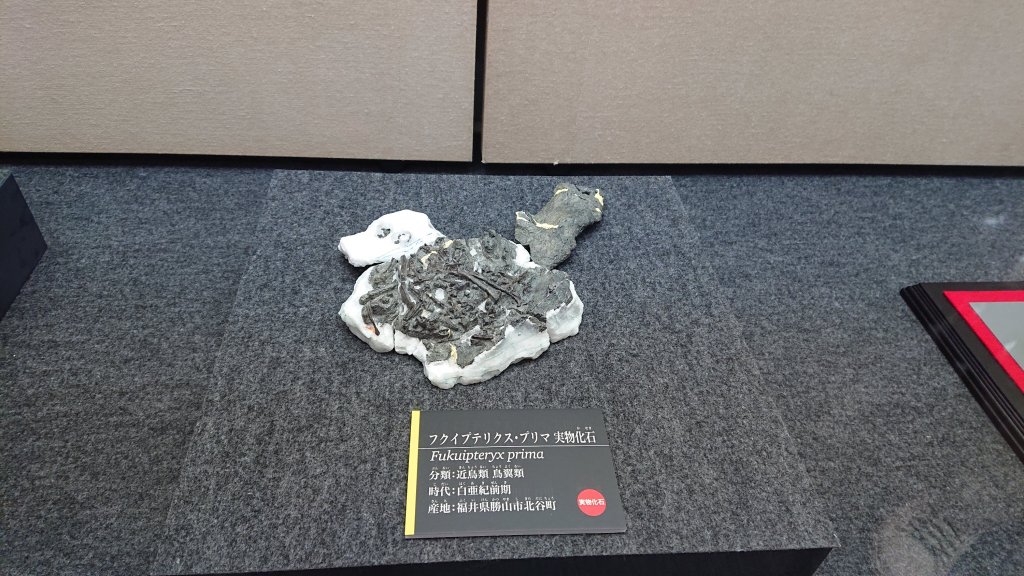
Reconstructed skeleton of Fukuipteryx prima.Holotype of Fukuipteryx prima.
Fukuipteryx prima is the early bird from Fukui. If you know about it particularly, read this article, please.
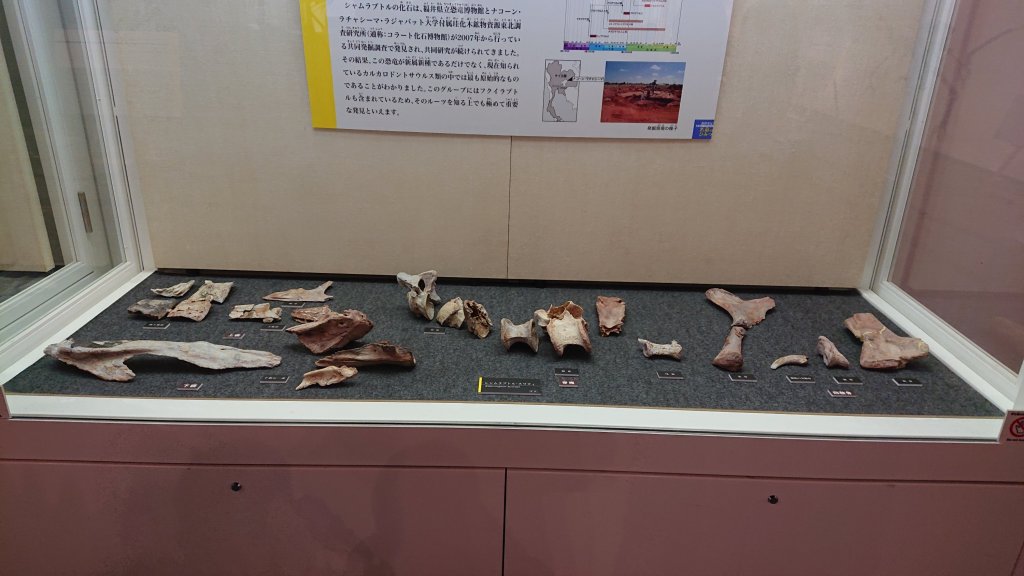
Holotype of Siamraptor suwati.
Siamraptor suwati is the Carcharodontosaurian dinosaur from Thailand. It was named on last November 13th. Its genus name means “Thai thief” and species name was named after Mr. Suwat Liptapanlop.
Life restoration model of Carcharodontosaurus
Carcharodontosaurus‘s name means “great white shark lizard” because its sharp, thin teeth are like great white shark’s.
Reconstructed skeleton of subadult Gorgosaurus libratus.
Subadult Gorgosaurus libratus is slenderer than adult. Its genus name means ” dreadful lizard” and species name means “balanced”.
Reconstructed skeleton of Psittacosaurus sp.
Psittacosaurus sp. is the early ceratopsian dinosaur. Its name means “parrot lizard” because its beak looks like parrot’s. It lived in Early Cretaceous Asia widely and had at least 11species.
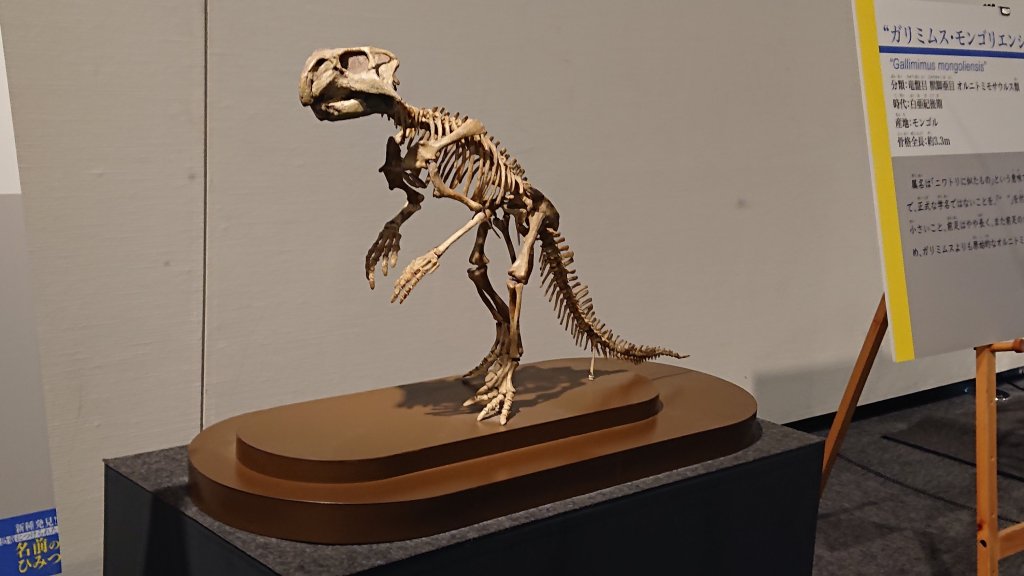
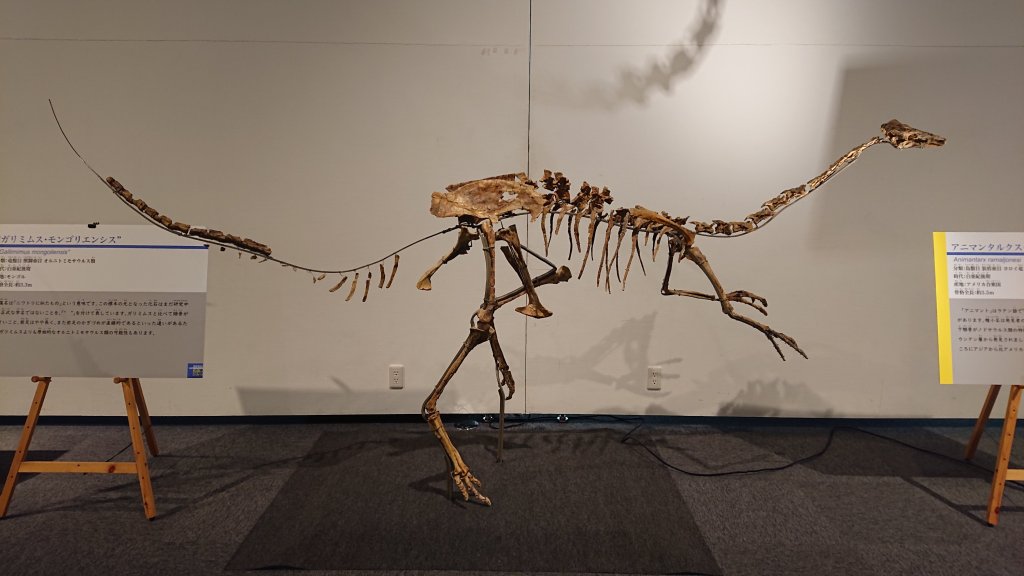
Reconstructed skeleton of “Gallimimus mongoliensis”
“Gallimimus mongoliensis”‘s name isn’t officially. It is researched now. It has points older than G. bullatus, so it may be different genus to Gallimimus.
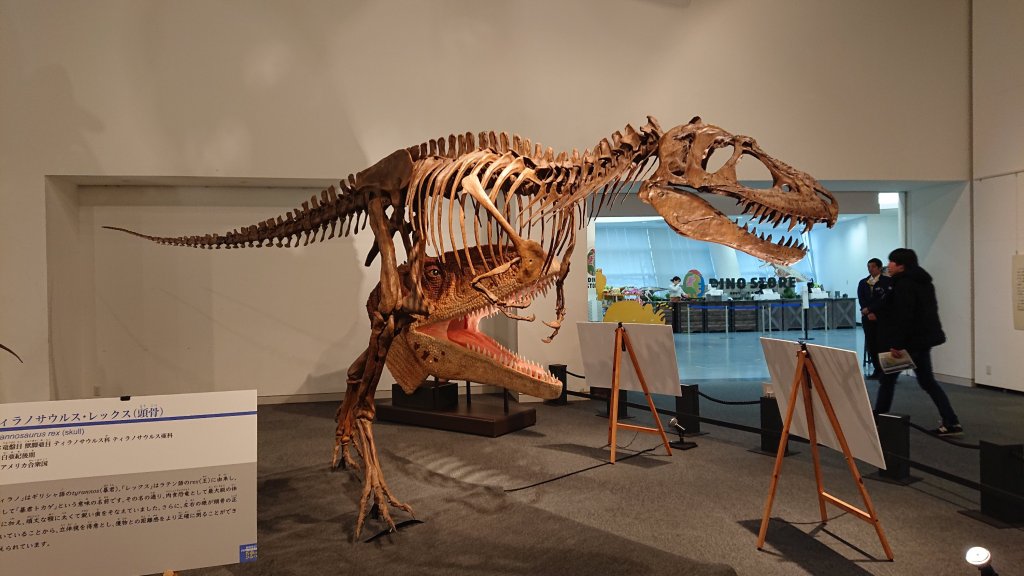
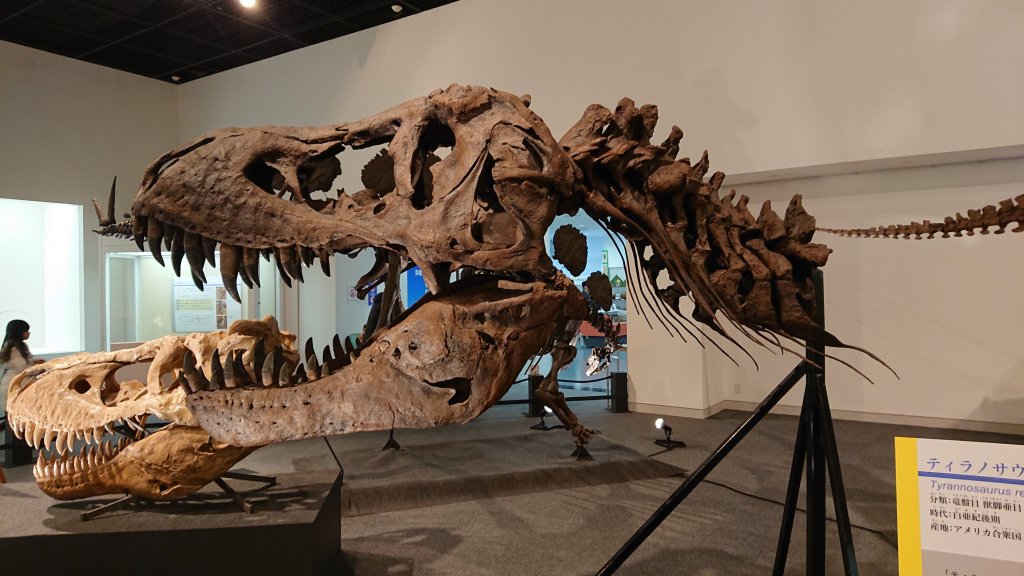
Reconstructed skull of Tyrannosaurus rex.
Tyrannosaurus rex‘s name means “tyrant lizard king”.This name is particularly match for it.
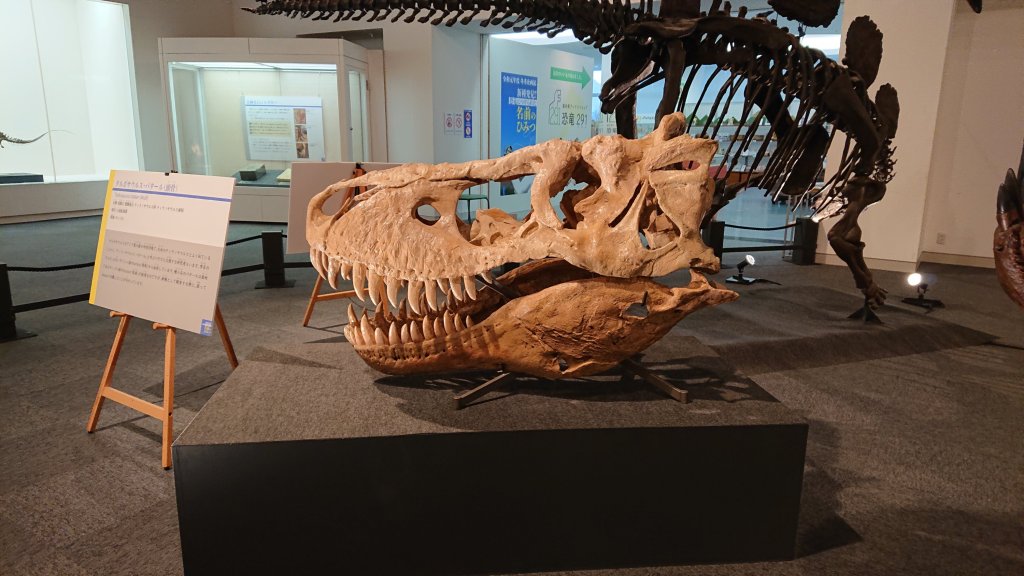
Reconstructed skull of Tarbosaurus bataar.
Tarbosaurus bataar is quite similar to T. rex. Some paleontologists think it is included in Tyrannosaurus. Its genus name means “alarming lizard” and species name is misspelling of “baatar”, “hero” in Mongolian.
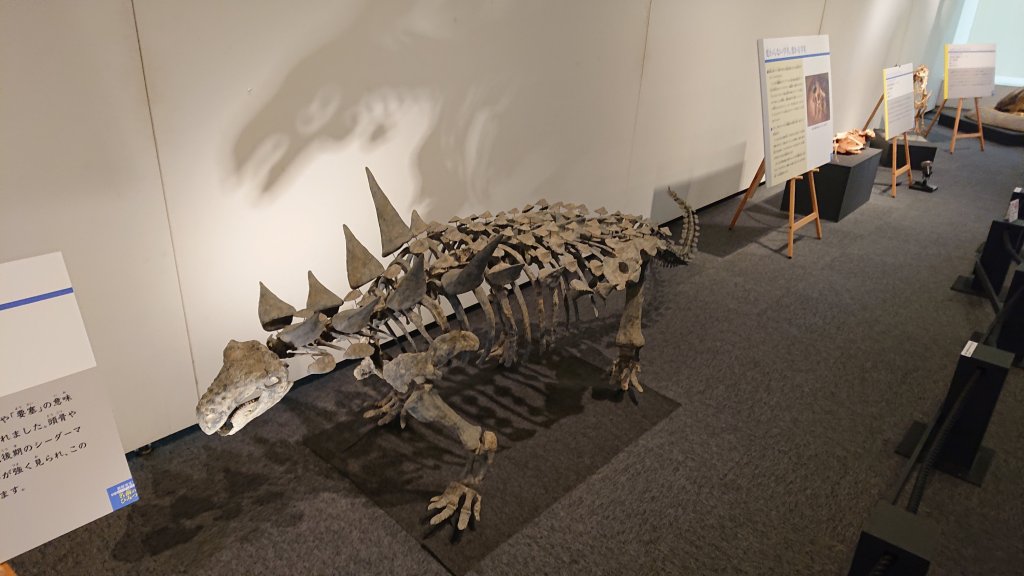
Reconstructed skeleton of Animantarx ramaljonesi.
Animantarx ramaljonesi is the nodosaurid dinosaur. Its genus name means “living fortress”, from the comment by paleontologist R.S.Lull. Its species name was named after Ramal Jones who found it.
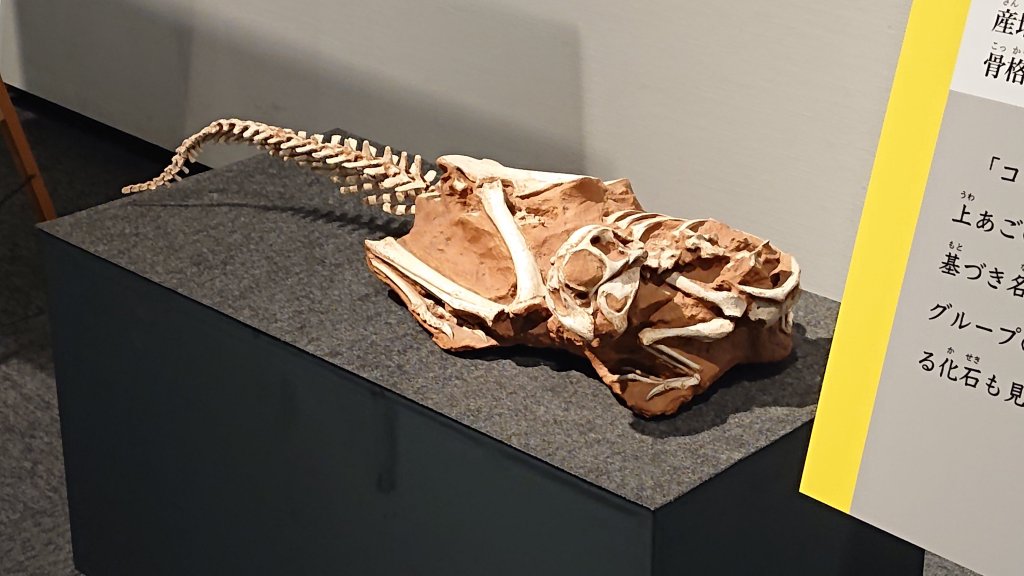
The specimen of Conchoraptor gracilis
Conchoraptor gracilis is the oviraptorid dinosaur. Its genus name means “shell thief” because its beak looks good for cracking hard object like shell. But it is uncertain that it ate shell. Its species name means “graceful”.
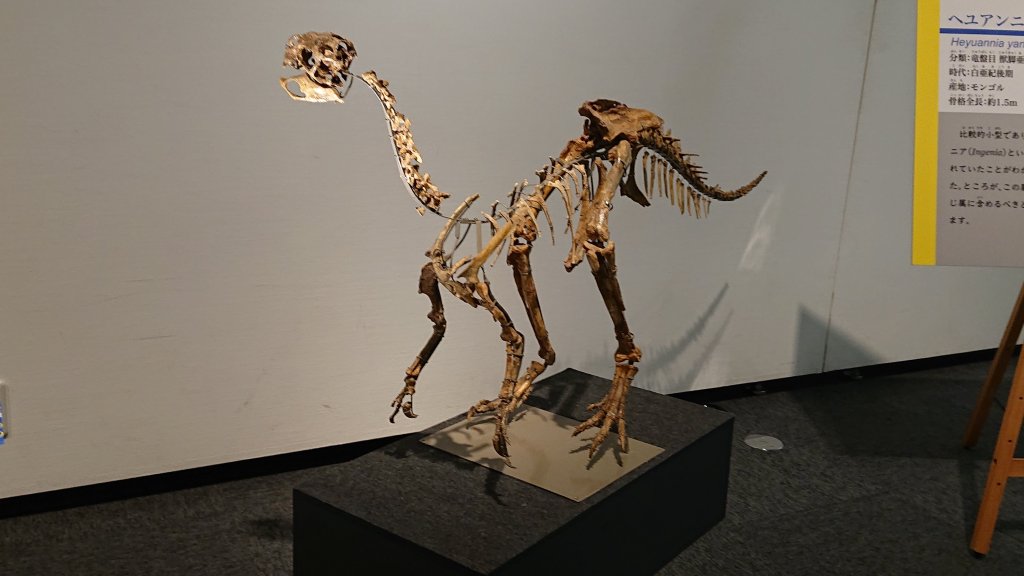
Reconstructed skeleton of Heyuannia yanshini.
Heyuannia yanshini is the oviraptorid dinosaur. At first, it is named Ingenia, but this name had already been used for roundworm. So it was renamed Ajancingenia, but it was included in Heyuannia.
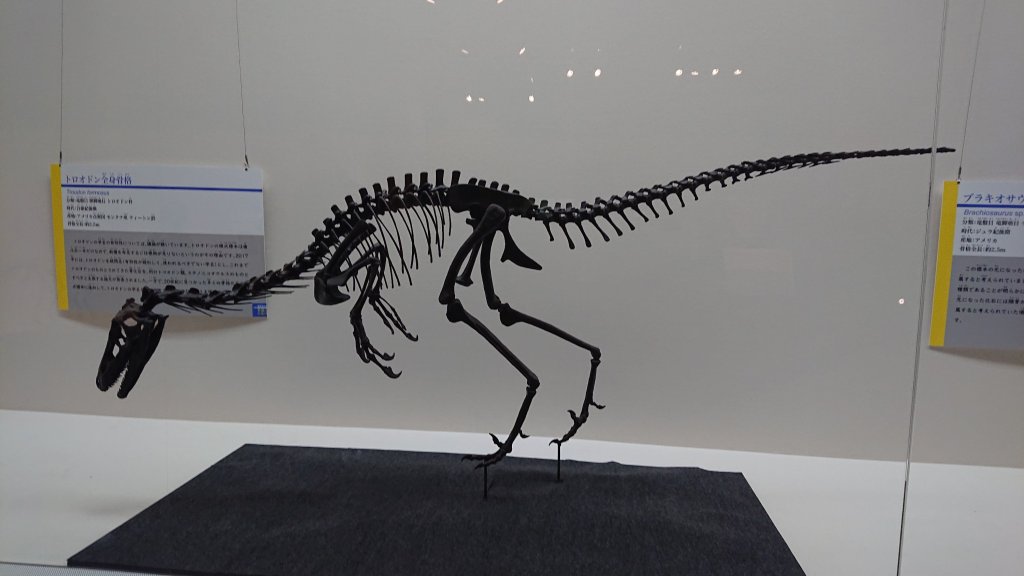
Reconstructed skeleton of Troodon formosus or Stenonychosaurus sp., the troodontidae from Egg Mountain site.
Troodon formosus or Stenonychosaurus sp. is the troodontid dinosaur from Egg Mountain site. In 2017, Troodon‘s name was disappeared and Stenonychosaurus‘s name came again. But some paleontologists say that Troodon‘s name should come again with designating neotype.
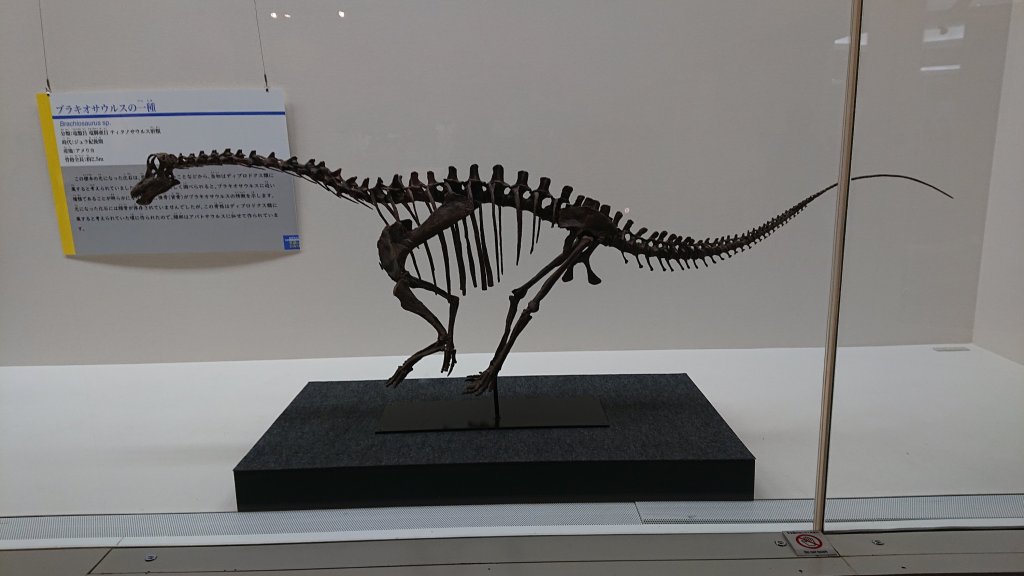
Reconstructed skeleton of juvenile Brachiosaurus sp. Its artifact parts are based on Apatosaurus.
Juvenile Brachiosaurus sp. was thought as Apatosaurus, so its artifact parts are based on Apatosaurus.
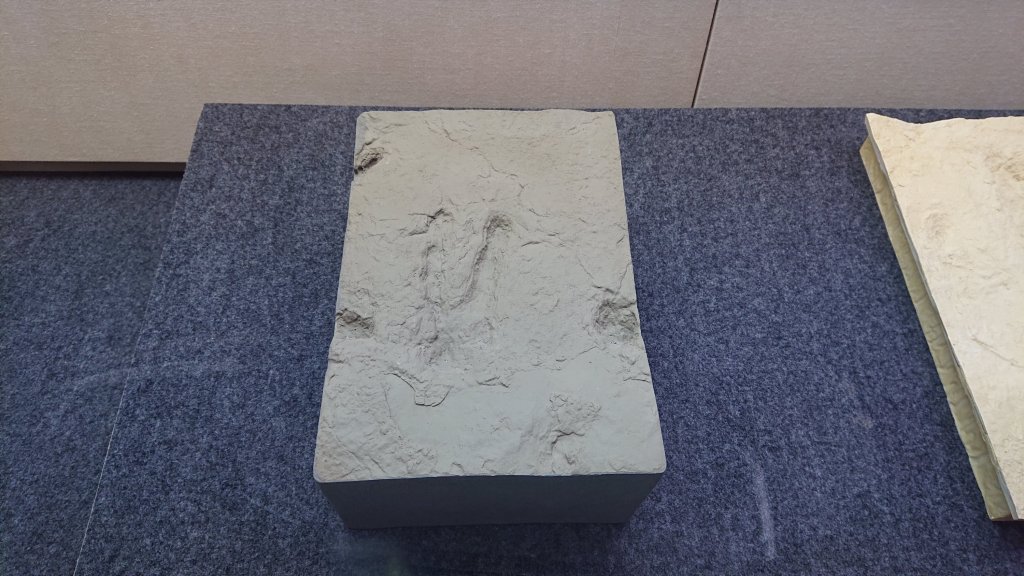
The specimen of Dromaeosauripus yongjingensis.
Dromaeosauripus yongjingensis is the footprint of dromaeosaurid dinosaur. footprint fossil is named its own scientific name because it is uncertain which made it.
Thanks for reading! Next time, I’ll start writing about permanent exhibition.
On November 14, a new Cretaceous bird in Japan was named and described. It was named Fukuipteryx prima!
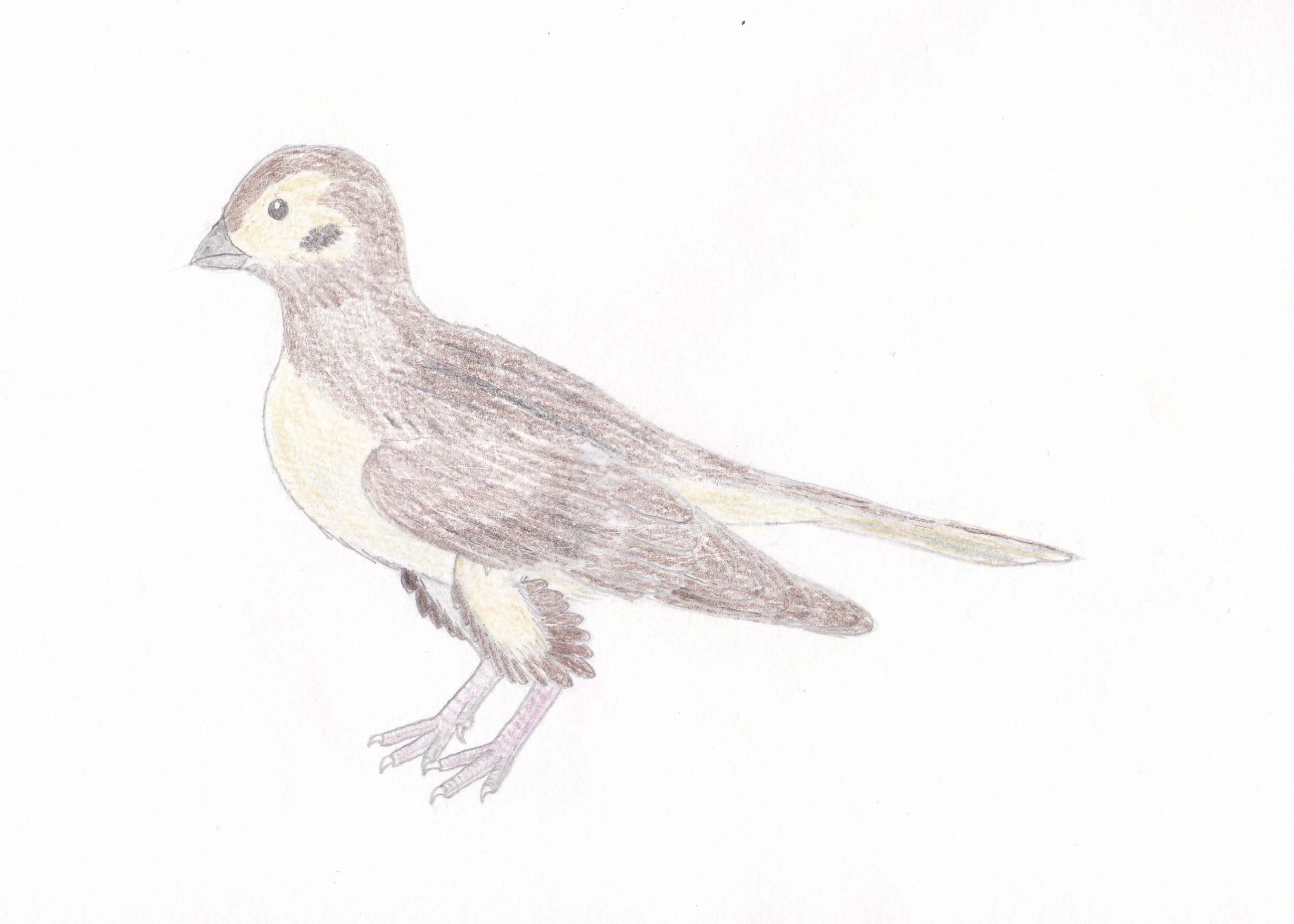
Life restoration of Fukuipteryx prima by myself
Fukuipteryx is first Japanese mesozoic bird that was named. Its name means “primitive wing from Fukui”. It was found from Kitadani Formation in Fukui. Its wingspan is about 50cm wide. It lived in Early Cretaceous, about between 127 and 115 million years ago. Its fossil was under 1 years old when it lived. When it was alive, Kitadani Formation was the swamp near the river. It lived with animals like crocodile, turtles, and dinosaurs like Fukuiraptor and Fukuivenator.
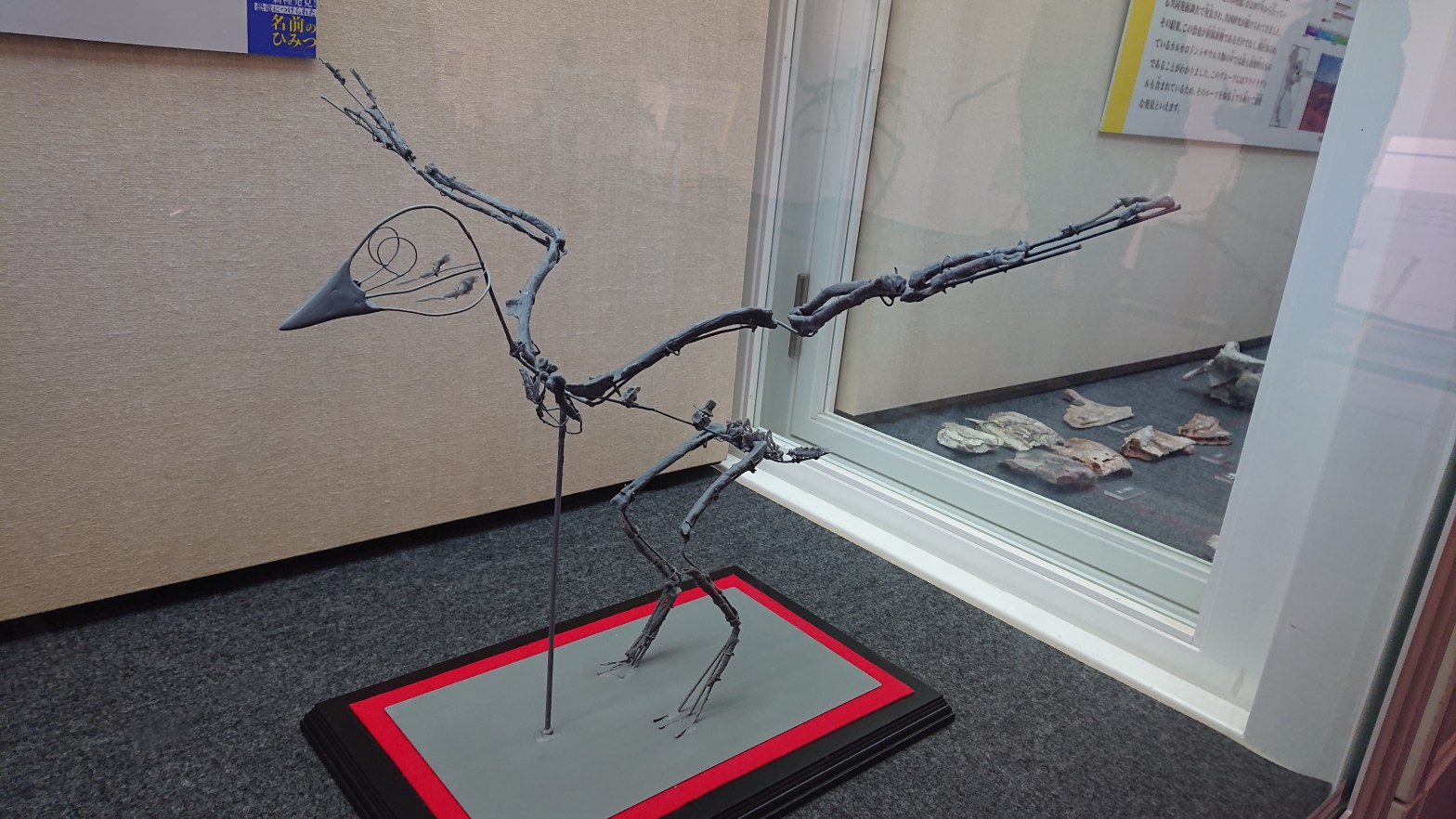
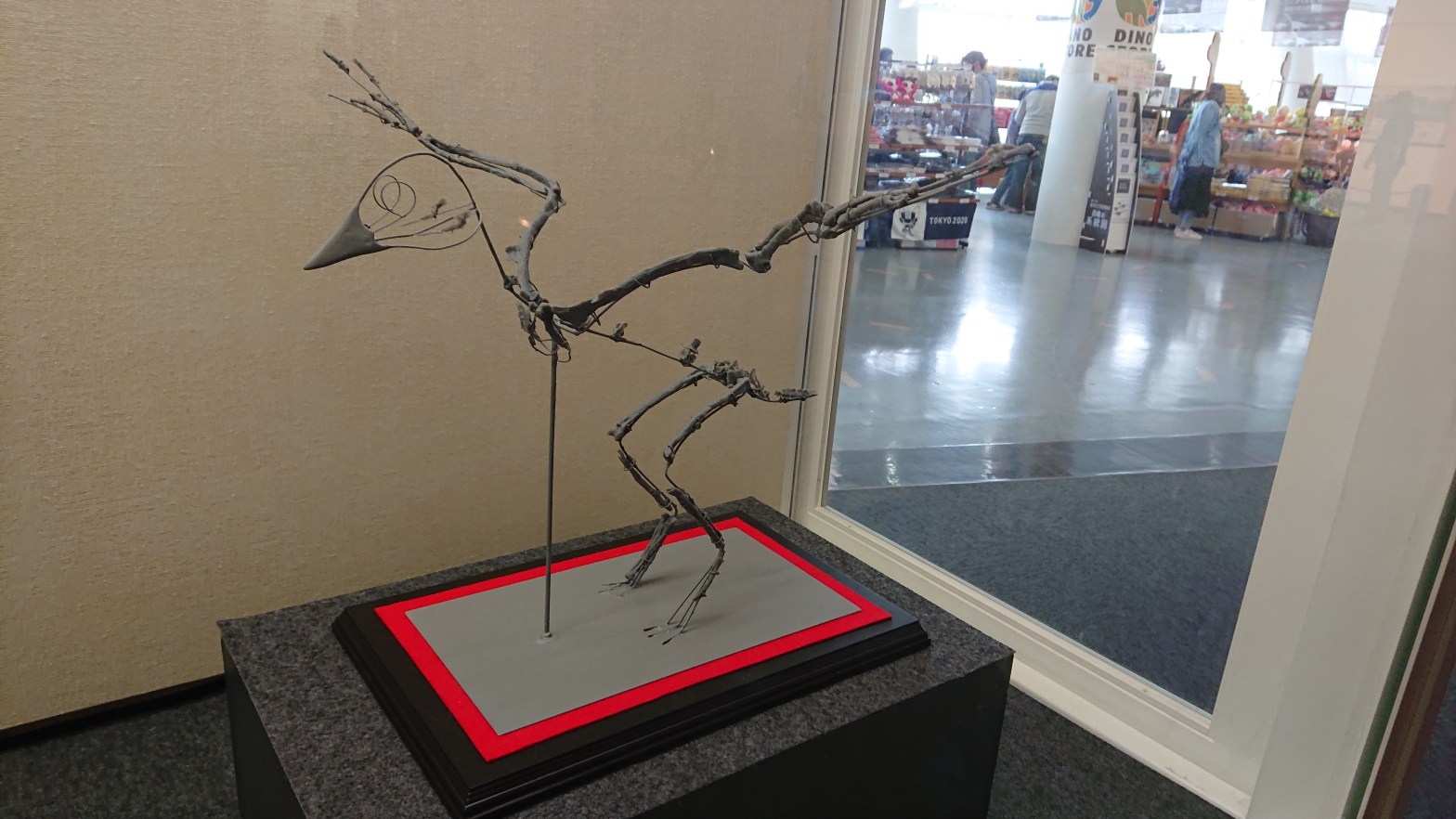
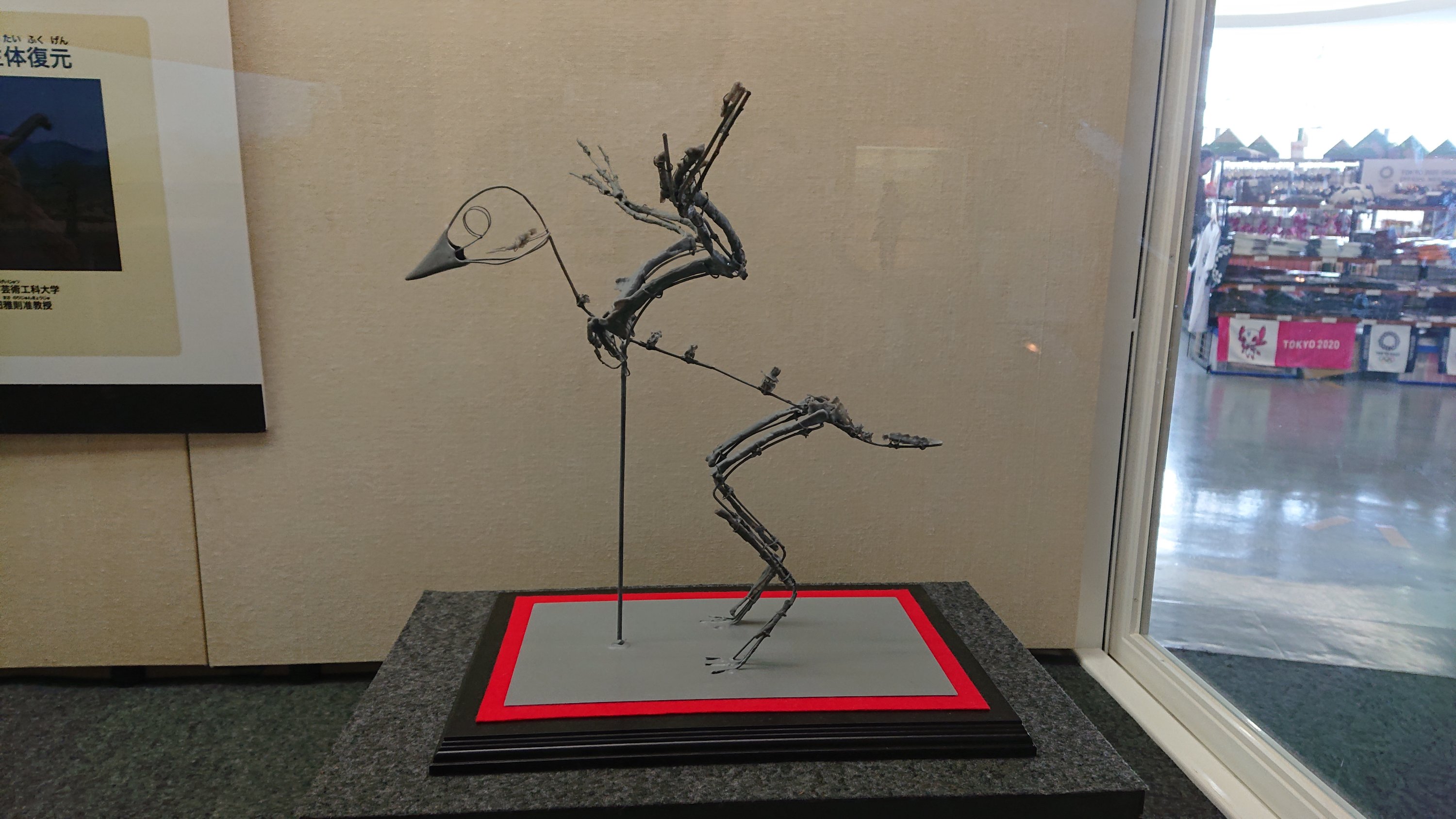
Reconstructed skeleton made by 3D printer. It is seen in Fukui Prefectural Dinosaur Museum.
Fukuipteryx has short tail like modern birds, but it has a lot of primitive points. In modern birds, tail bones are completely stuck each other, but in Fukuipteryx, Shapes of each bones are seen. It shows the way how bird’ tails became shorter.
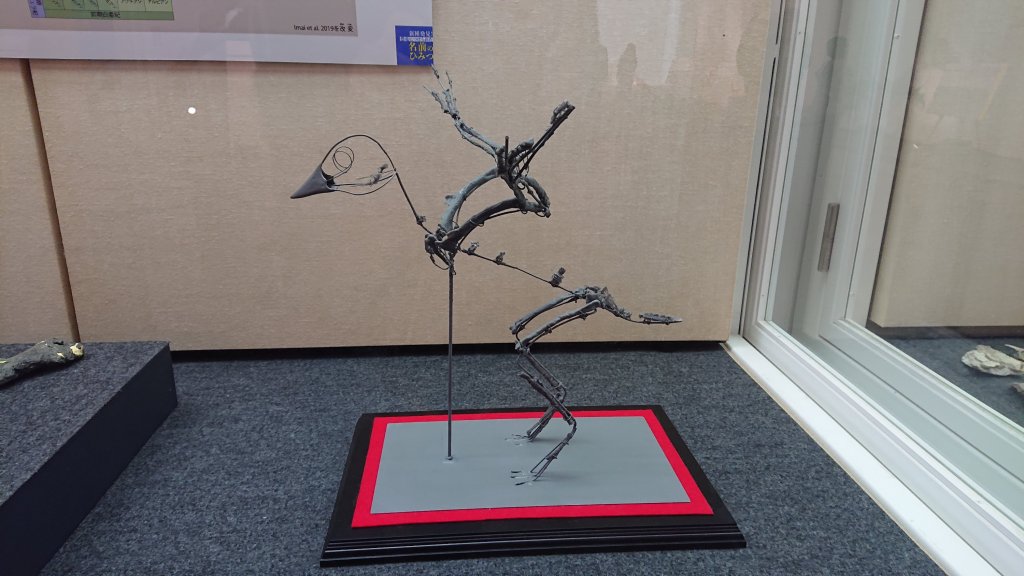
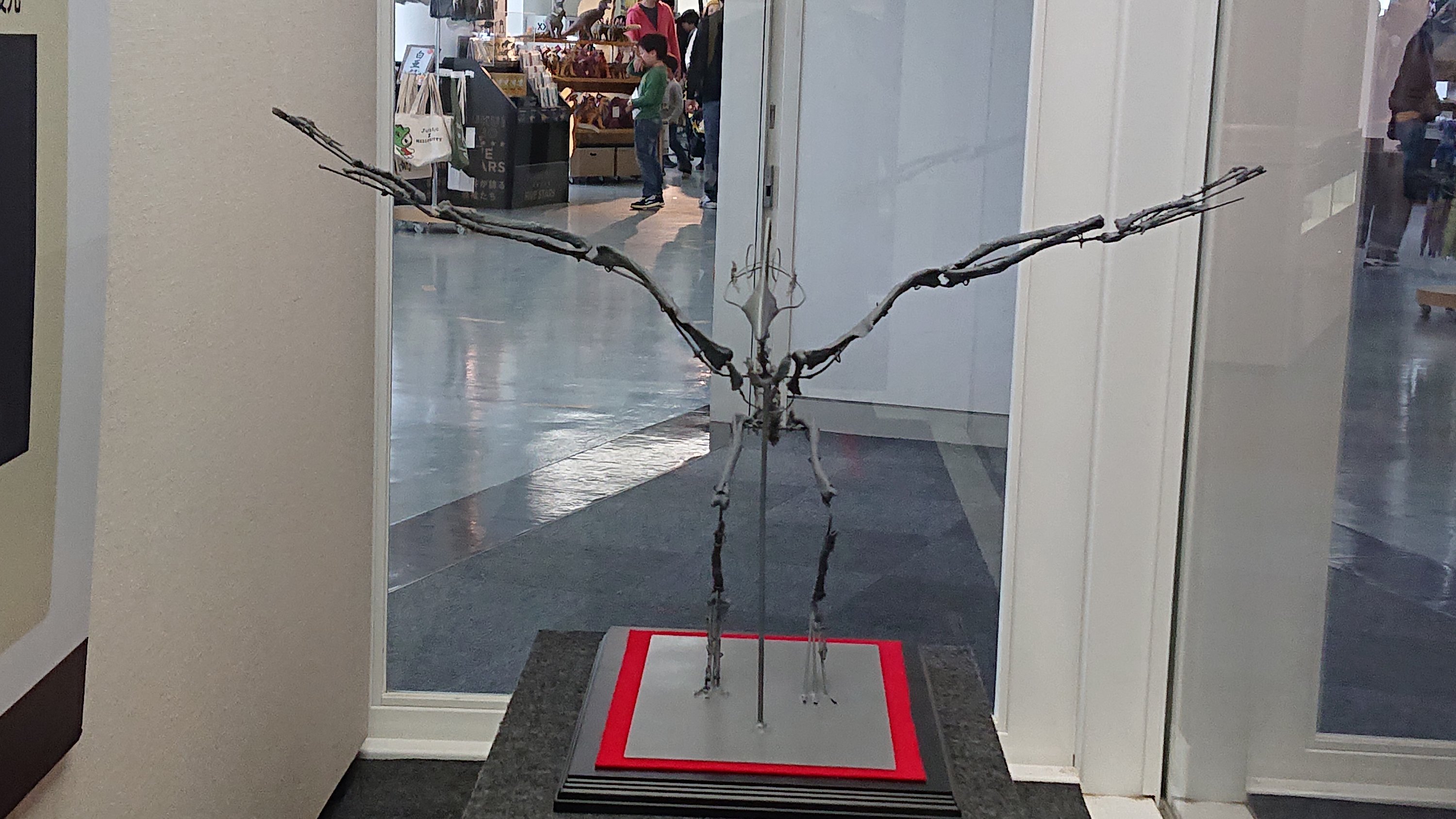
front view of reconstructed skeleton.
It has a thick wishbone like the letter “U”. Wishbone is the bone seen in front of chest bone in some reptiles, dinosaurs, and birds. It supports chest and shoulder muscles and help their breath. In modern birds, wishbone is fine and soft like a spring, but it of Fukuipteryx is more thicker and less flexibility.
The occurrence of Fukuipteryx.
It has three fingers with claws on each wing like dinosaurs. In modern birds, instep bones are stuck each other, but they are not stuck in Fukuipteryx.
On the other hand, it has a big bump that was stuck a muscle to raise its wing on its upper arm bone. It could flap strongly. It has both old points and new points. It was halfway of the step to flight.
To surprise, Fukuipteryx branched before Jeholornis, an early bird with long tail. It shows that tail have become shorter many times in the evolution of birds and a linage including modern birds is only one of the example.
Fukuipteryx prima is very important species in the evolution of birds. Thank-you for reading.
I am writing in Perth Airport. I will leave Australia and return to Japan. I will arrive Japan tomorrow.
Australia is good to live. Australian people are all kind.
I could see a lot of birds. Birds in Australia are quite different to them in Japan.
After returning to Japan, I will keep writing this blog. I want to write about Japanese museums, birds in Australia or Japan, and prehistoric animals in Japan.
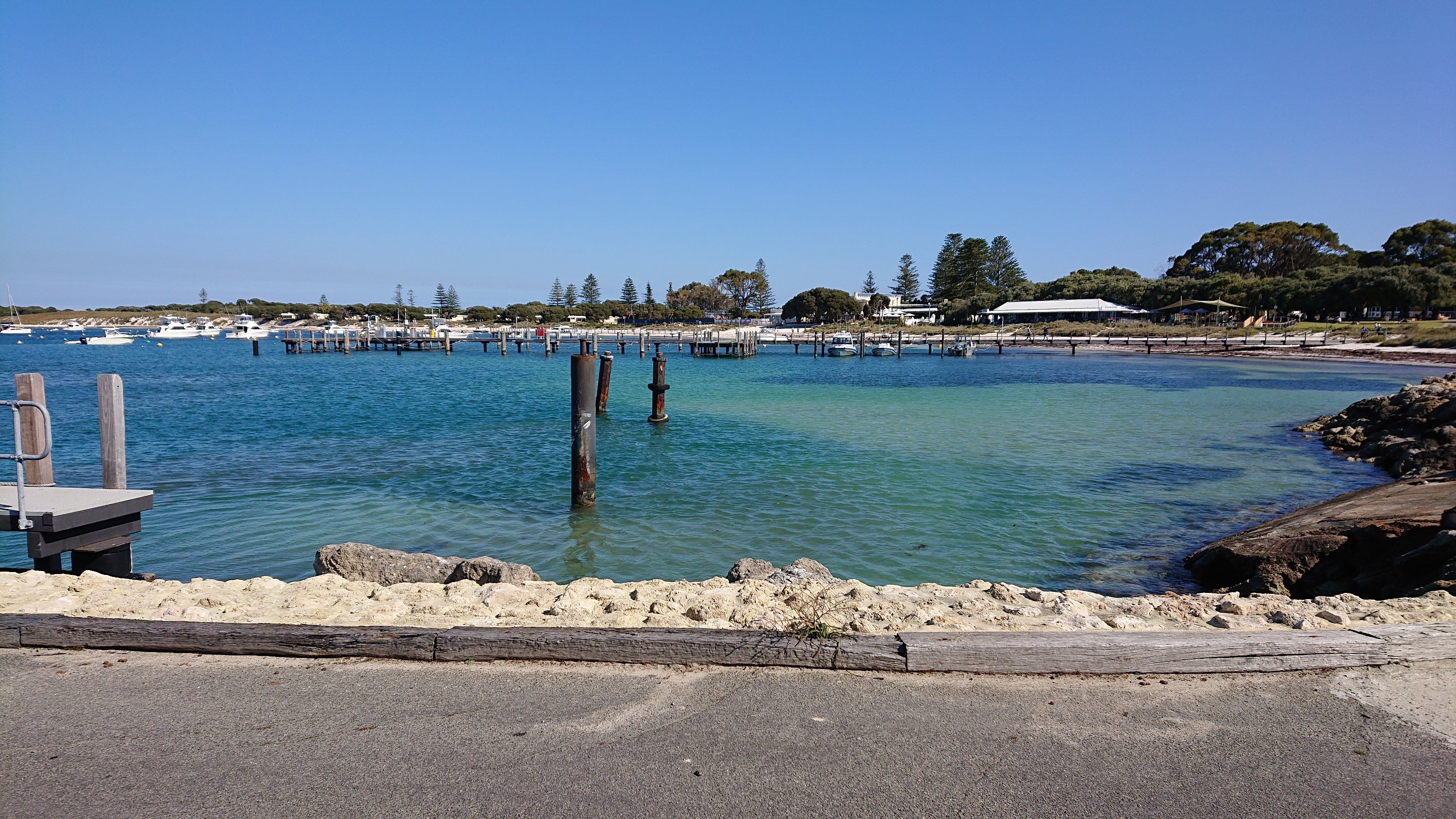
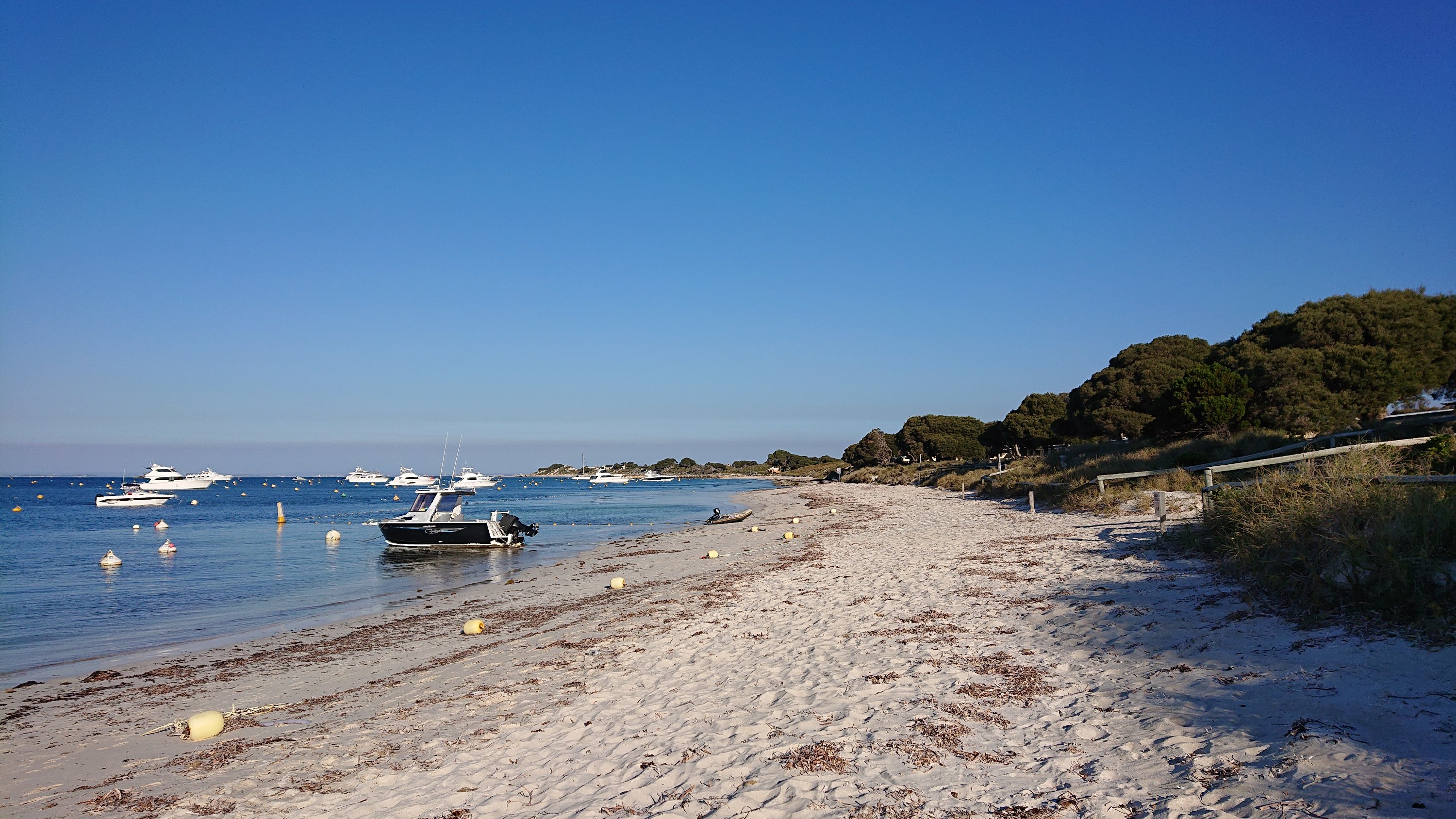
On September 27th, I went to Rottnest Island. There were beautiful view and many wildlives there.
In the ship to the island, I saw a breaching whale. But I am sorry that I could not take photos because of swing of the ship.
What the beautiful sea it is!
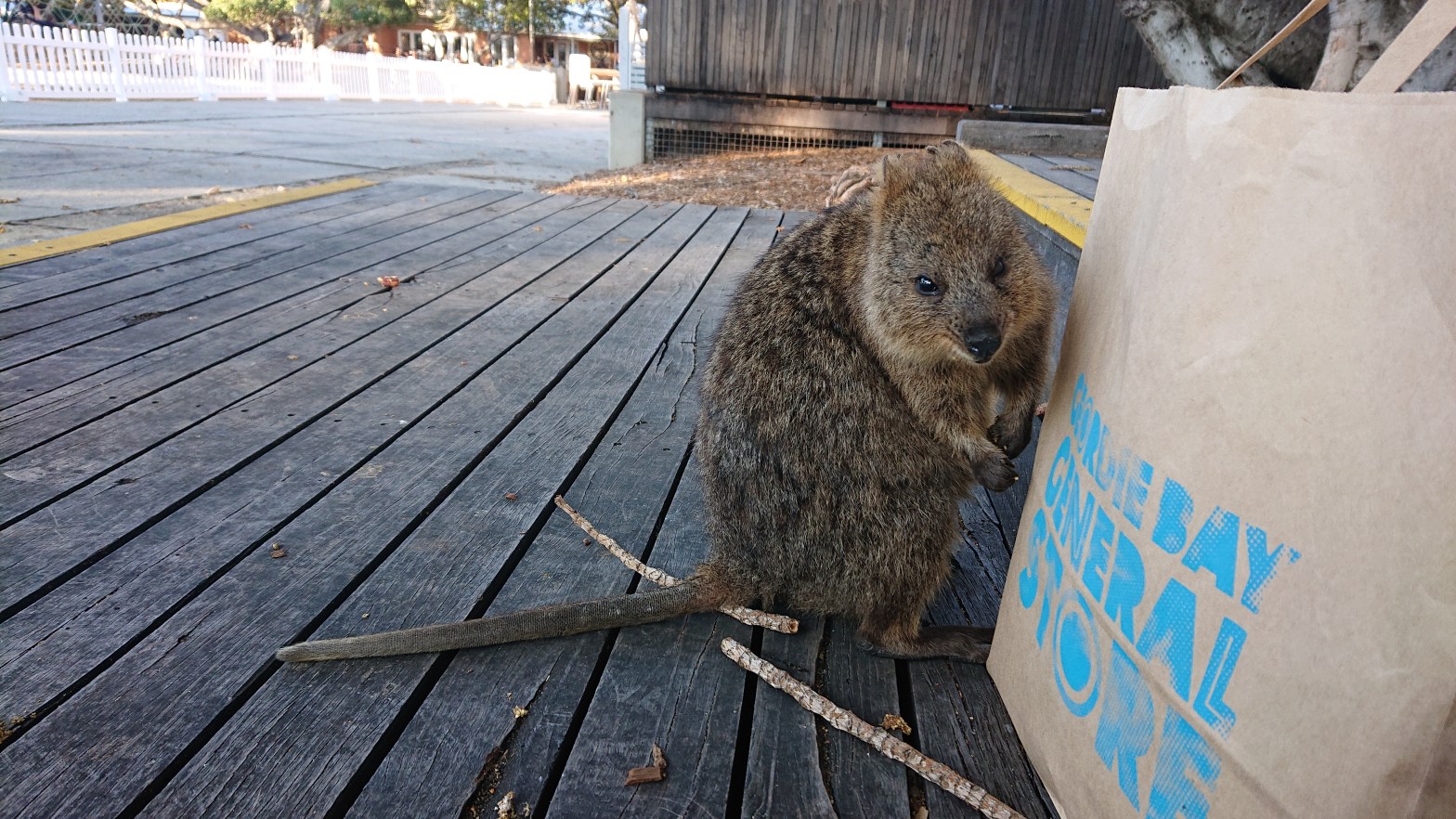
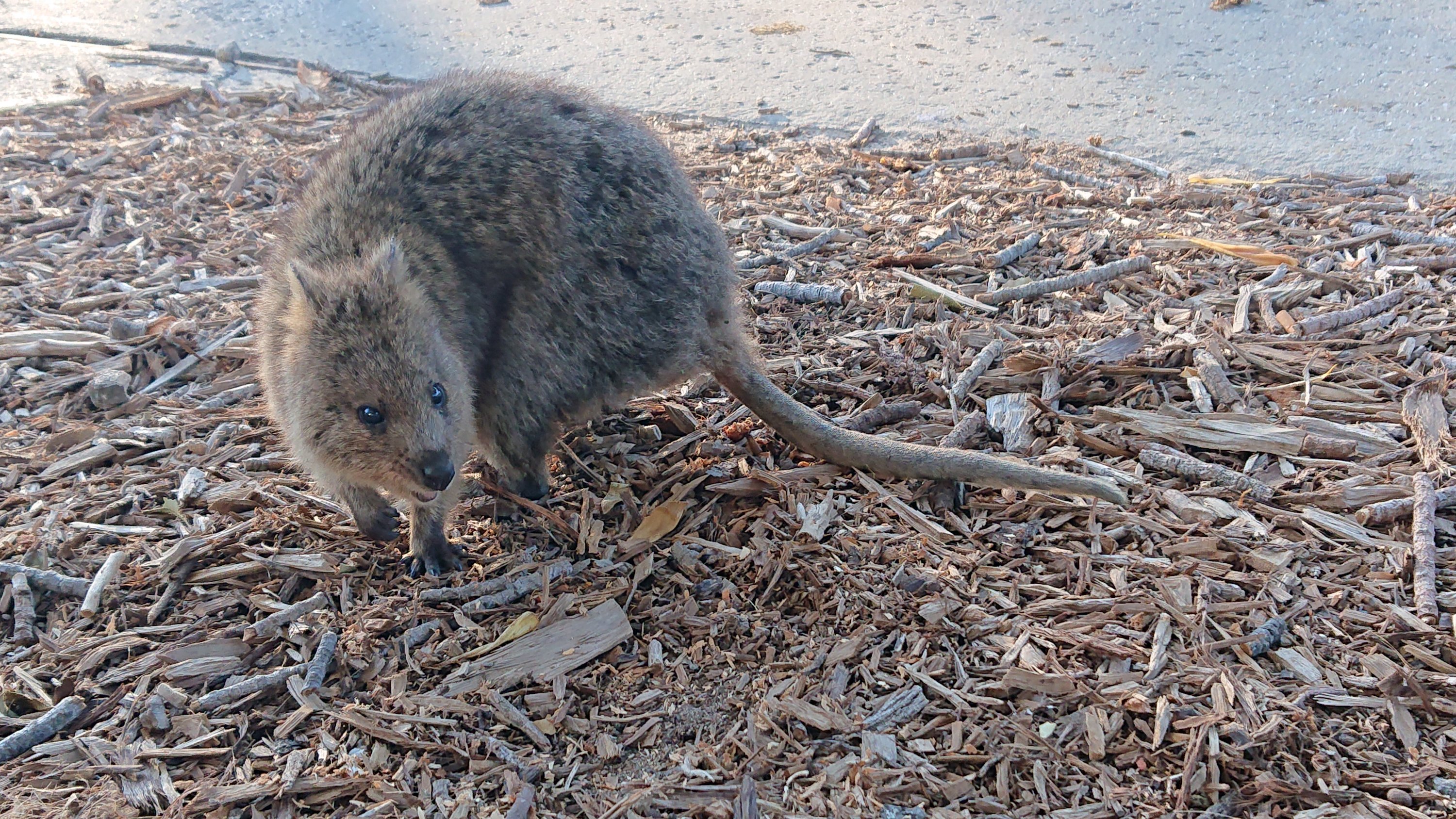
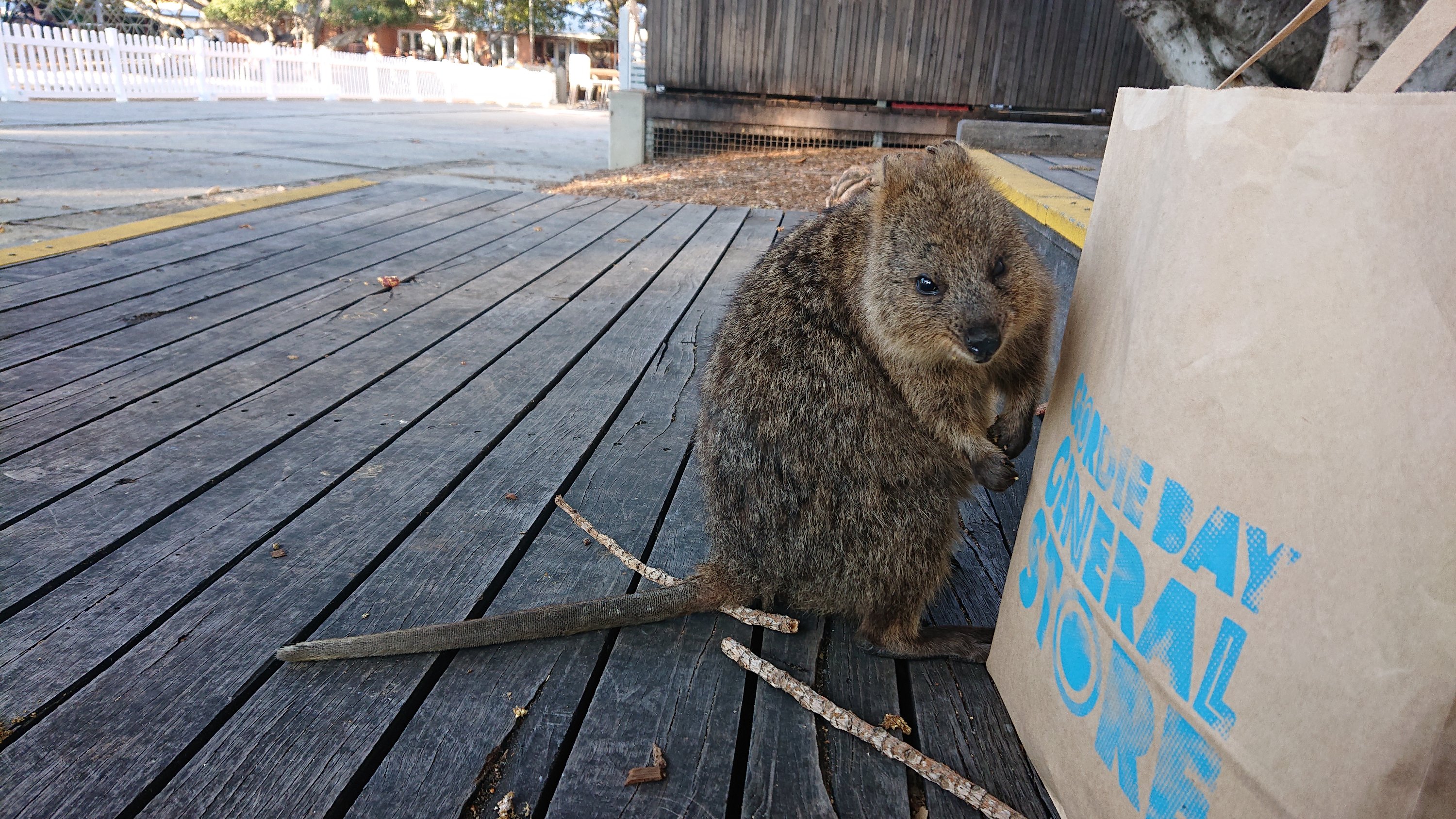
Quokkas (Setonix brachyurus) are very cute. They are never afraid of anything.
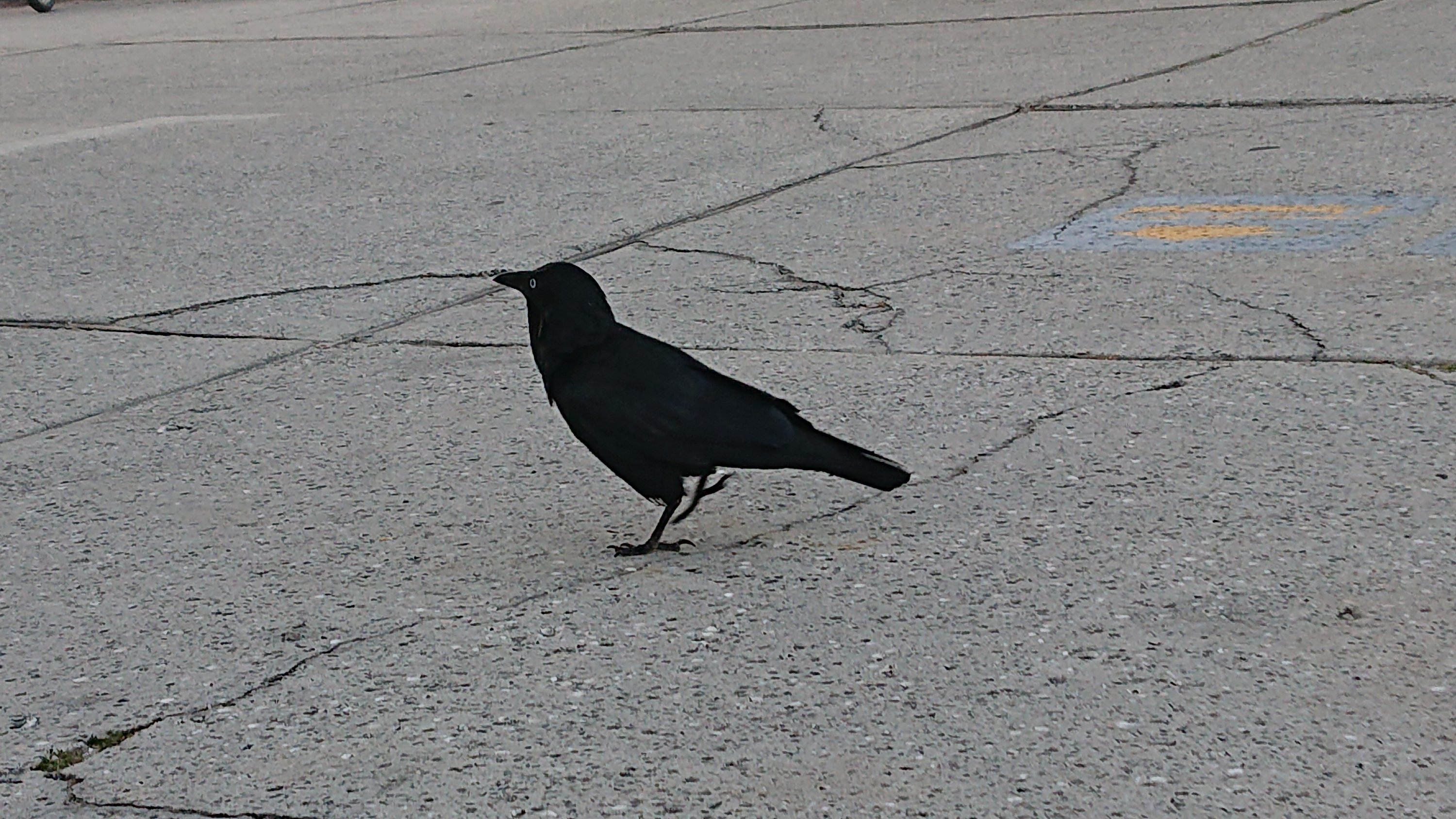
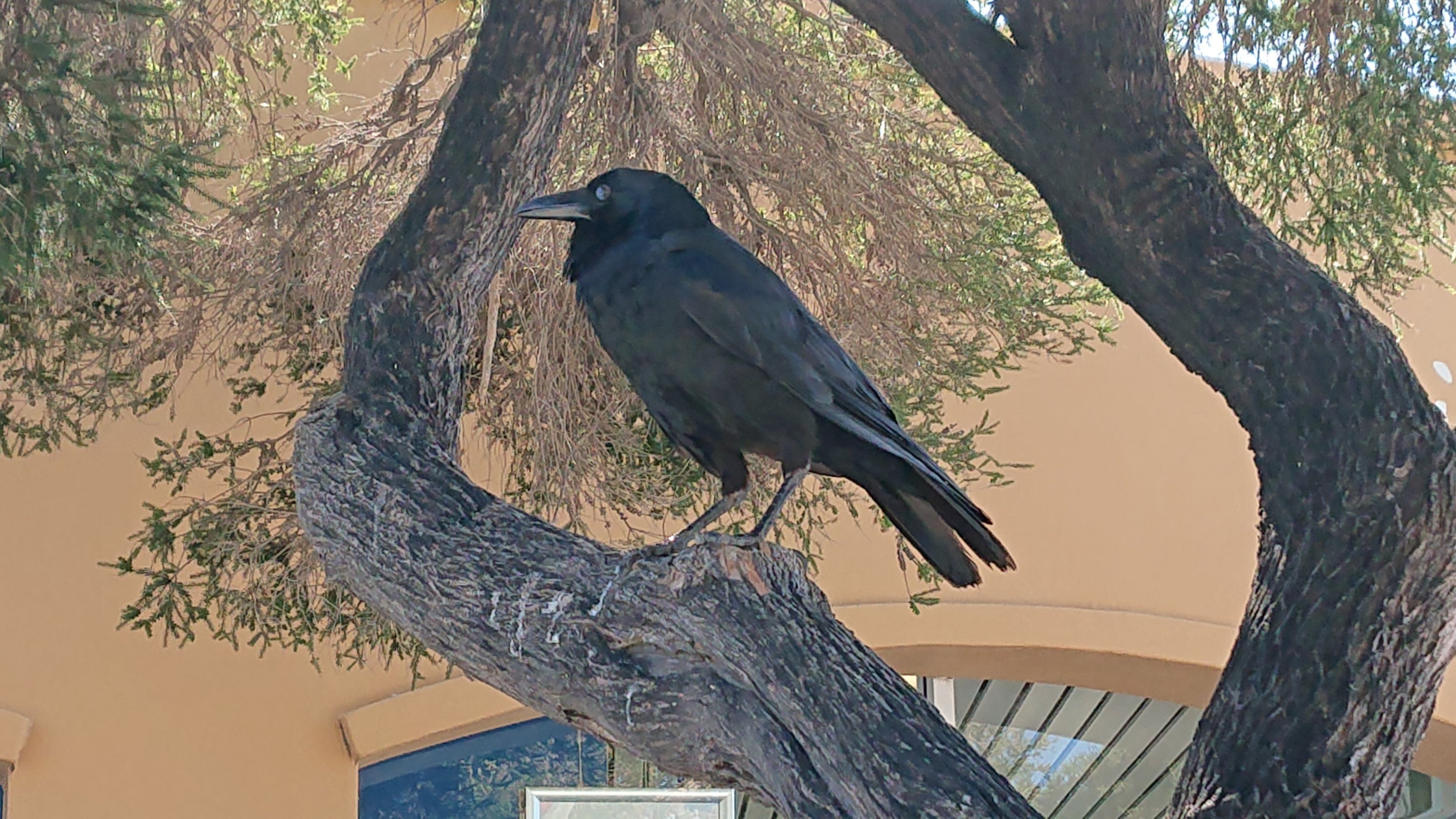
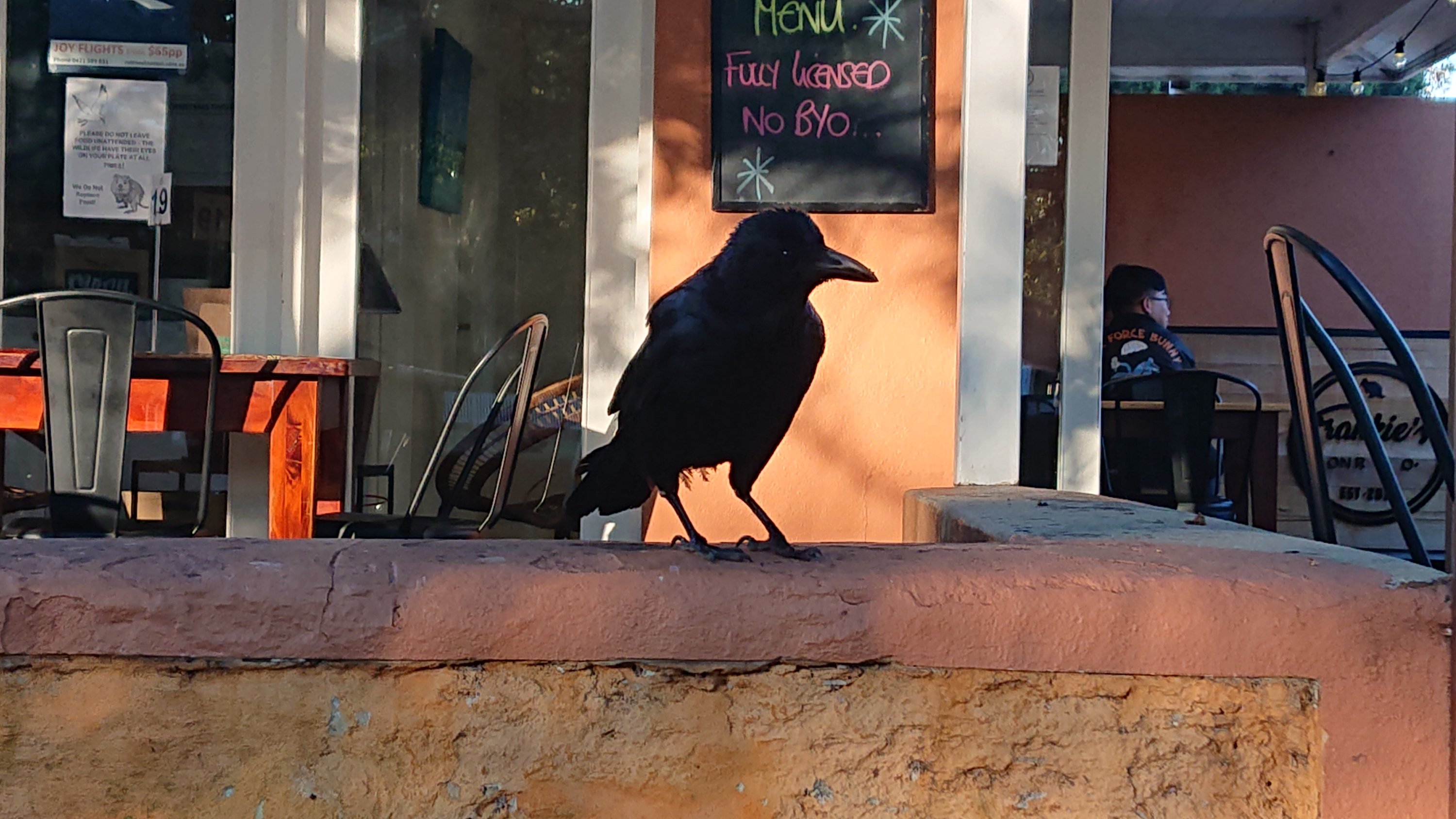
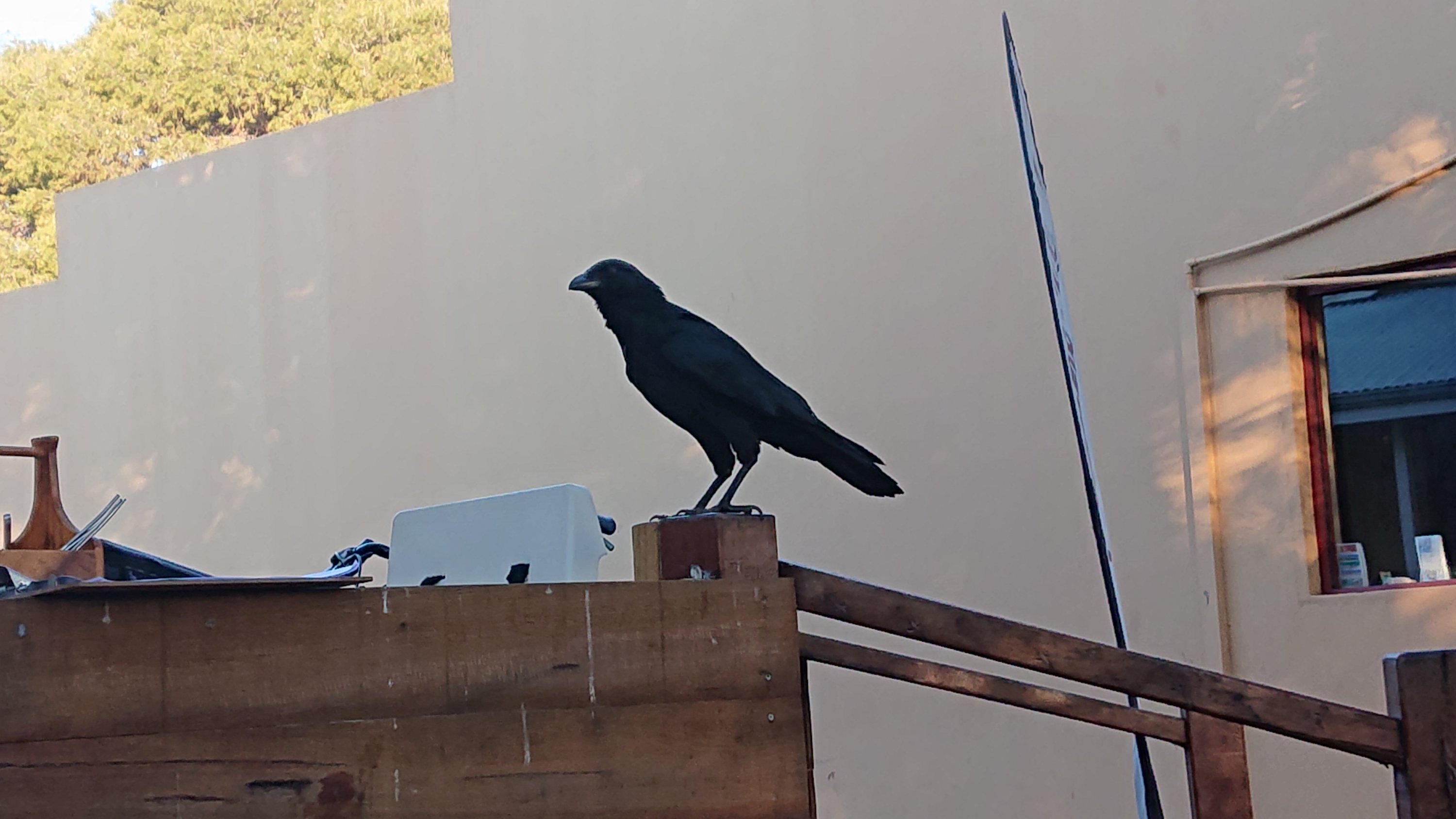
Australian ravens (Corvus coronoides) are the most common crows and ravens around Perth. Their call sounds like voice of man. It sounds funny for Japanese.
These crows or ravens have black eyes like crows in Eurasia. It is quite unique point as crows in Australia. I don’t know what species they are. If you know, tell me in your comment, please.
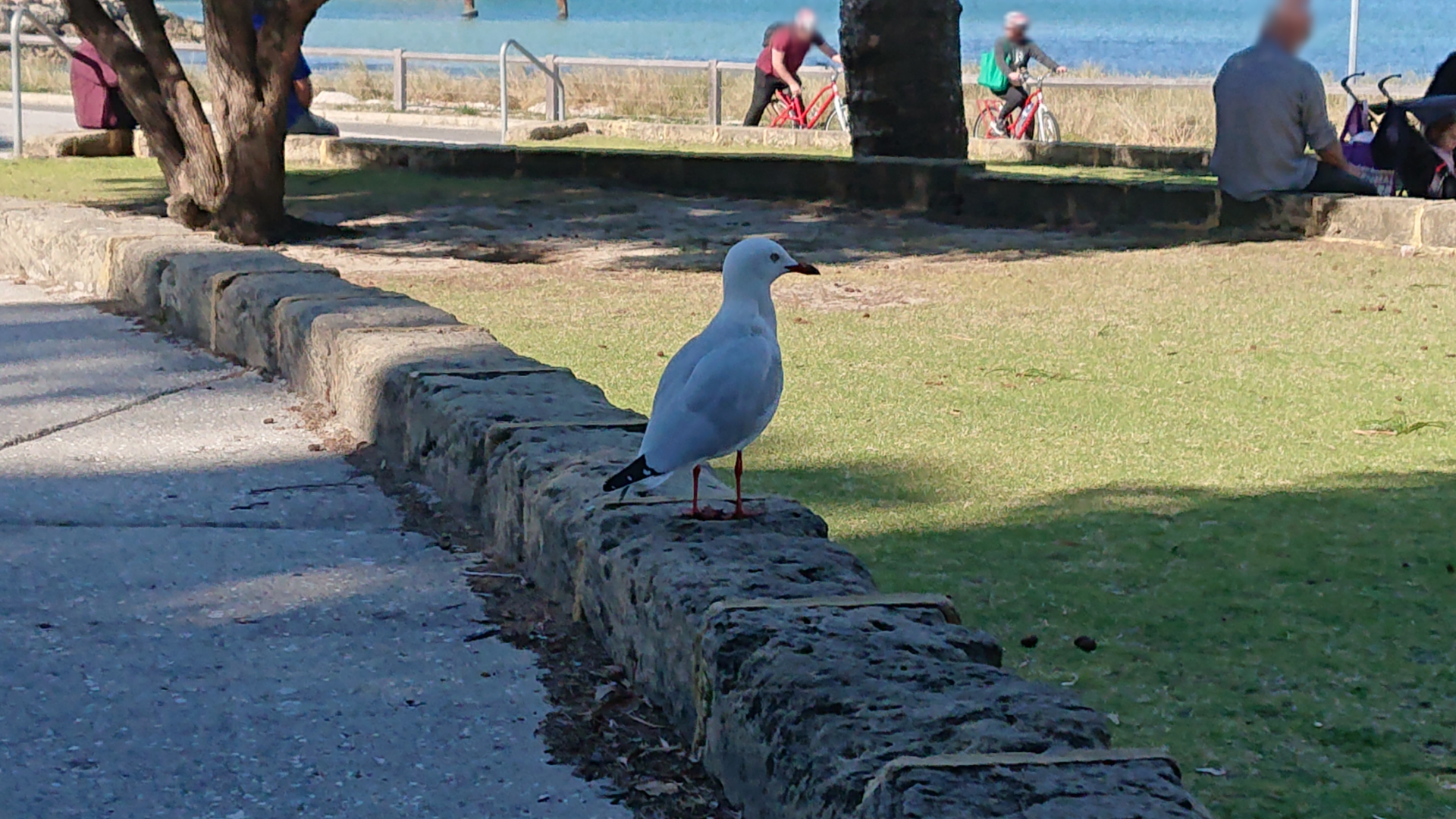
Silver gulls (Chroicocephalus novaehollandiae) are the most common seagulls in Australia. They are beautiful.
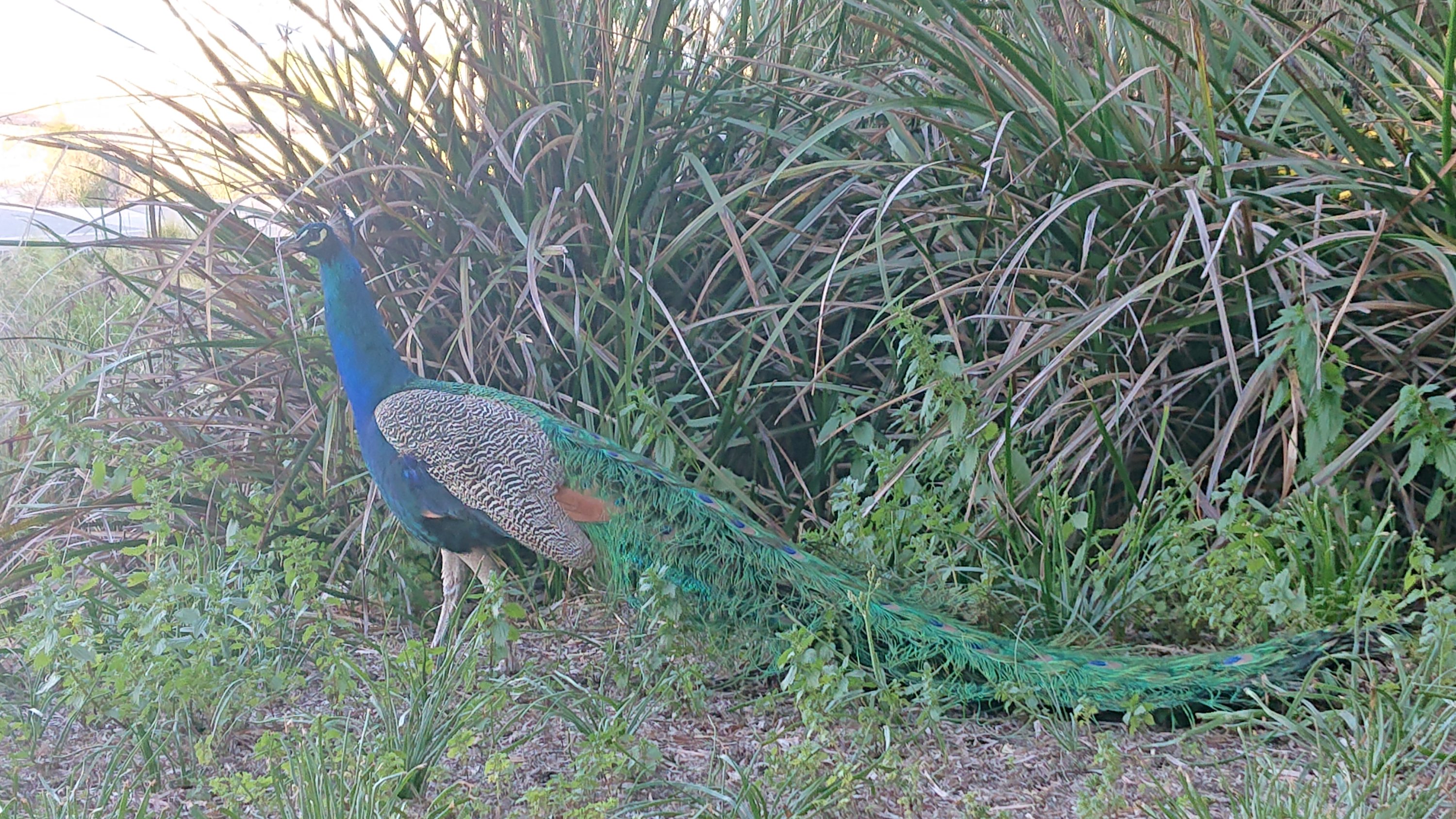
Indian peacocks (Pavo cristatus) are not native birds in Rottnest Island. They are originally indian birds as their name. I don’t know how they influence ecosystem in Rottnest Island, but I know that they eat native rare small animals in Japanese southern islands. I think that it is not good that they are in Rottnest Island.
At last, I saw a cormorant. I noticed that it was black-faced cormorant, pied cormorant or little pied cormorant. But it was too far to identify and take photos.
Rottnest island had a lot of nature, so I could spend relaxing time.
I am sorry to rest writing this report. I will write about unique sharks today.
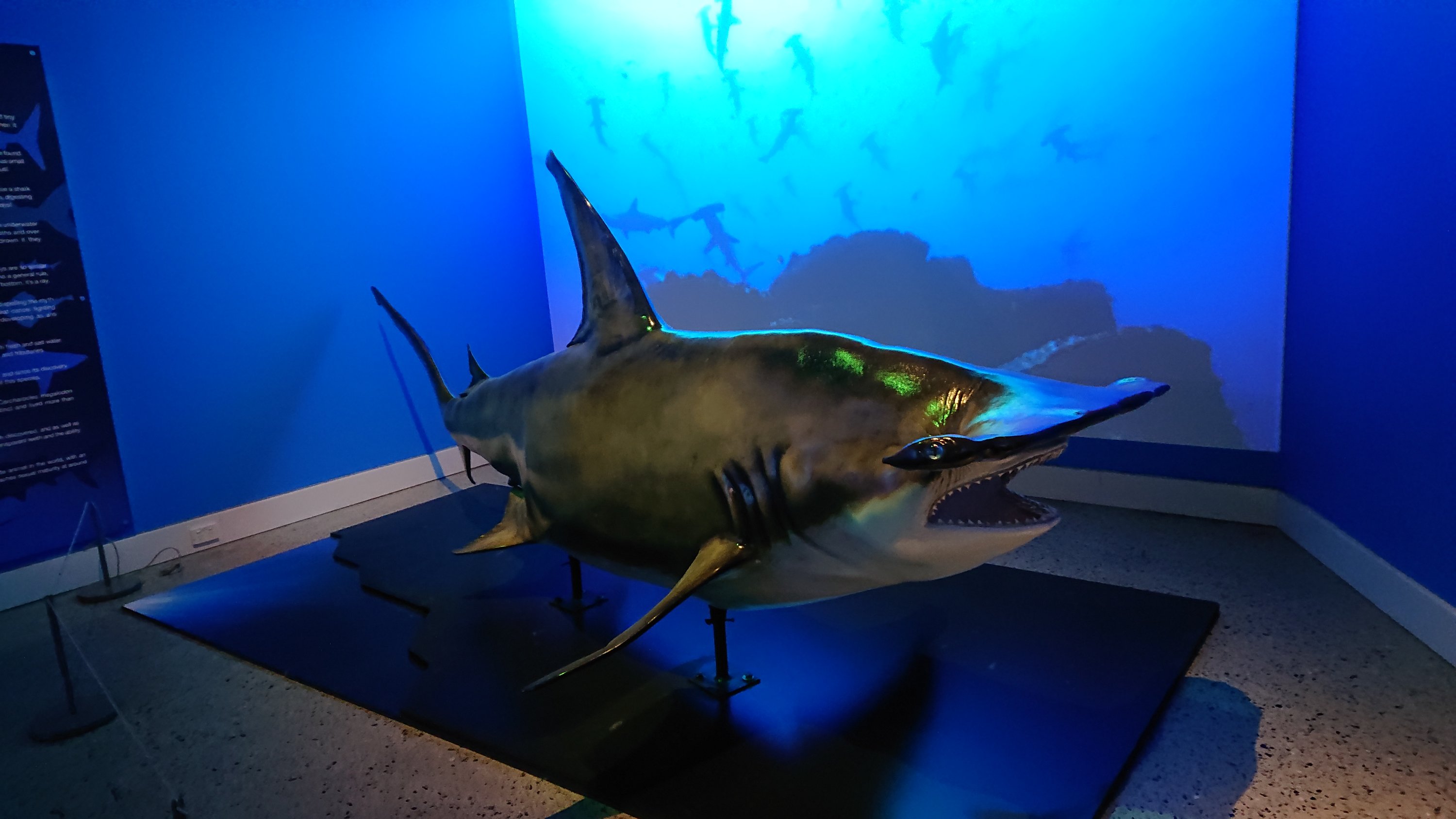
Great hammerhead (Sphyrna mokarran) sometimes grow more than 6m long. It is the biggest hammerhead shark. I think that hammerhead sharks have one of the most unique head in vertebrate.
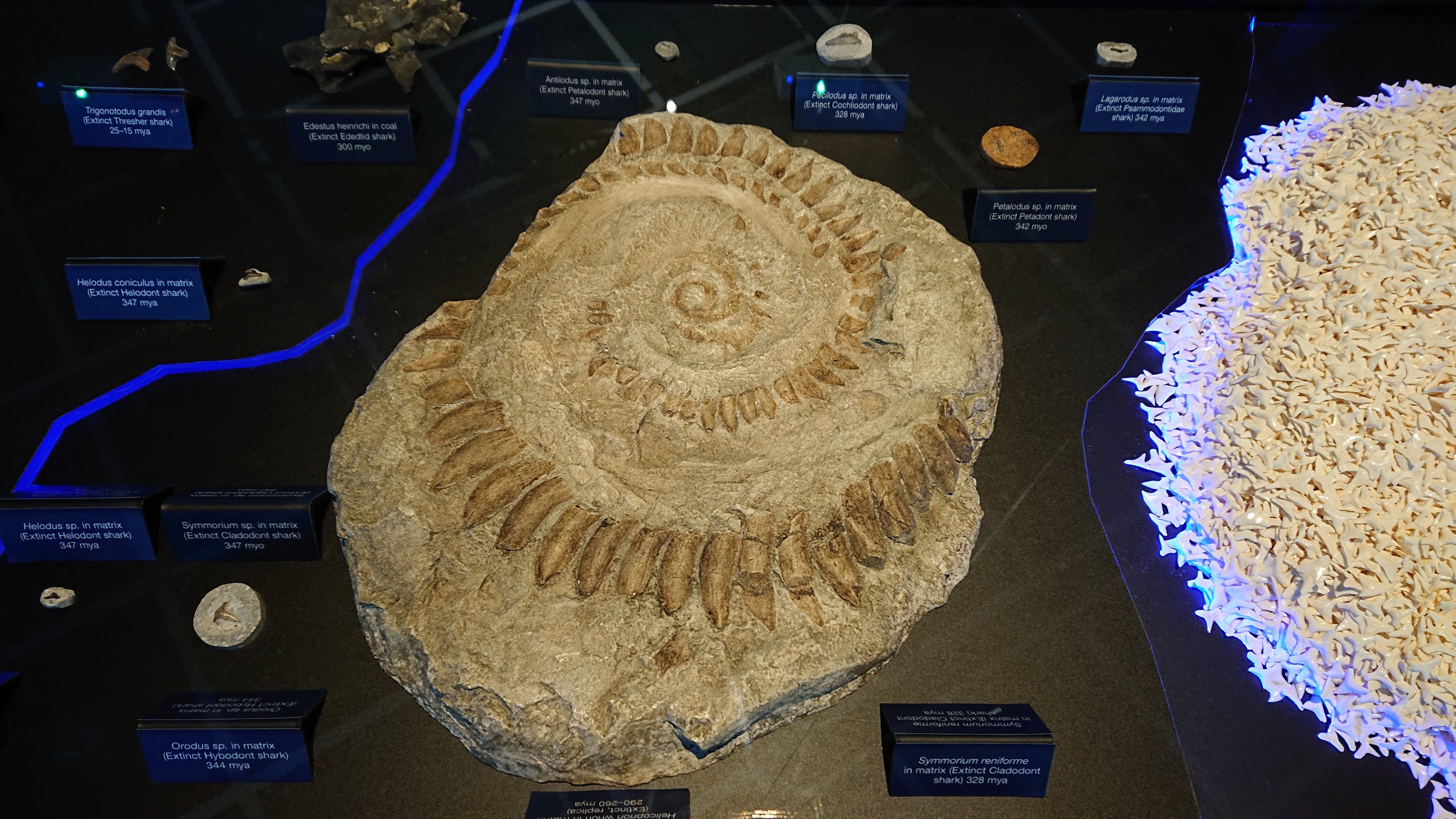
Helicoprion is popular for its coiled row of teeth, but no one had known where and how they had been when he had lived for long time. But in 2013, a research showed that they had been in lower jaw like a circular saw. It is said that these teeth are used for slashing his prey like nautiluses or ammonites.
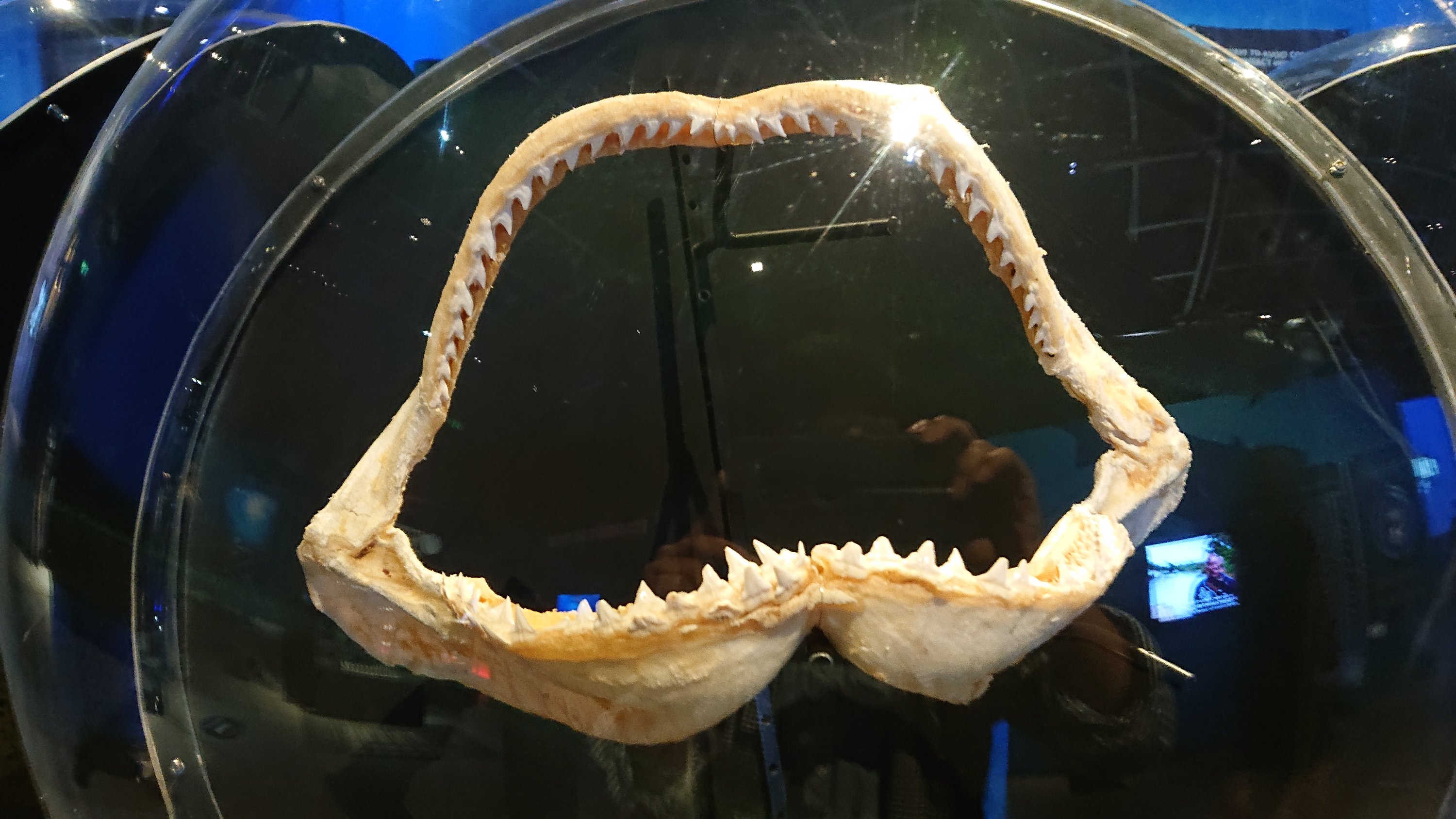
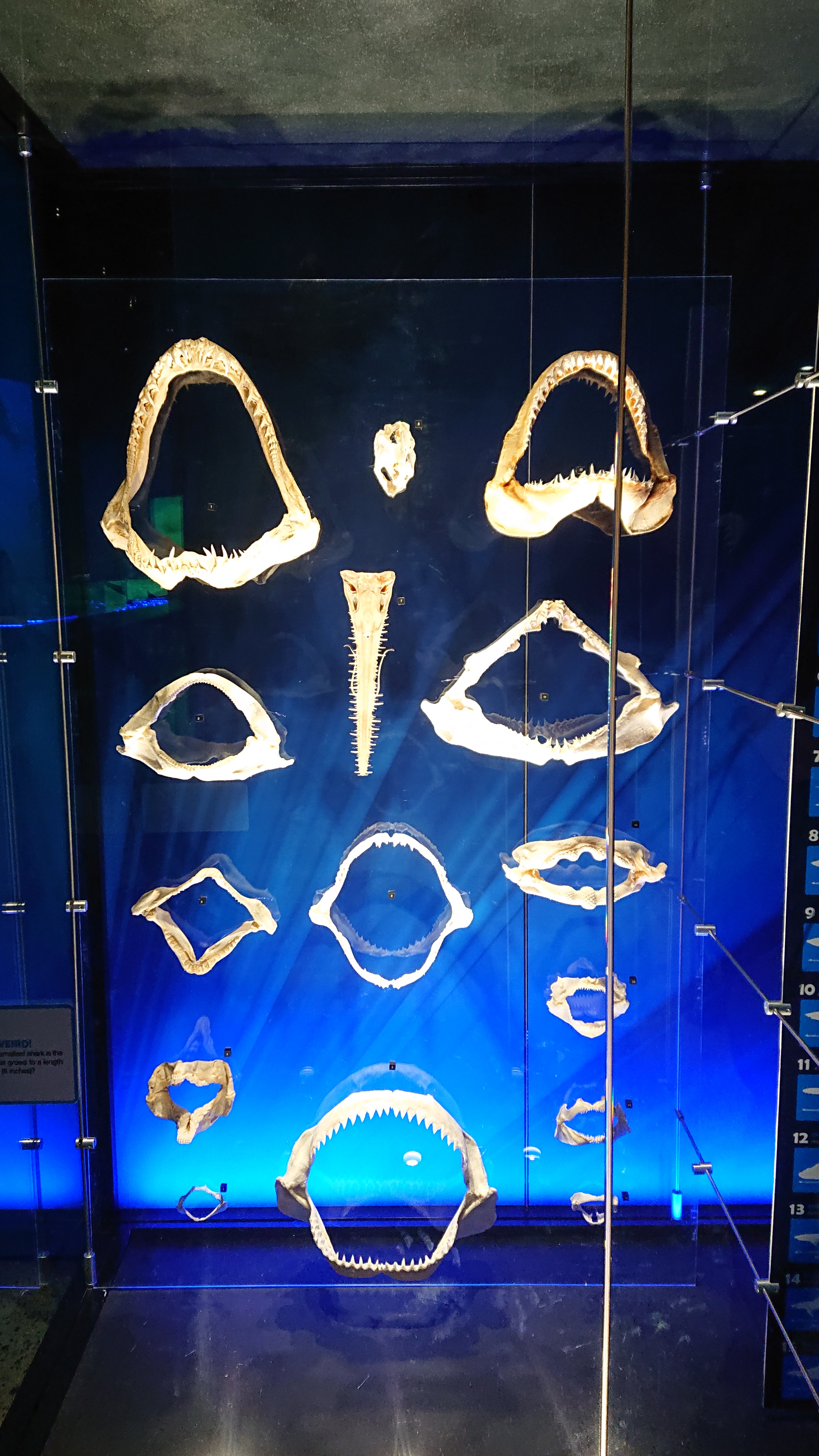
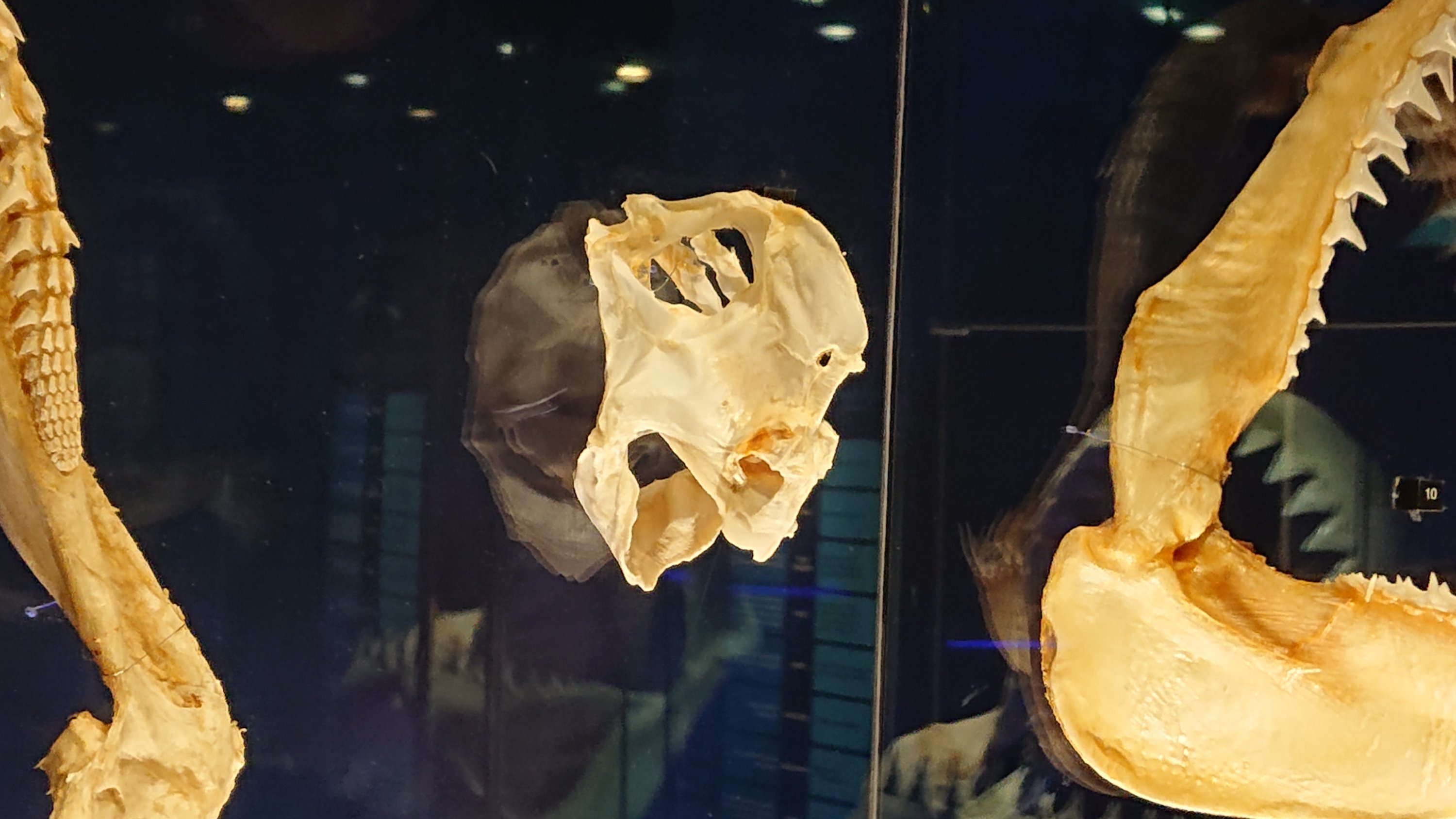
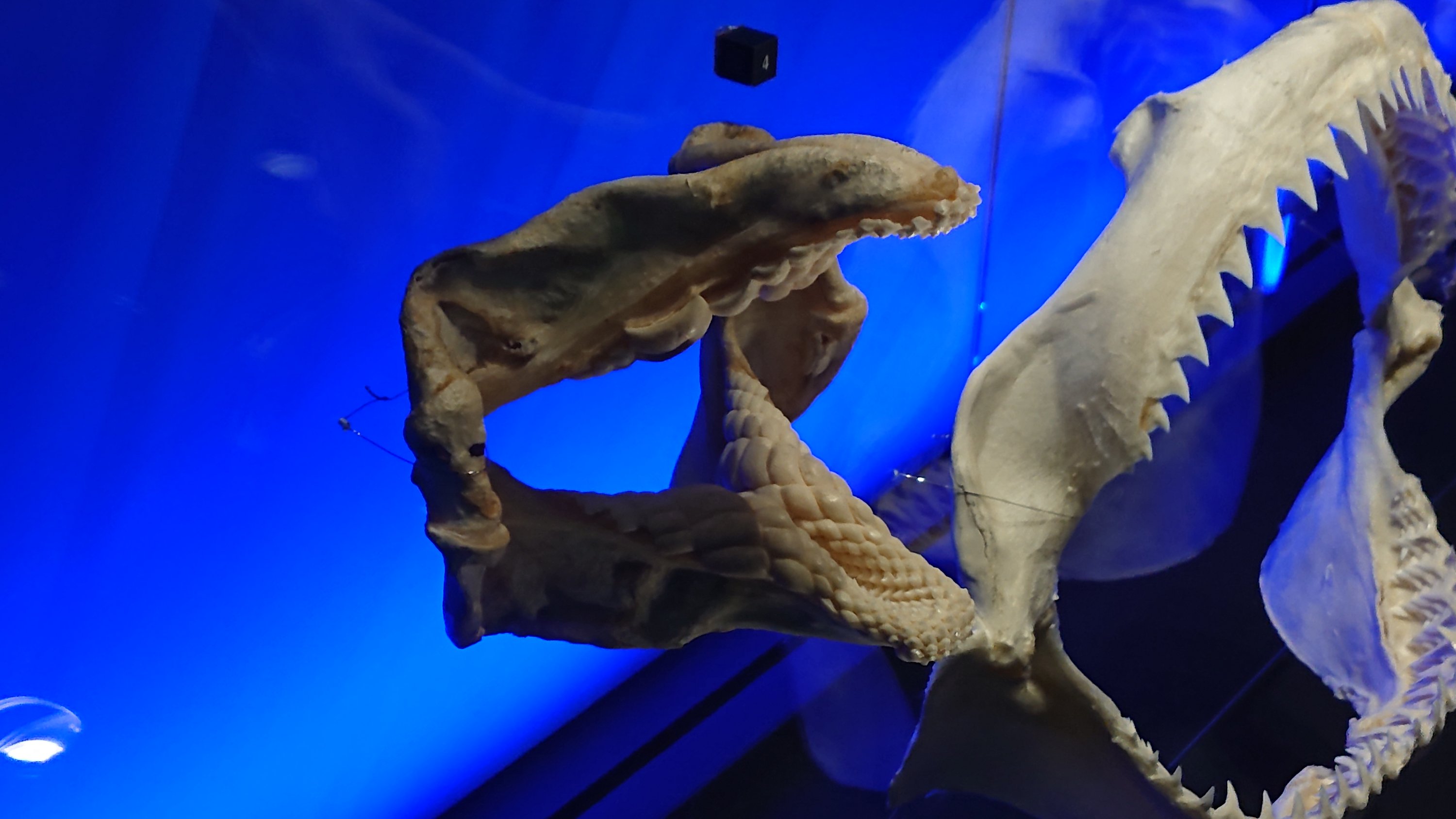
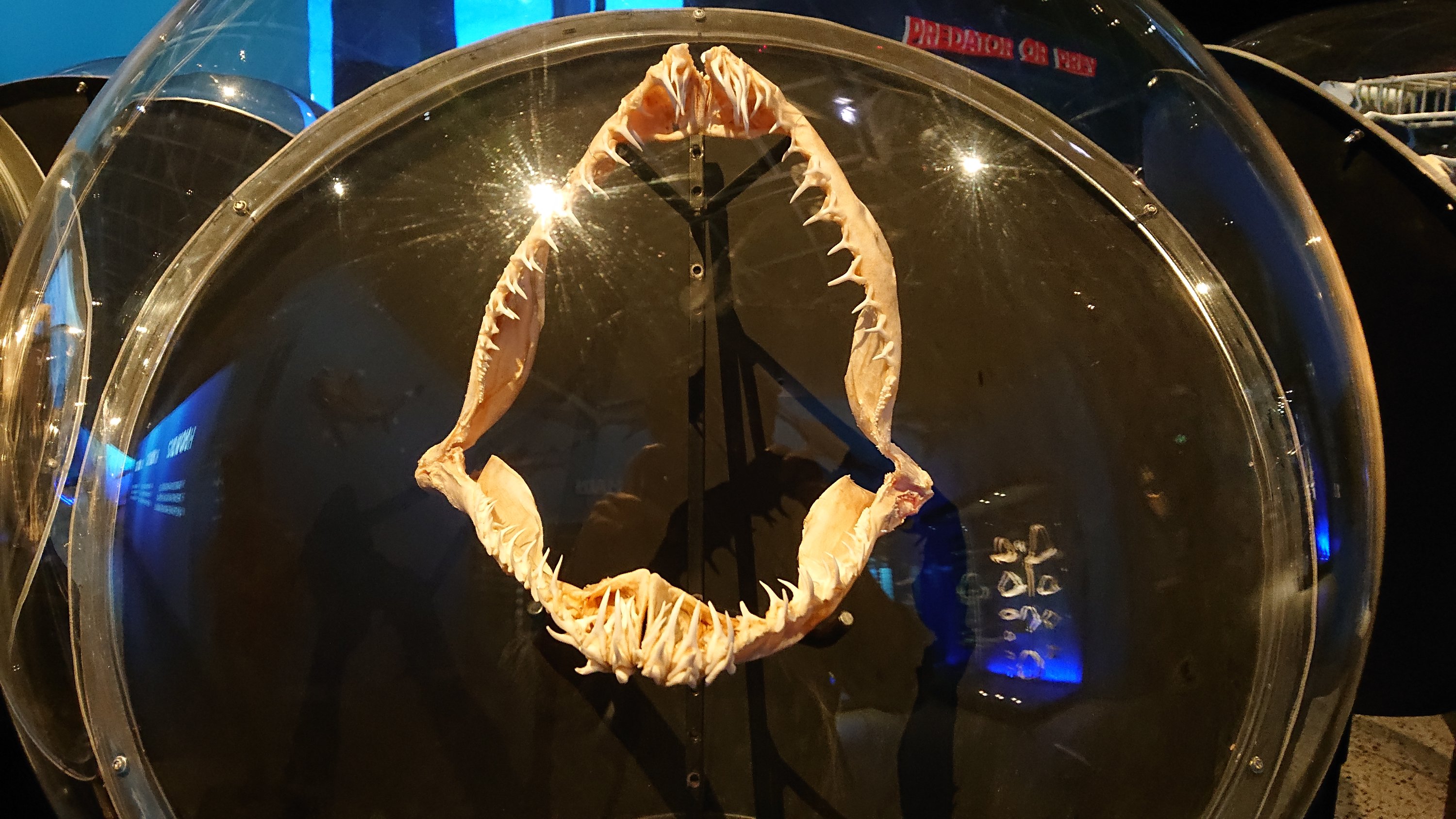
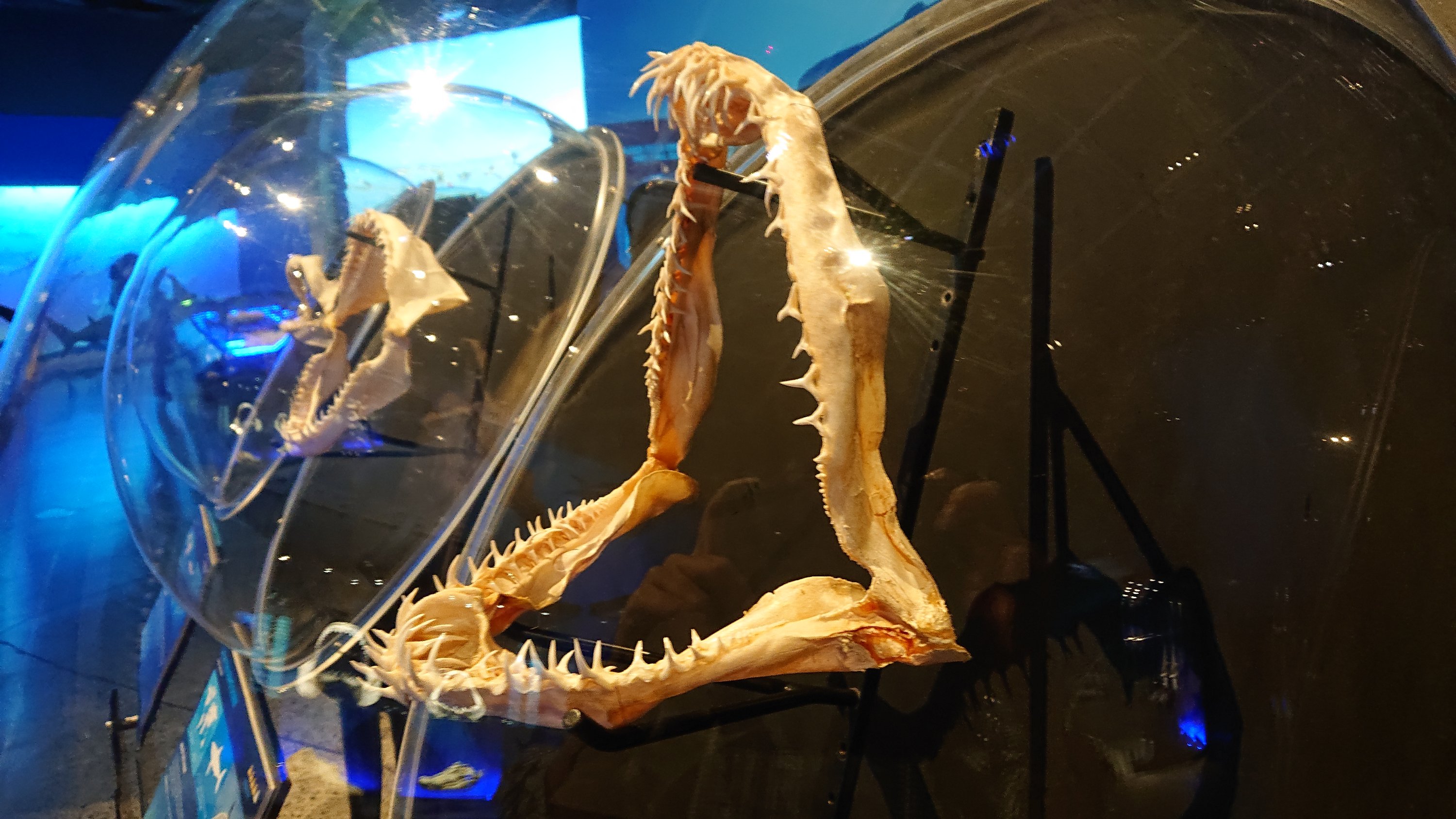
Jaws and teeth of variety of sharks. They are quite different for their own food and use.
Jaw of spotted ratfish (Hydrolagus colliei) is use for cracking shells of prey like shellfish or crab. Ratfishes are known as the living fossils.
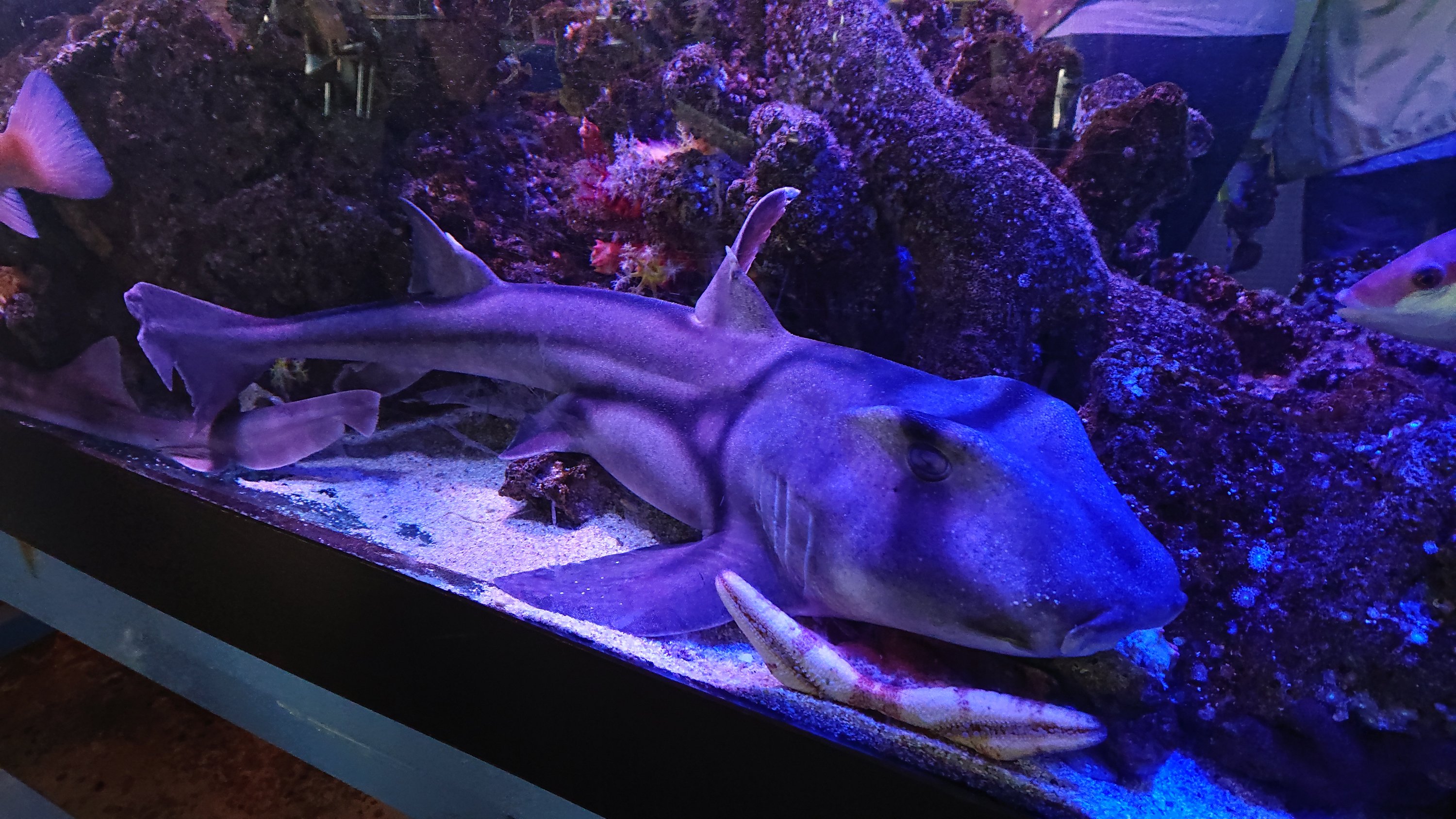
Jaw of Port Jackson shark (Heterodontus portujacksoni) is also useful for crushing shells. Japanese bullhead shark, relative to him is sometimes called “sea snail crusher” in Japan.
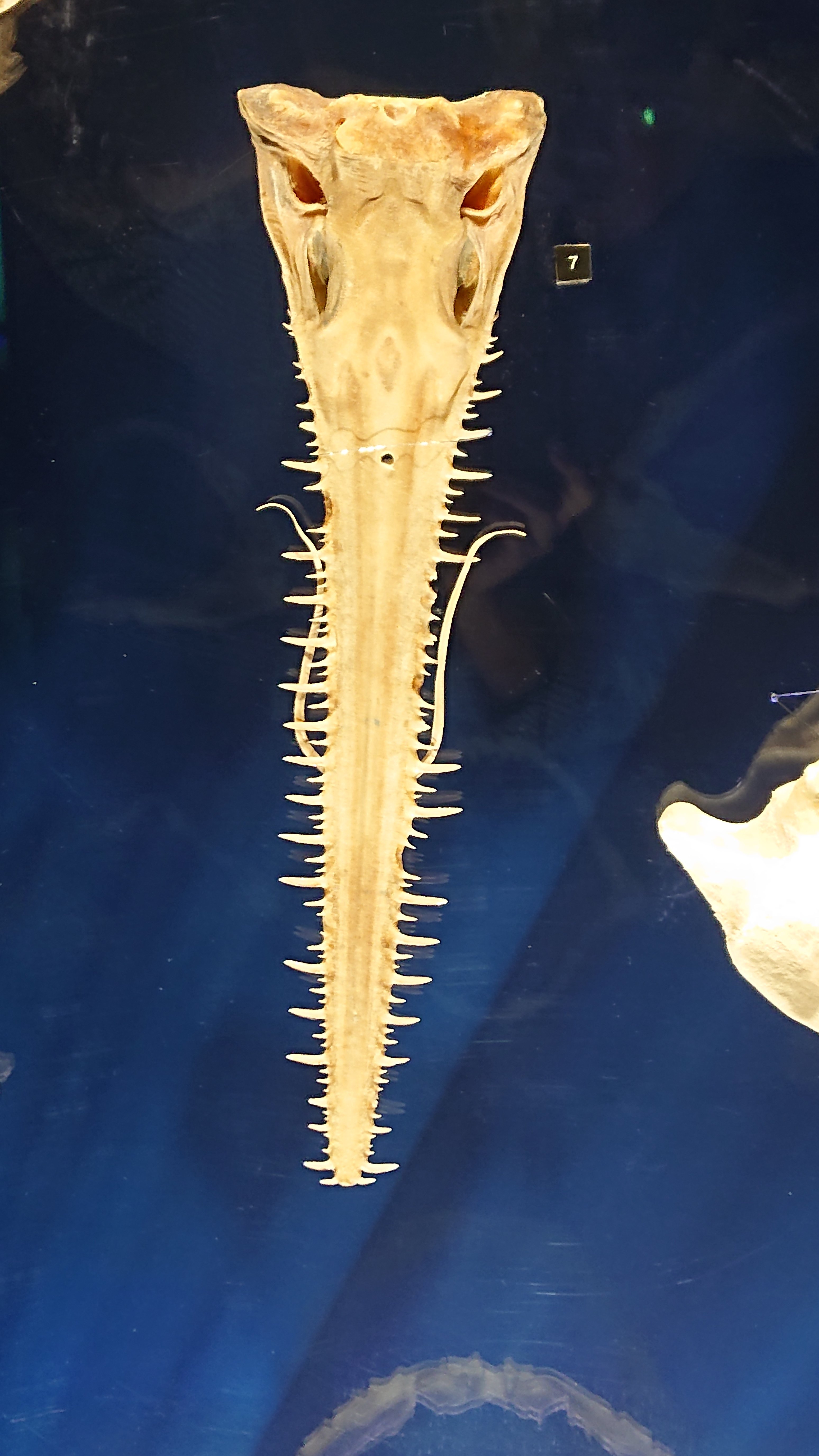
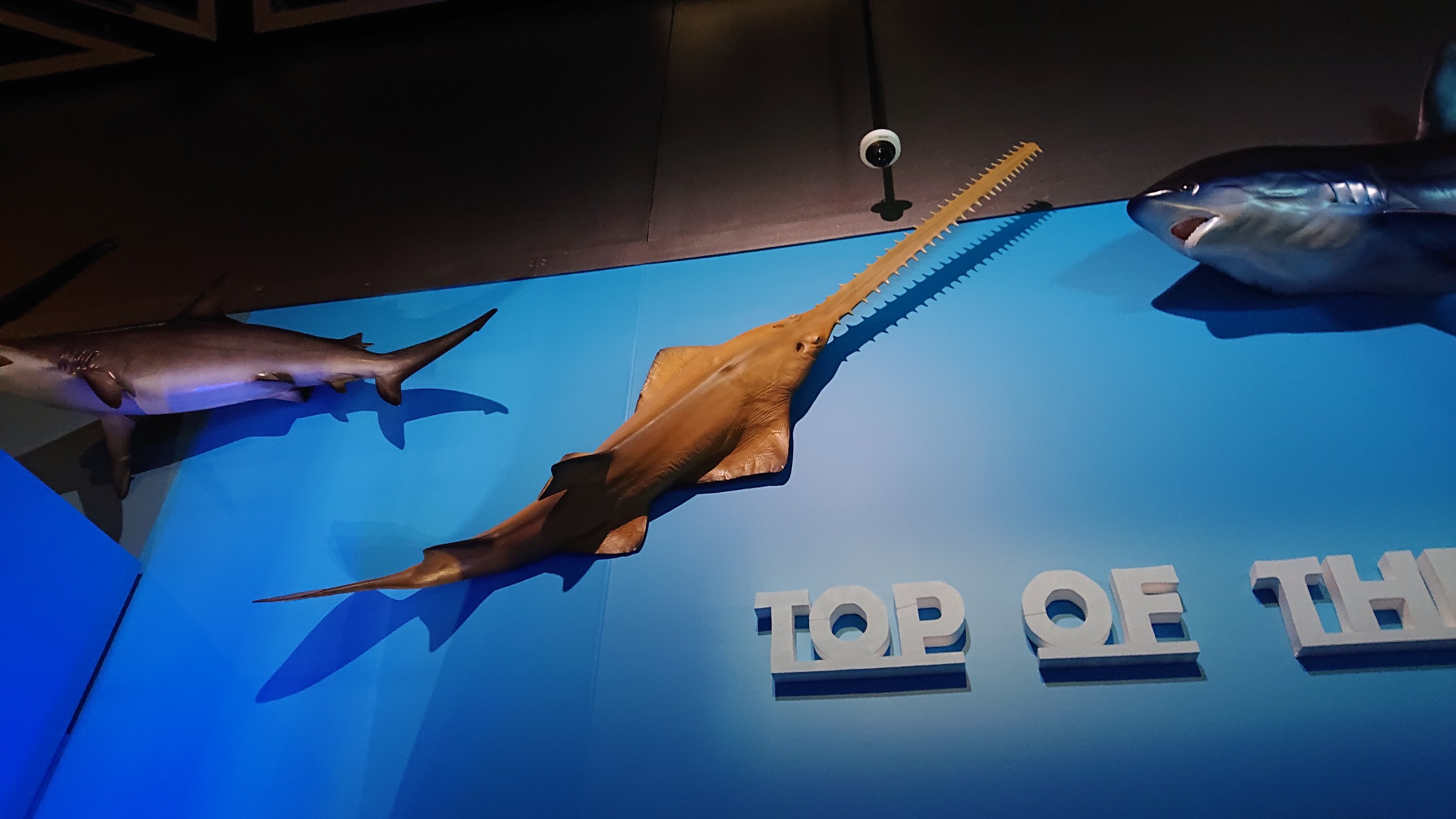
Sawsharks and sawfishes have quite similar not only figures but also behaviors. Both of them uncover sand on the seabed with their ” saws” to search their food. The most different point is position of their gills. Sawsharks’ gills are side of their body. On the other hand, sawfishes’ gills are underside of their body.
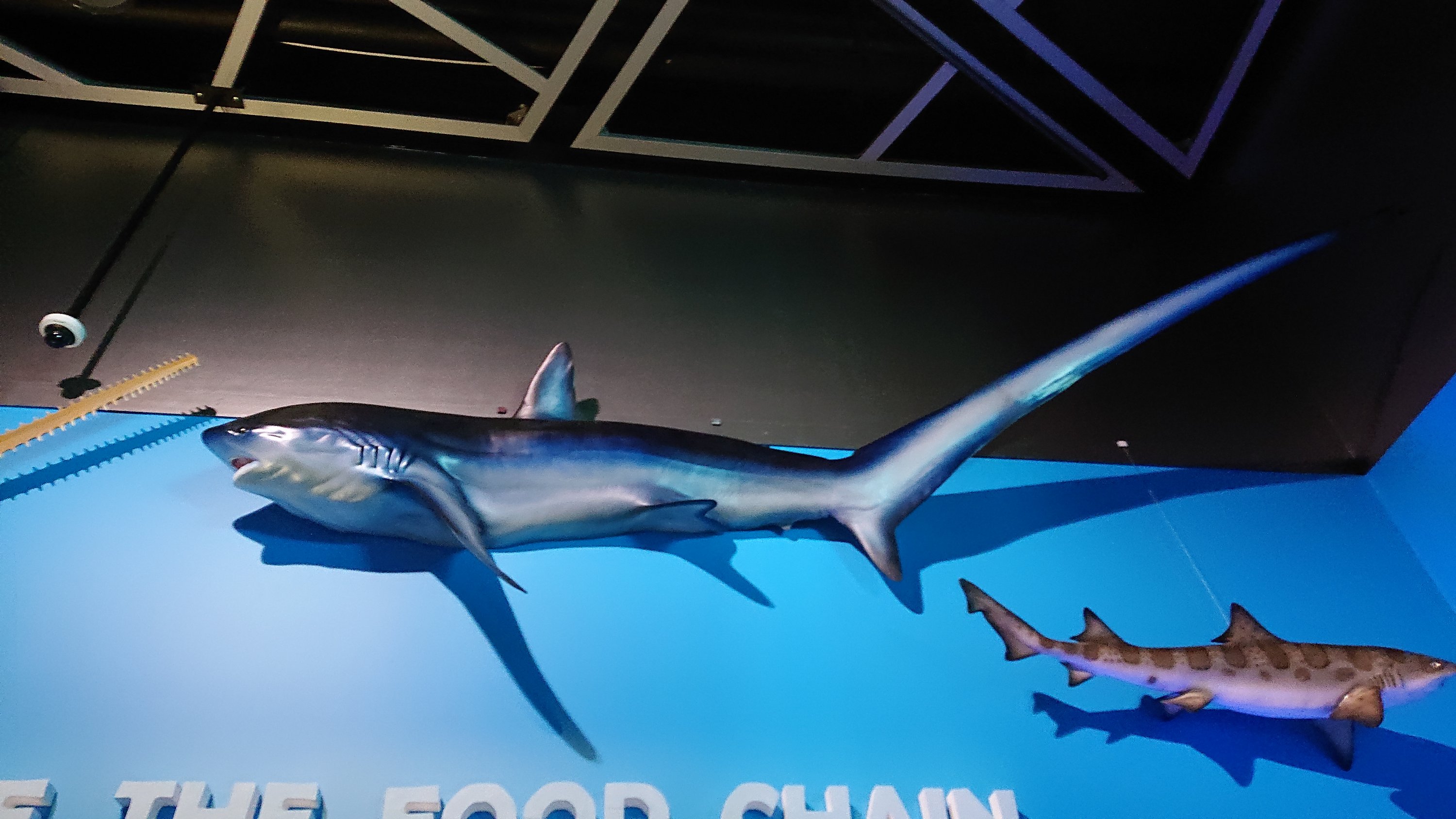
Common thresher shark (Alopias vulpinus) has very long tail fin. it accounts for about half of his length. This tail is the dreadful weapon for small fish.
Jaw and teeth of goblin shark (Mitsukurina owstoni) are eerie. In addition, this jaw rushes out when he bites.
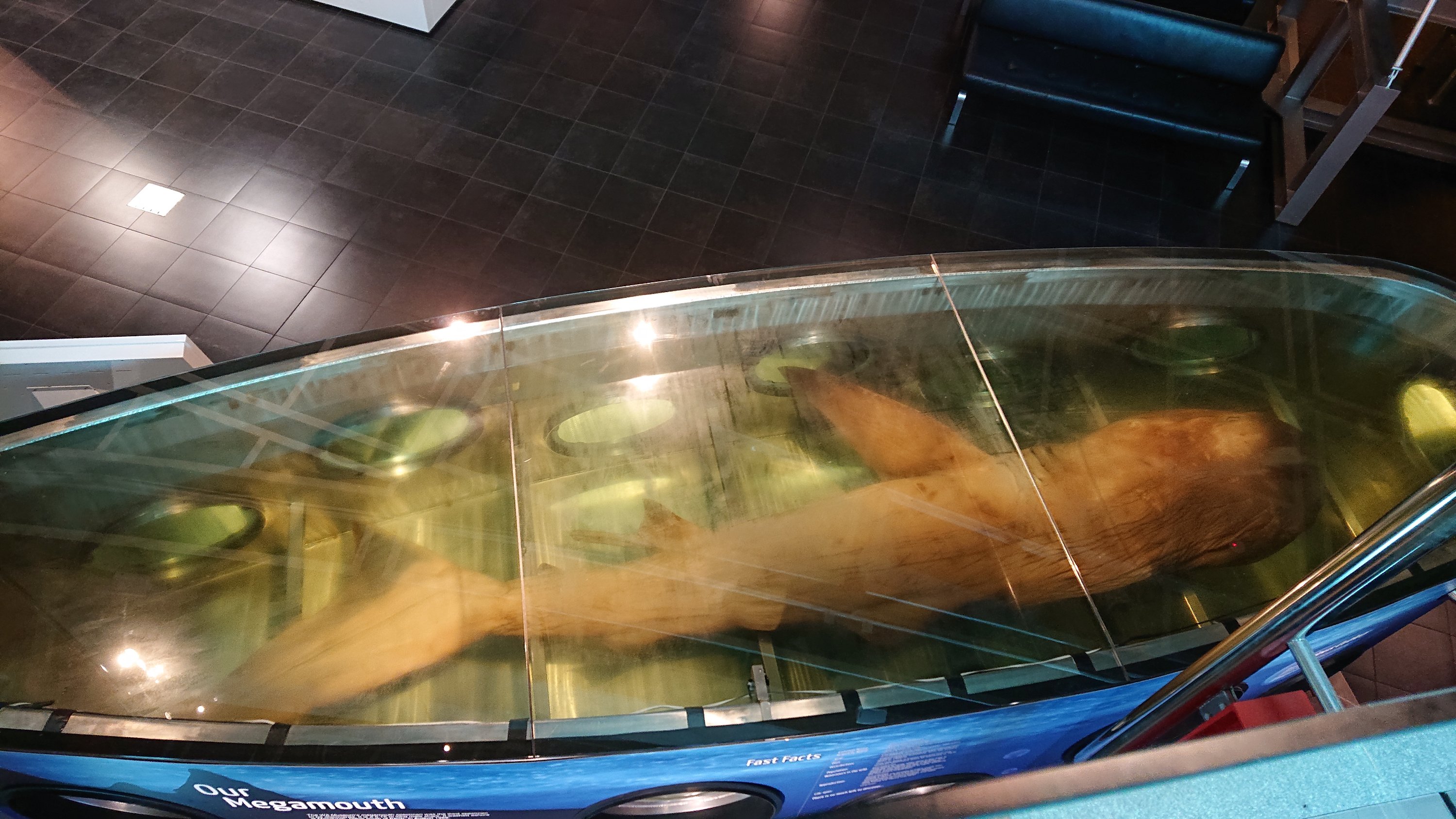
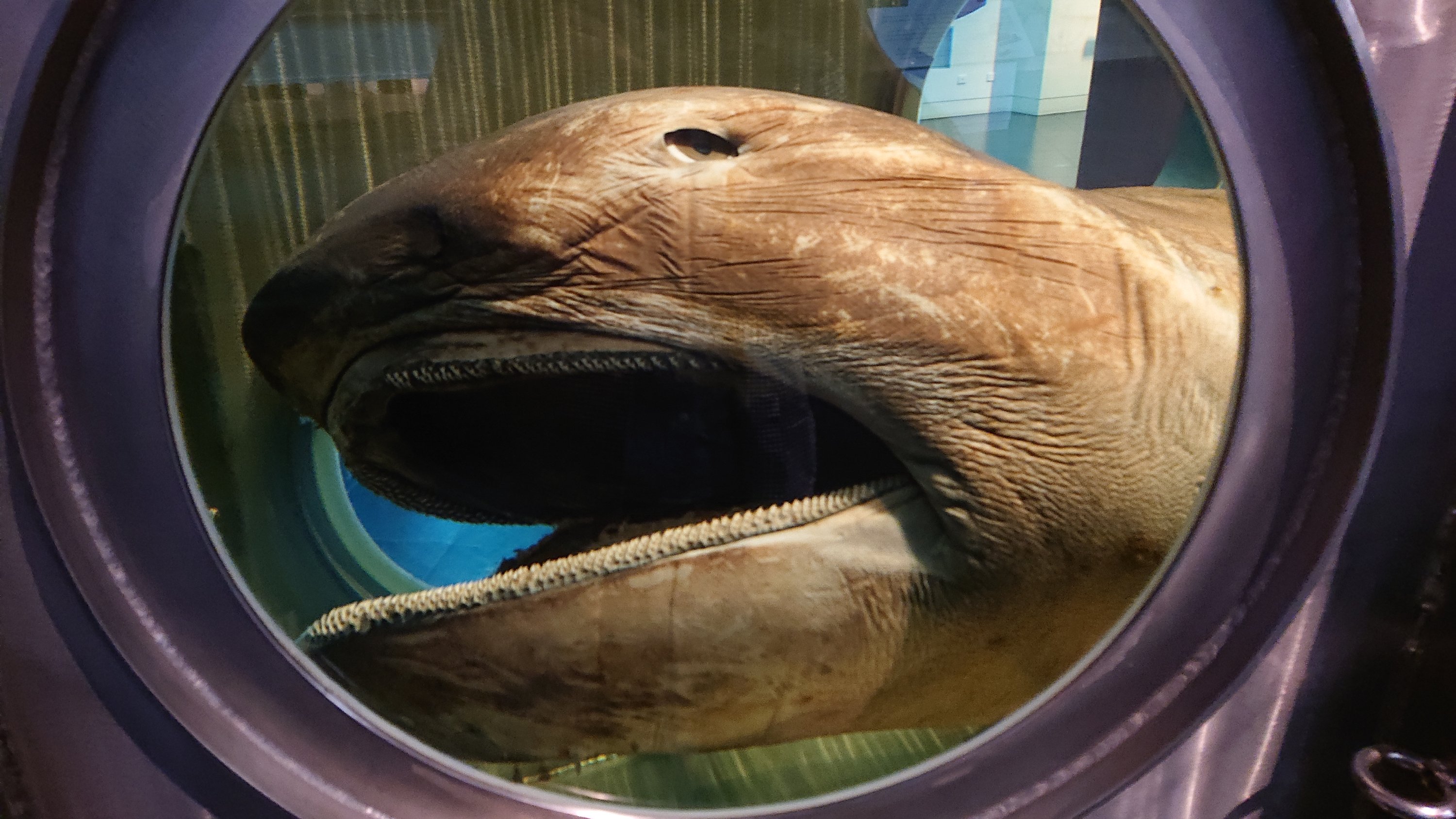
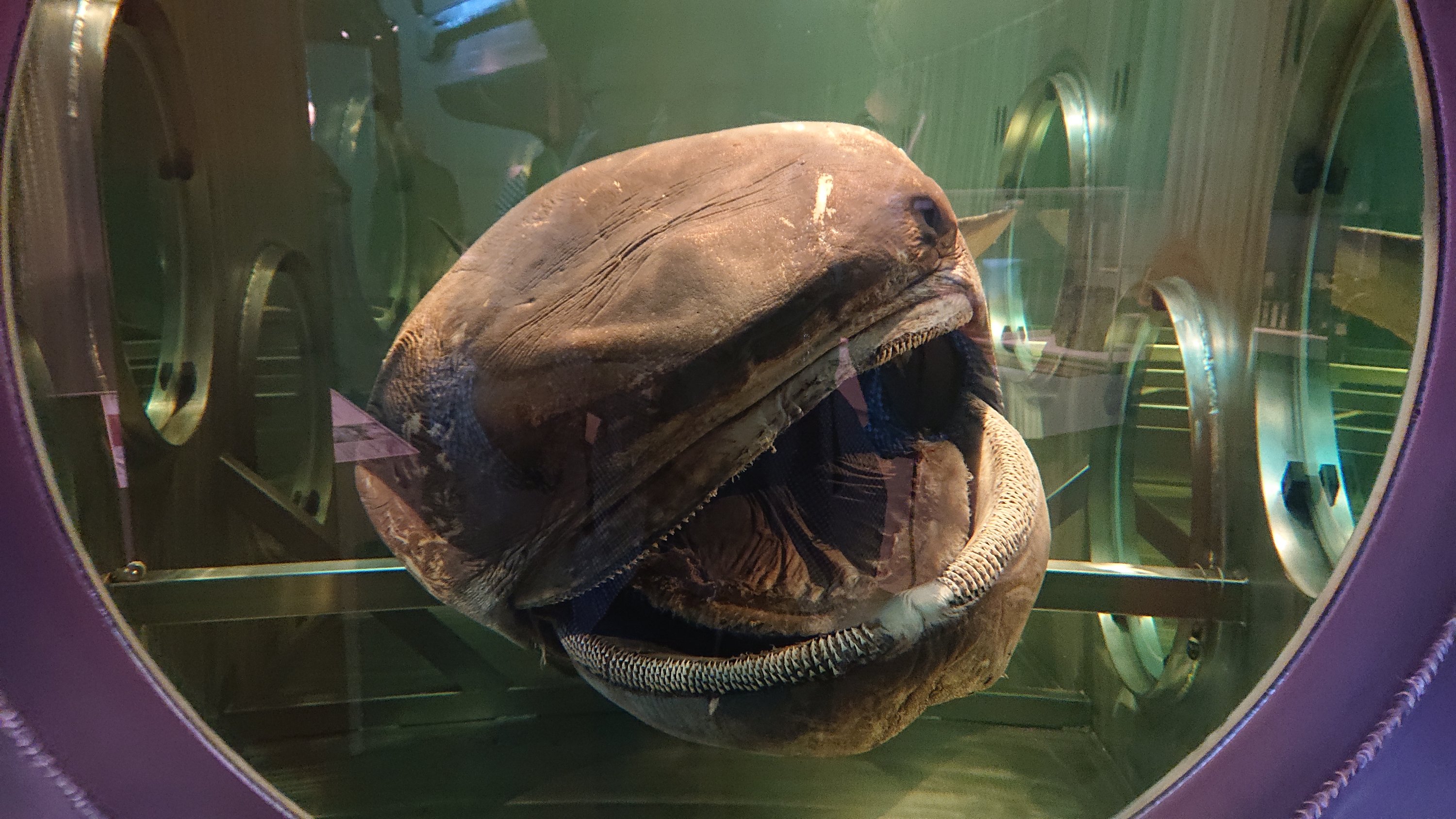
Megamouth shark (Megachasma pelagios) is in permanent exhibition. He has big mouth as his name, but his body is also huge.
The space of the exhibition was not so big, but There were so many specimens there. This exhibition showed almost all of sharks.

 Japanese Dino-mania