I’m very sorry to be so late. It’s the final report about FPDM. Today, I’ll write about extra space. To surprise, there are so many perfect fossils in the space.
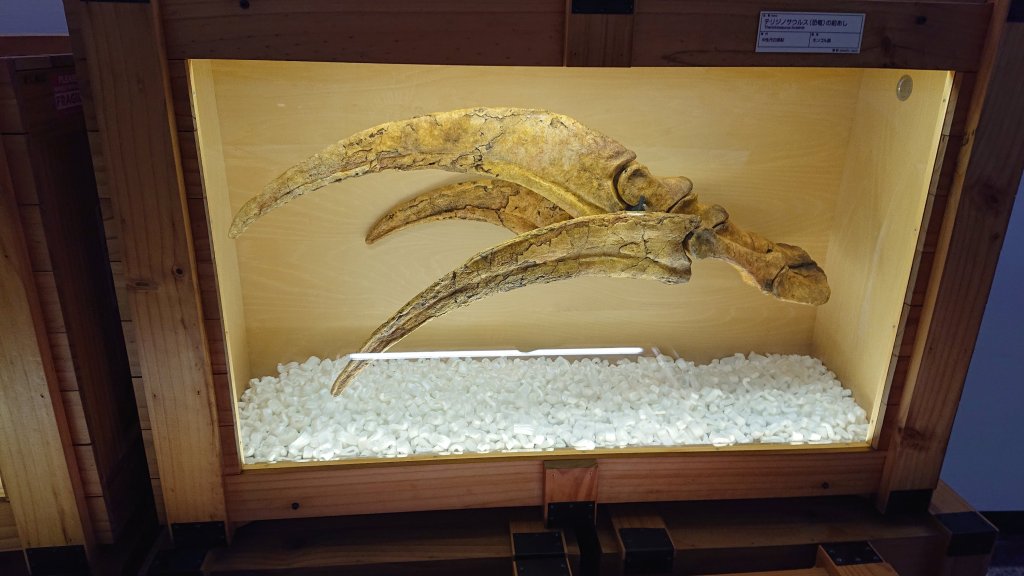
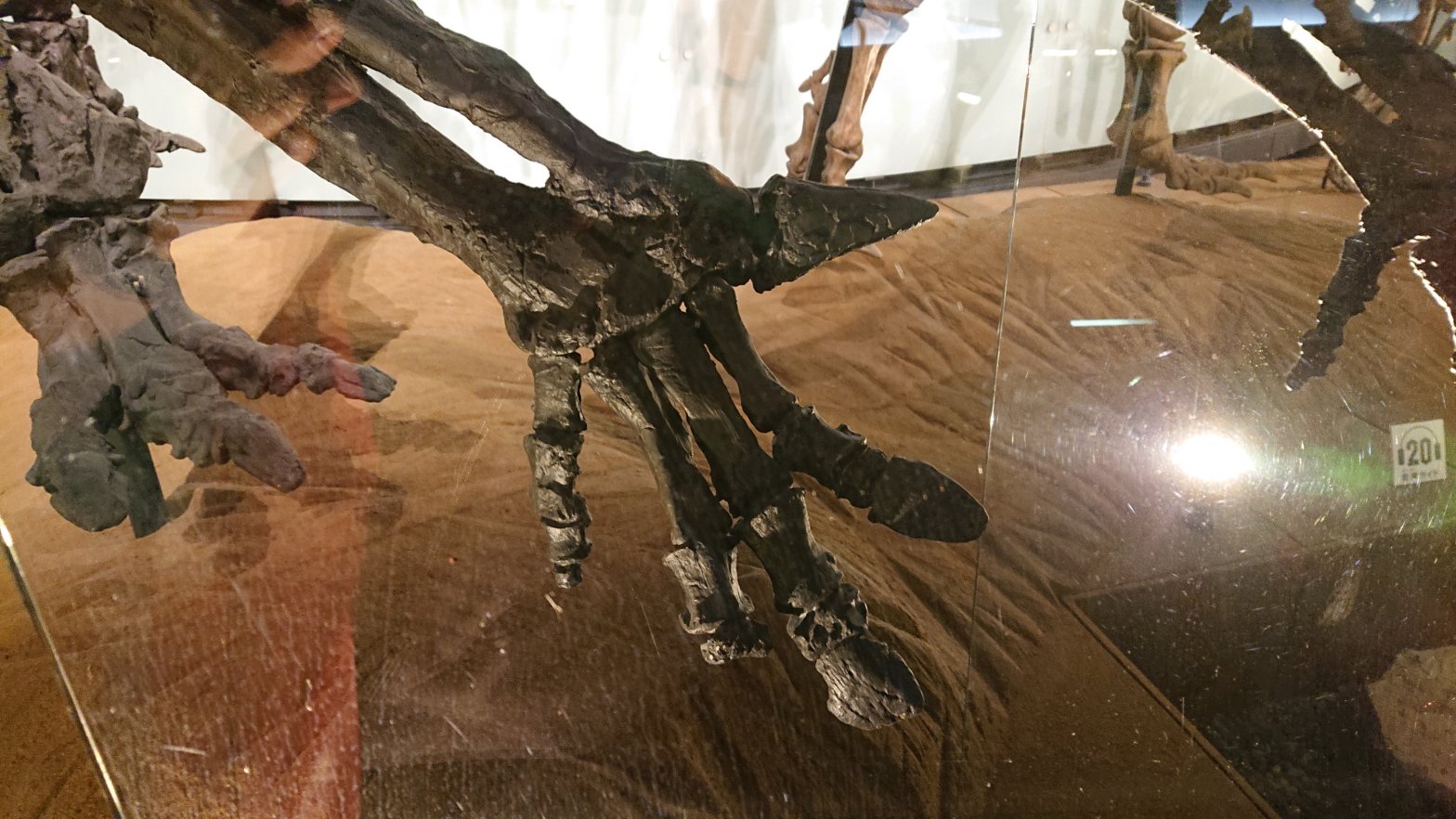
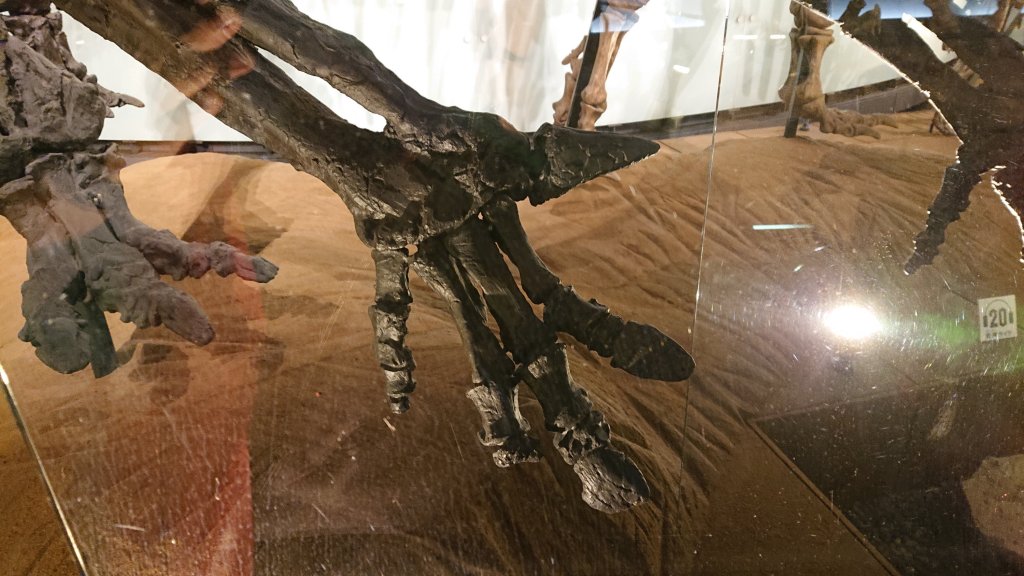
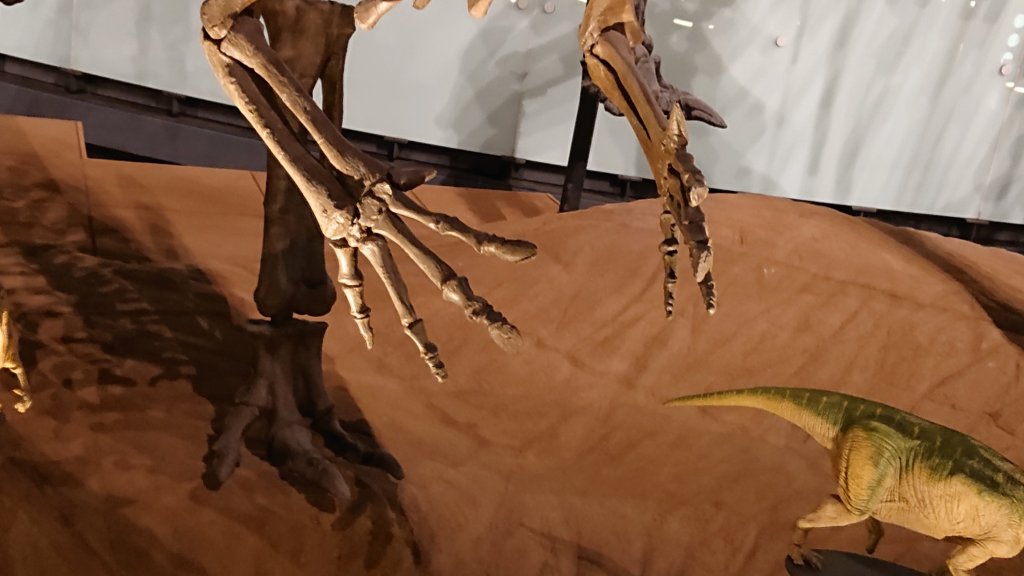
The hand of Therizinosaurus cheloniformis.
Therizinosaurus cheloniformis has so huge claws, but it’s thought to be herbivore.
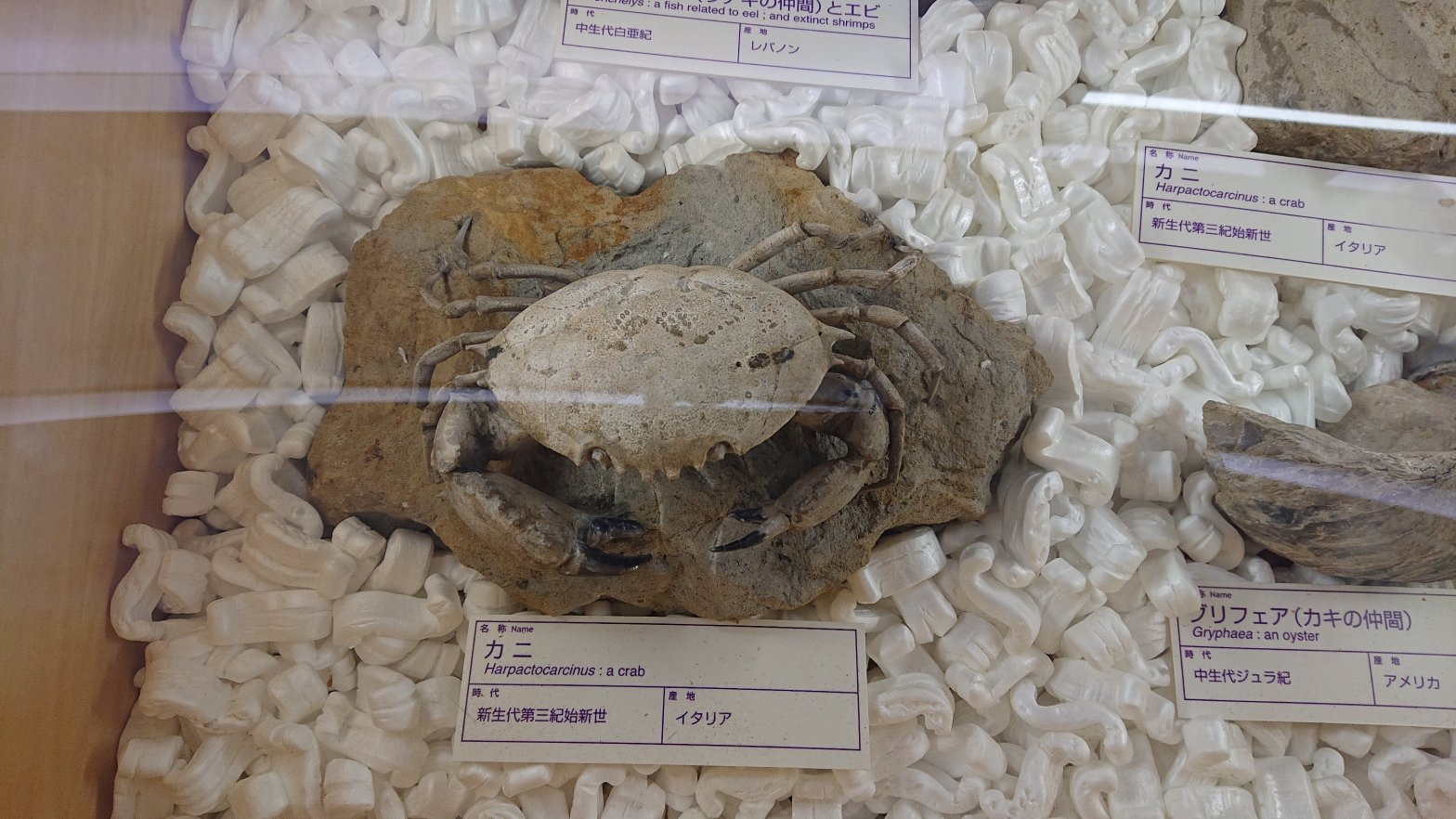
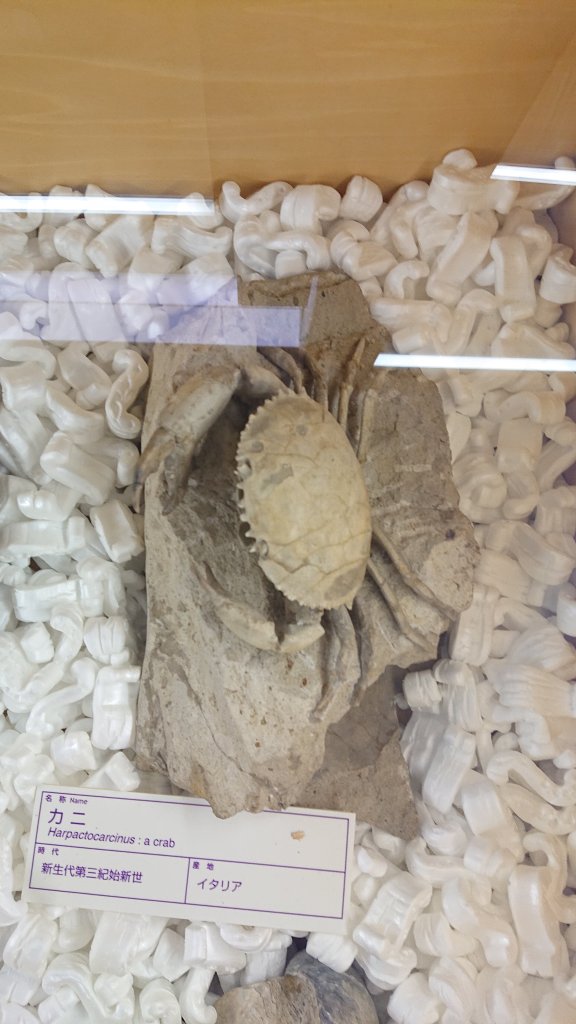
Harpactocarcinus from Eocene Italy.
How perfect these fossils are! They look as they still live.
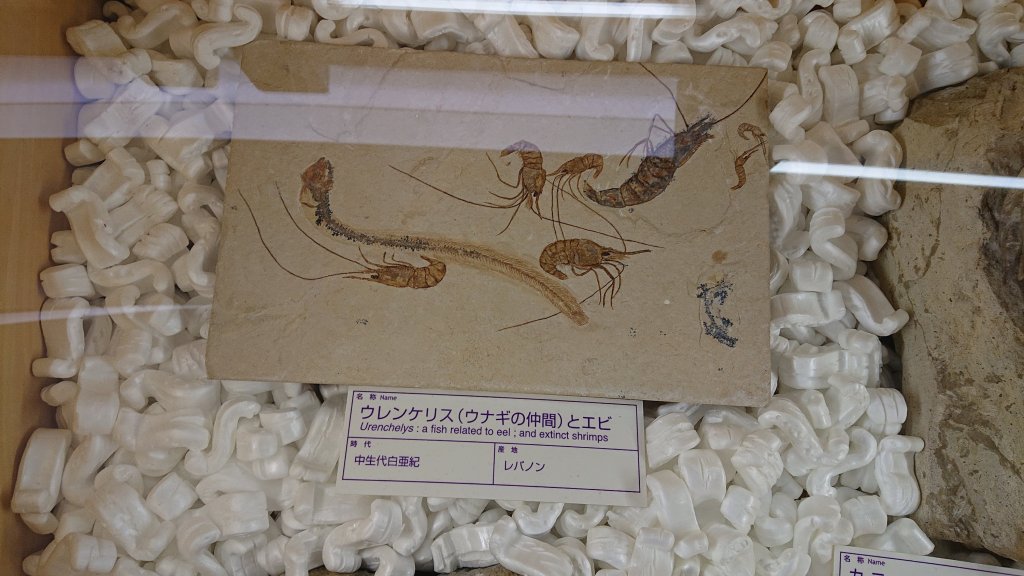
Urenchelys and shrimps from Cretaceous Lebanon.
Urenchelys is the Cretaceous eel. Eels have had long body since Cretaceous. There are so many such complete fossils from Cretaceous Lebanon.
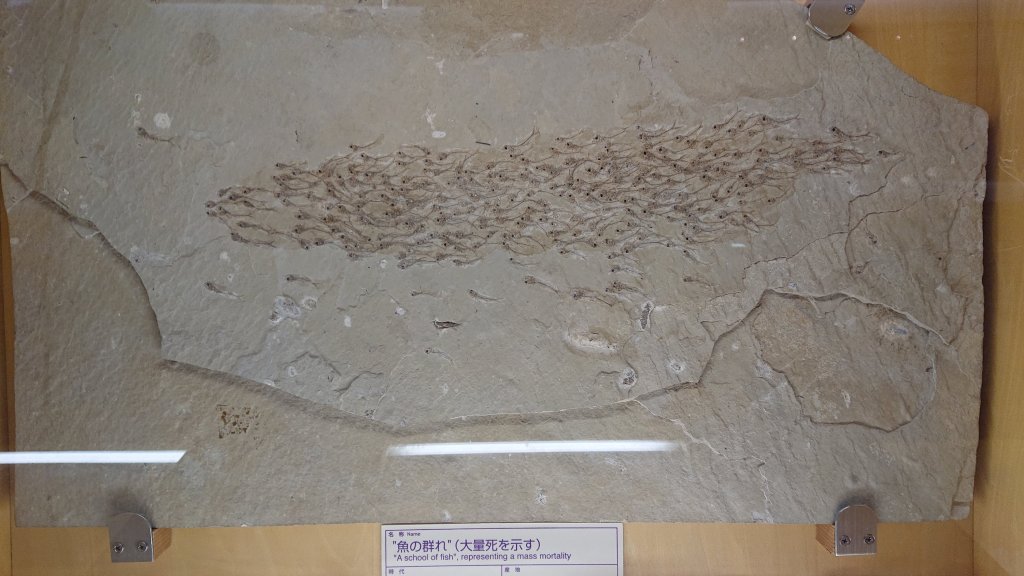
“A school of fish” from Eocene America.
This fossil shows so many fish died. What happened?
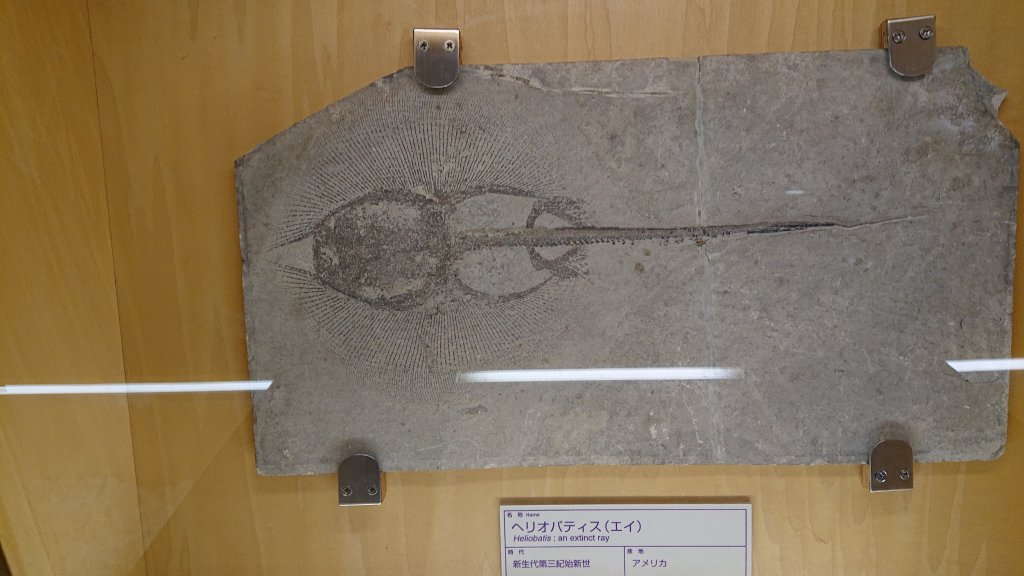
Heliobatis from Eocene France.
Heliobatis is the Eocene ray. Although it’s a cartilaginous fish, It’s body remains perfectly.
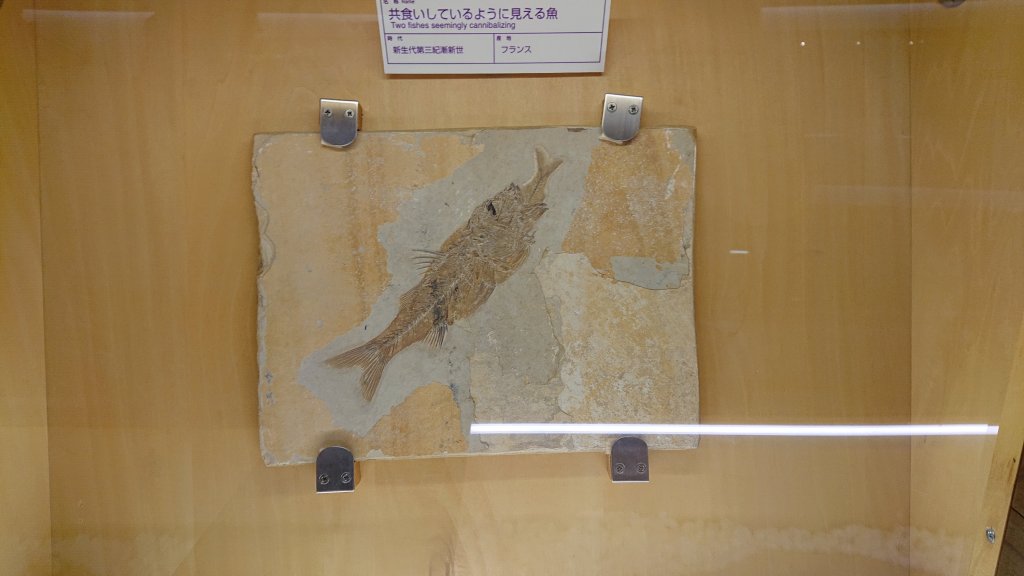
The fishes that seem to cannibalize.
These fishes looks to cannibalize. To surprise, There are many such fossils in the world.
Fukui Prefectural Dinosaur Museum is the largest dinosaur museum in Japan. There are so many fossils seen only in there. If prevailing of Coronavirus finished, you should visit.
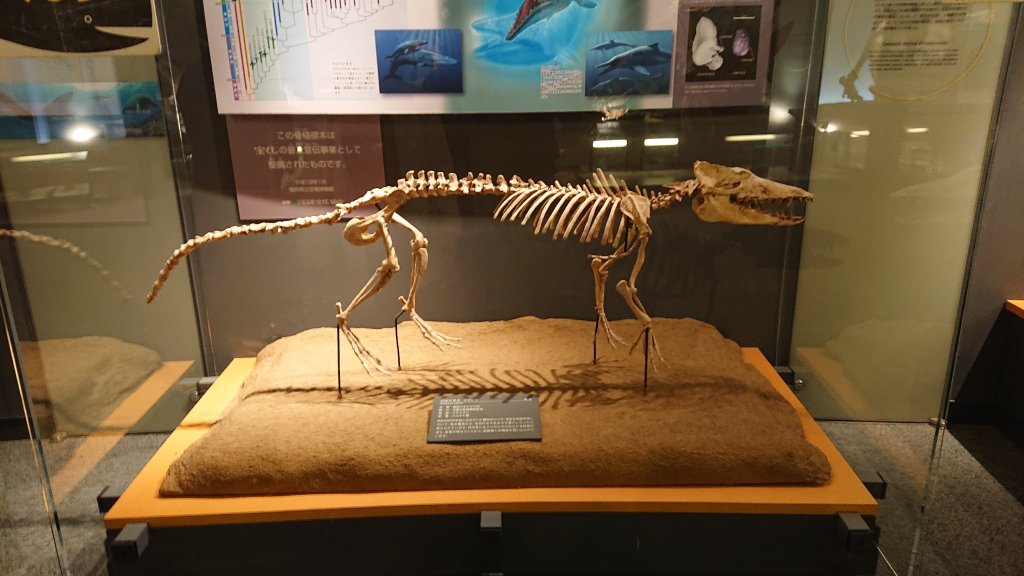
Pakicetus attocki is the early whale that walked. It isn’t similar to modern whales, but there are same points in ears.
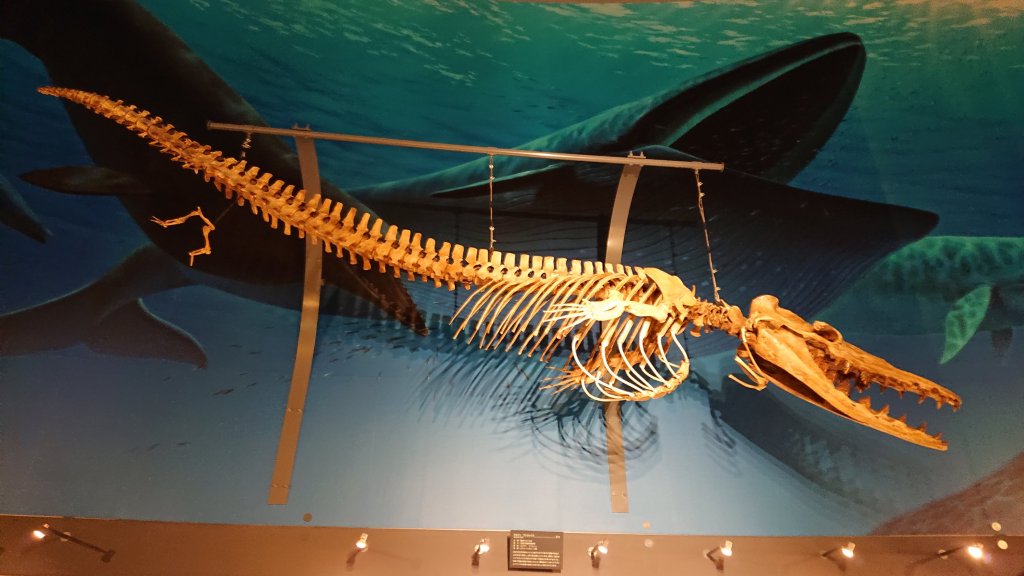
Reconstructed skeleton of Dorudon atrox.
Dorudon atrox is the early swimming whale. It is similar to modern whales, but it has small hind legs and structures of fore legs remain in its flippers well.
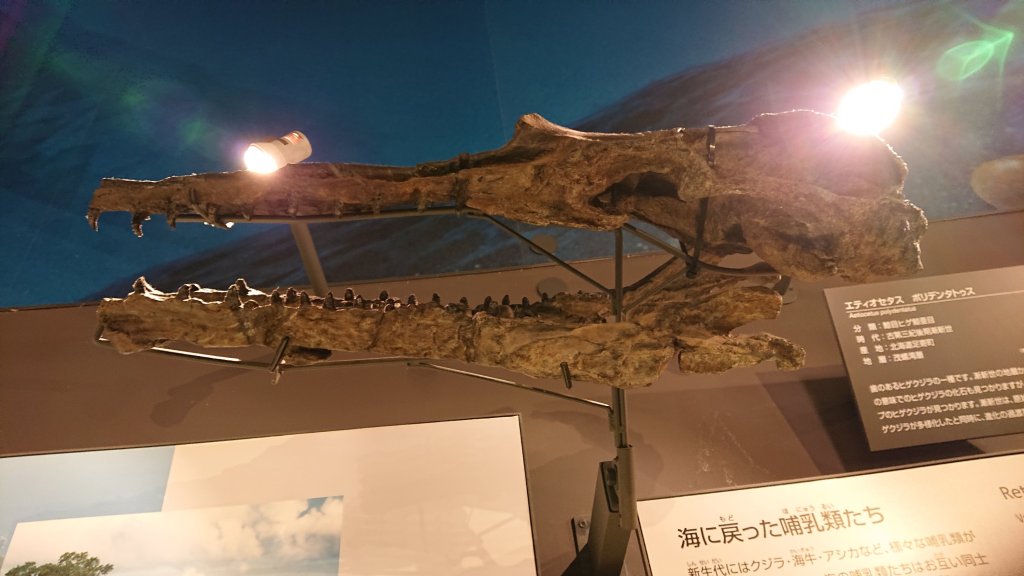
Skull of Aetiocetus polydentatus.
Aetiocetus polydentatus is the early baleen whale, but it has teeth in place of baleen.
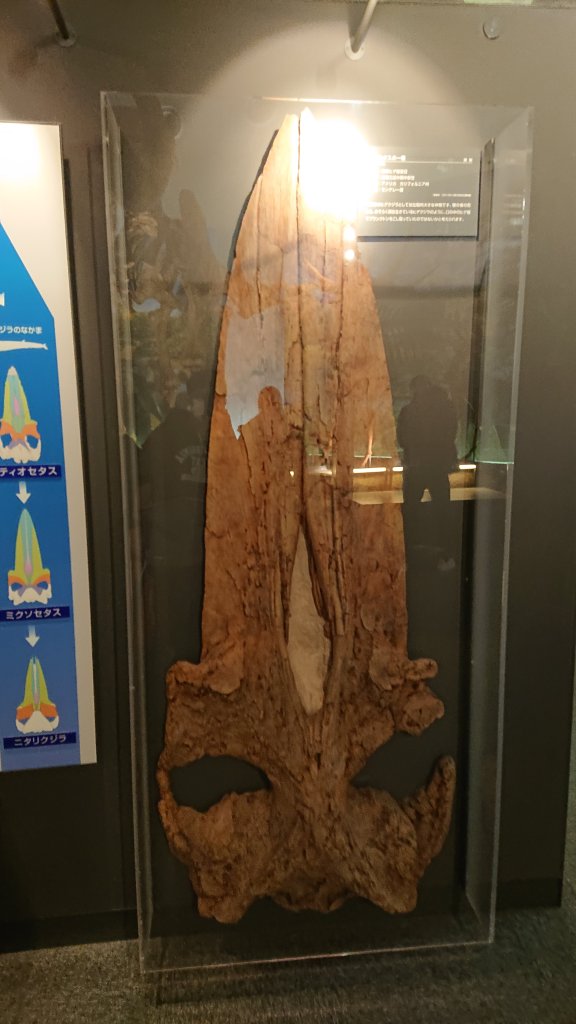
Skull of Mixocetus sp.
Mixocetus sp. is similar to modern baleen whales. This skull looks like a surfboard.
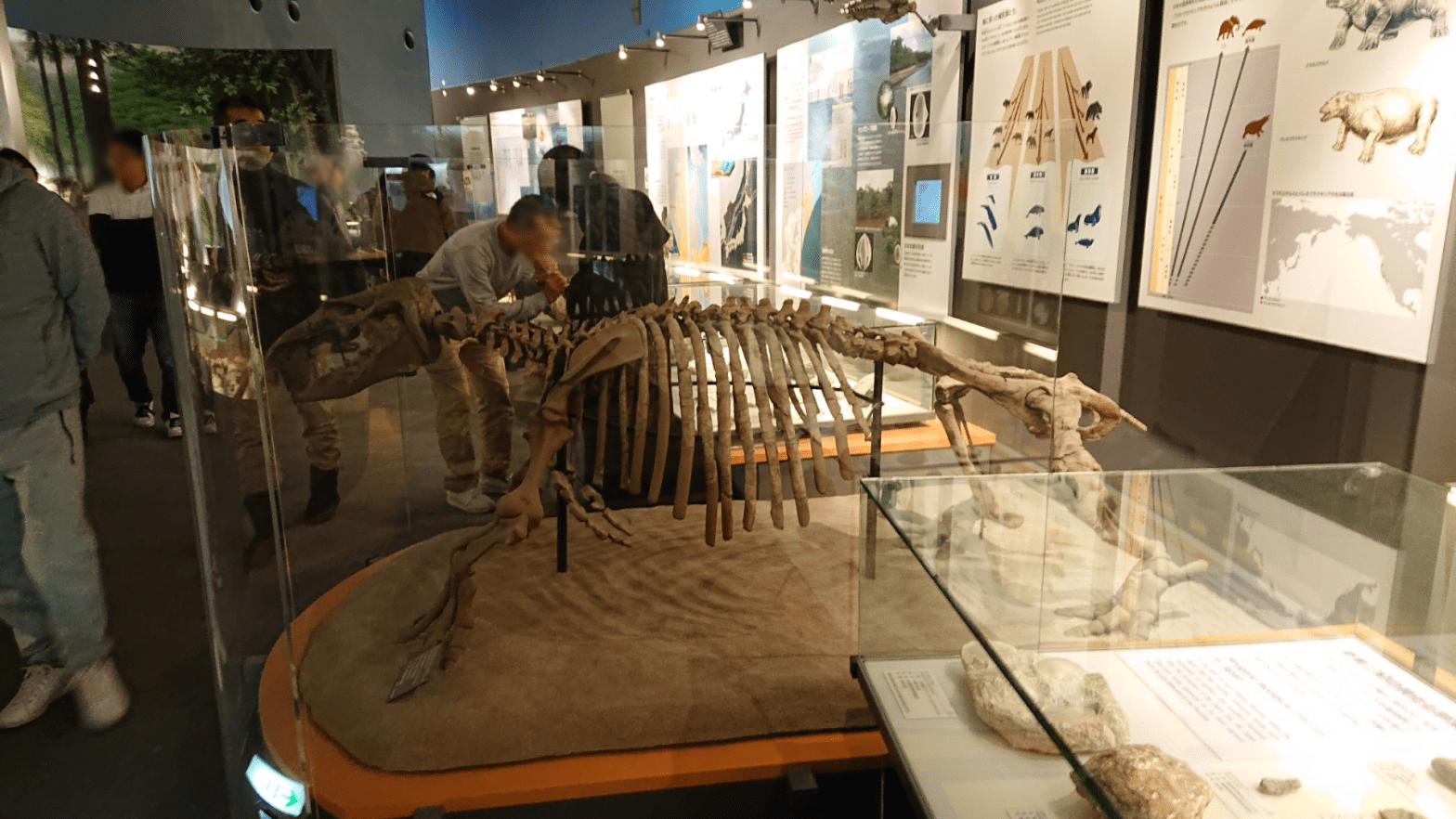
Reconstructed skeleton of Paleoparadoxia tabatai.
Paleoparadoxia tabatai is one of the unique prehistoric animal in Japan. It may be one of the most mysterious mammals ever lived.
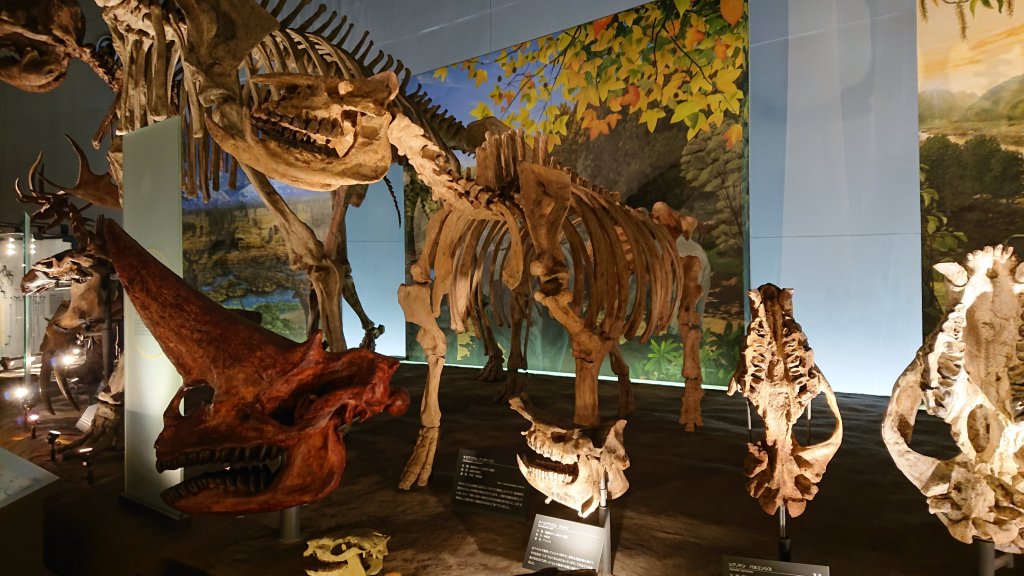
Reconstructed skeleton of Chilotherium anderssoni.
Chilotherium anderssoni has a pair of tusks in the front of lower jaw. I think they were used for digging roots (It’s only my thinking. You shouldn’t believe.).
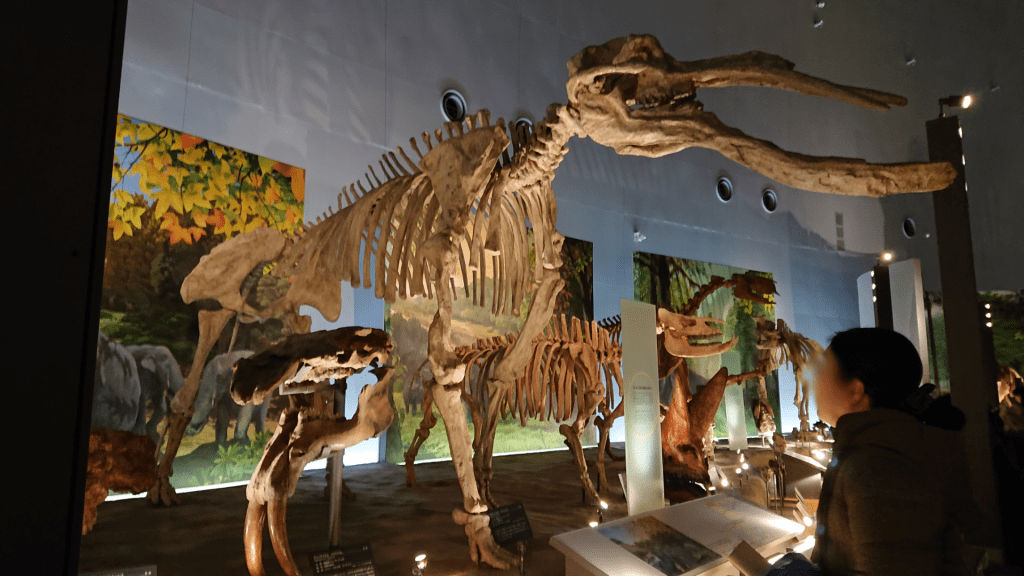
Reconstructed skeleton of Platybelodon grangeri.
Platybelodon grangeri has the long lower jaw like a shovel. I think It’s one of the most unique elephants ever lived.
Thank you for reading! Next is the final time. I’ll write about extra place in next time.
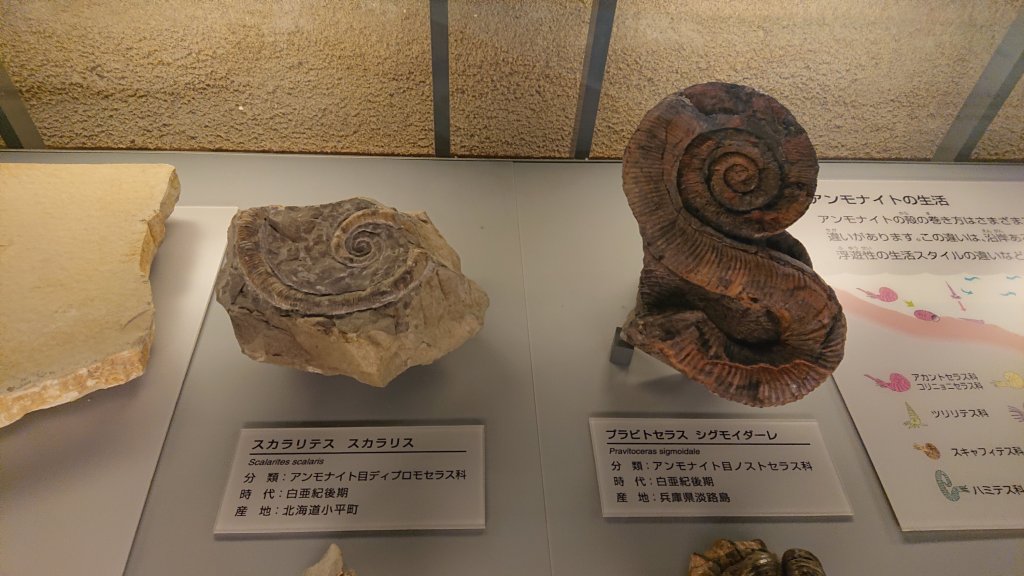
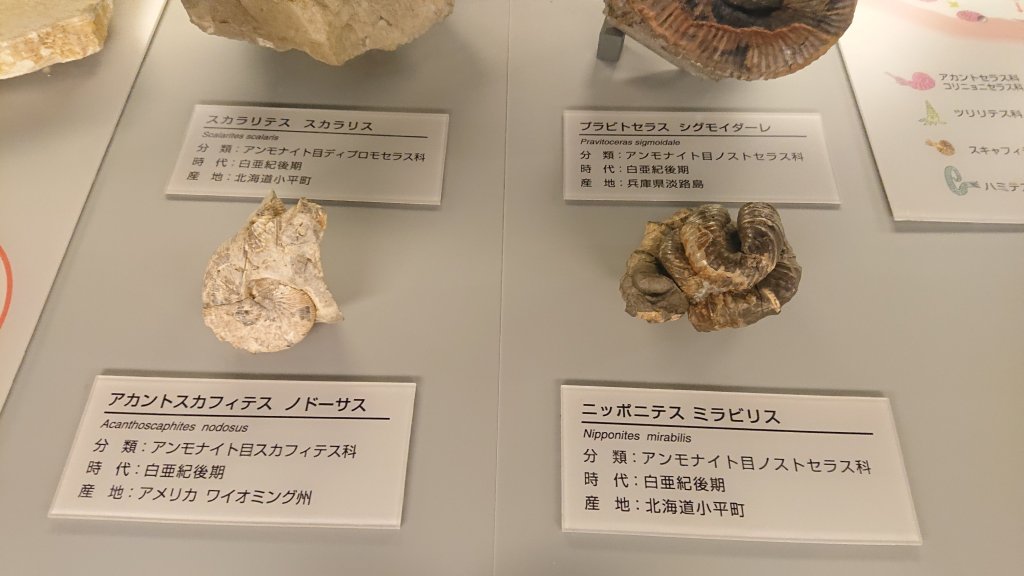
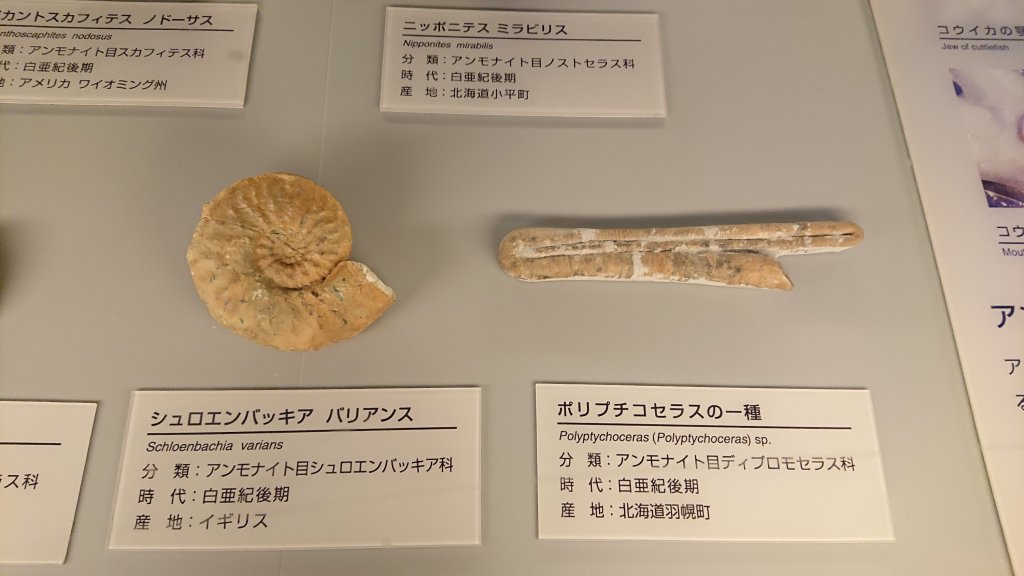
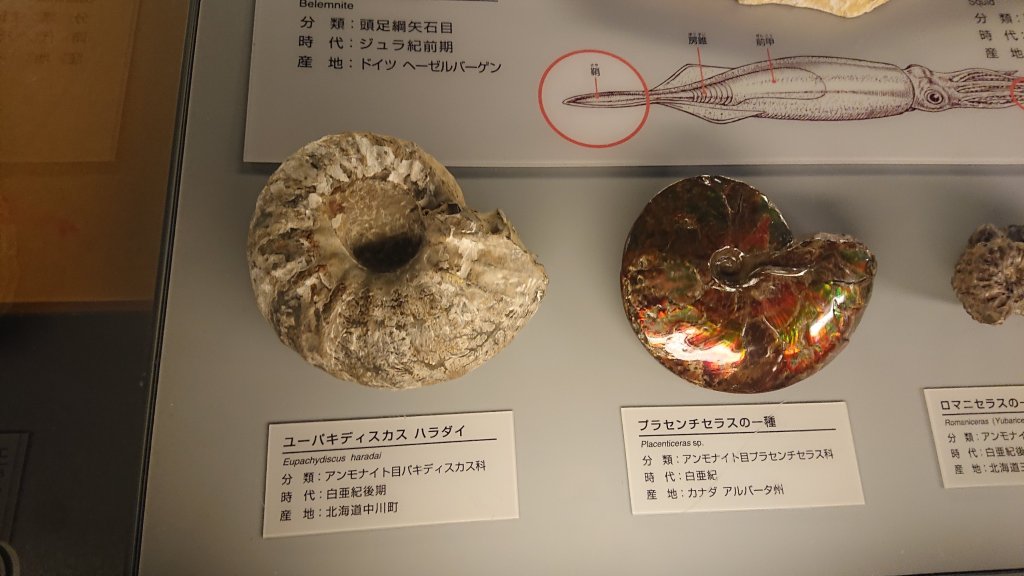
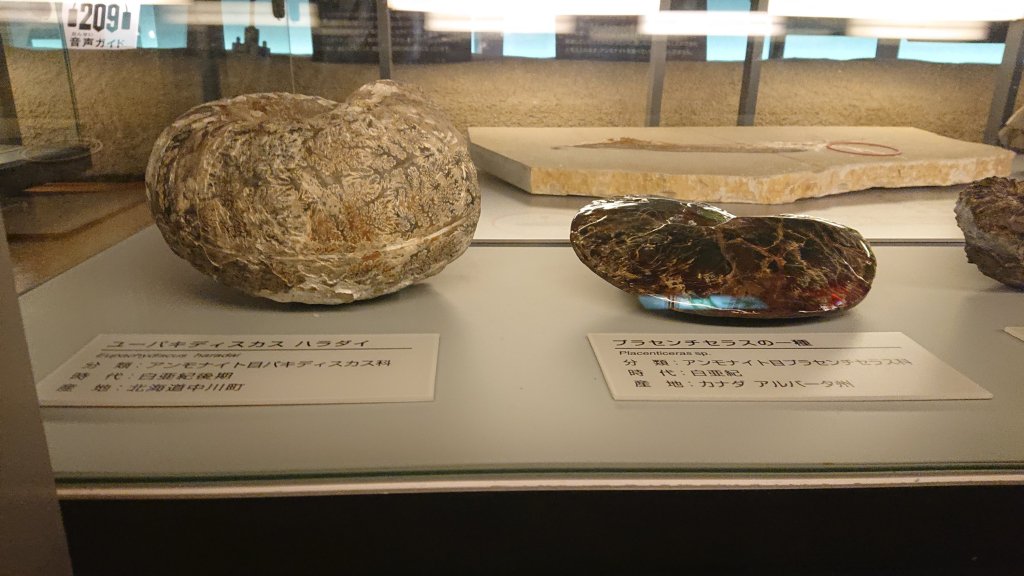
Shape and thickness of ammonites’ shells are different and some of them are quite unique. these difference were made by difference of their own environment or depth of water.
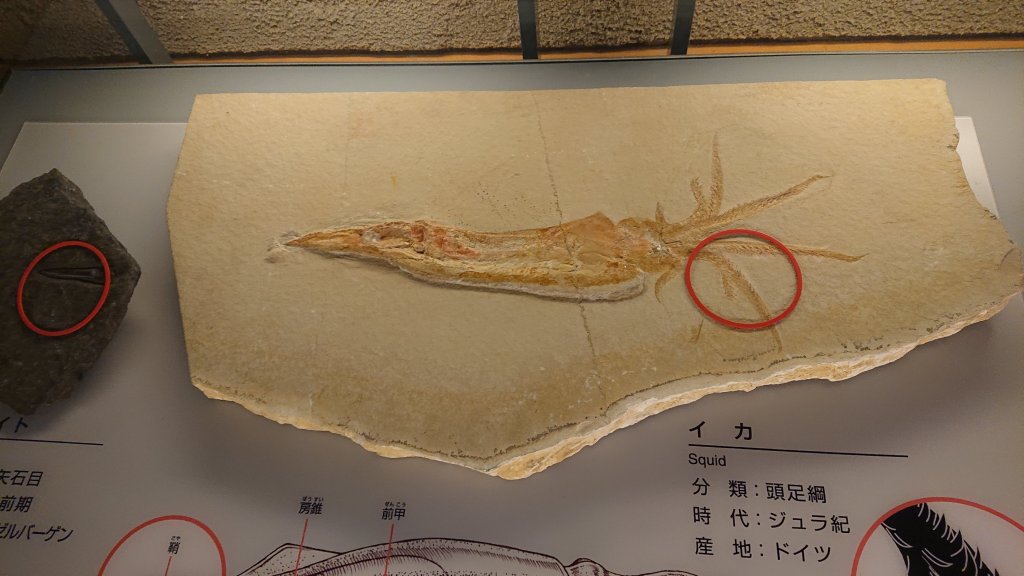
The squid from Jurassic Germany.
This squid is seen its soft body perfectly. it has hooks in place of suckers on its tentacles.
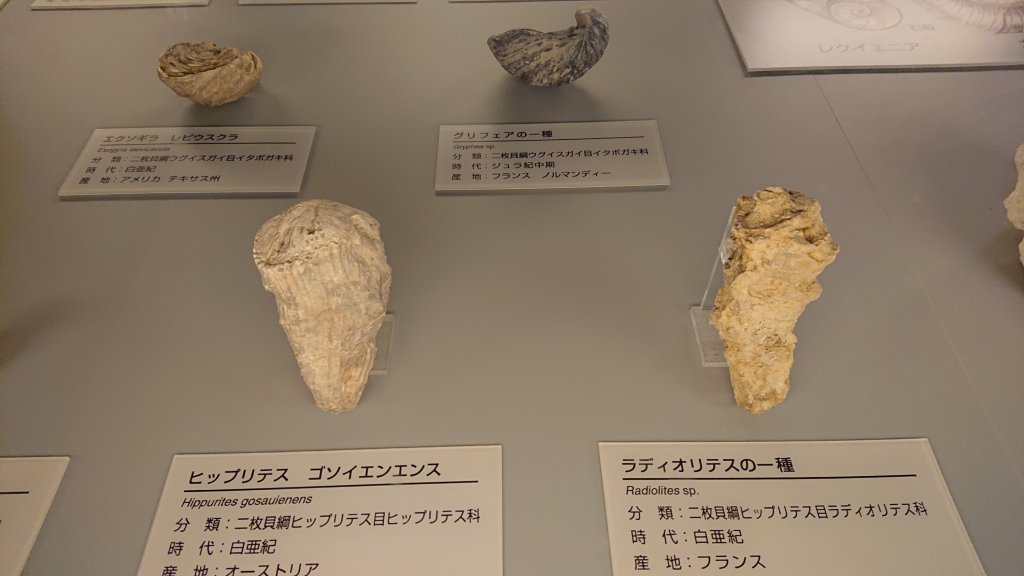
Hippuritesgosauienens and Radiolites sp. are look like cups, but their interiors are not big.
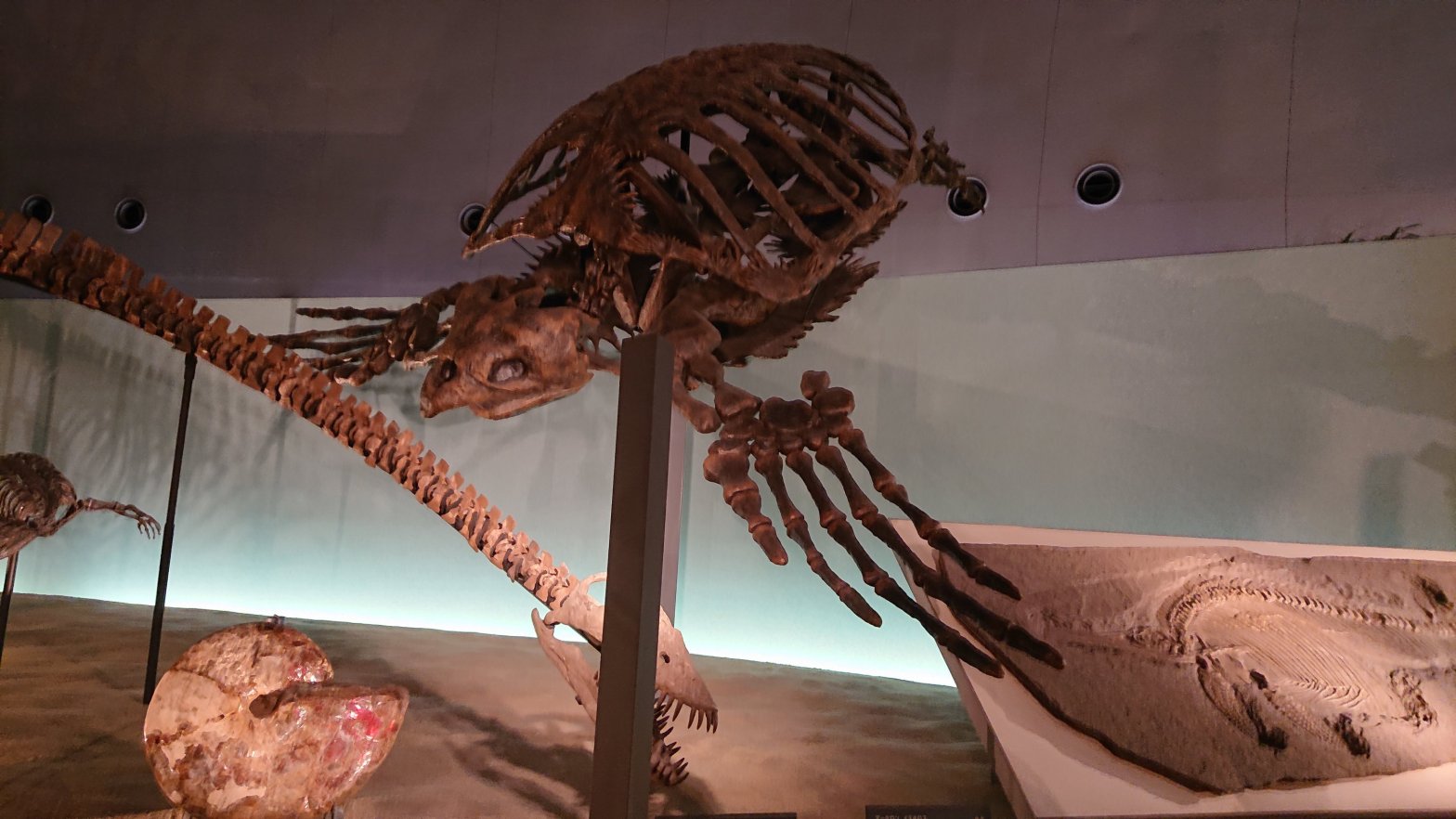
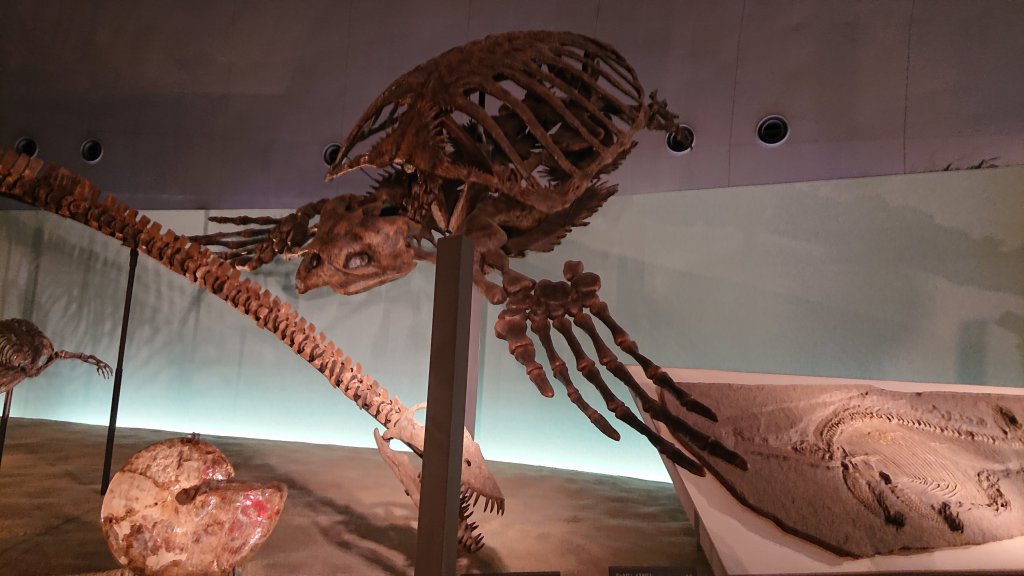
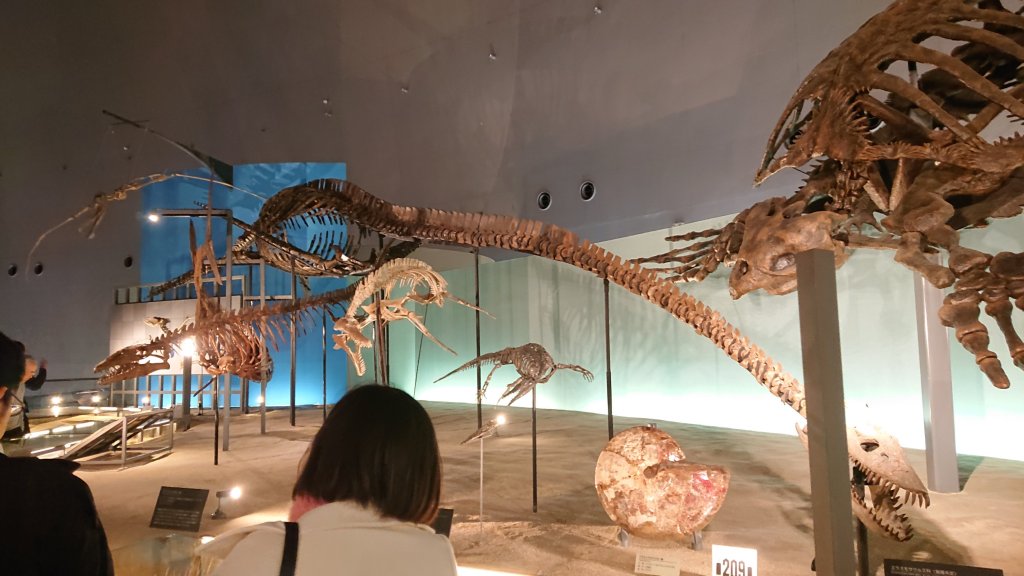
Reconstructed skeleton of elasmosauridae.
Elasmosaurid plesiosaur has very long neck. it is the longest sea reptile in the museum.
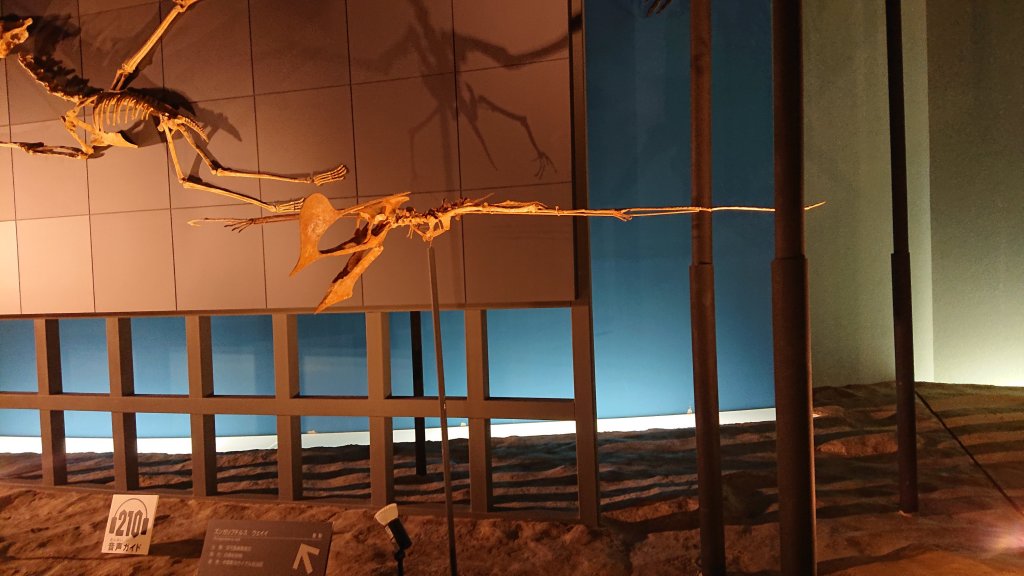
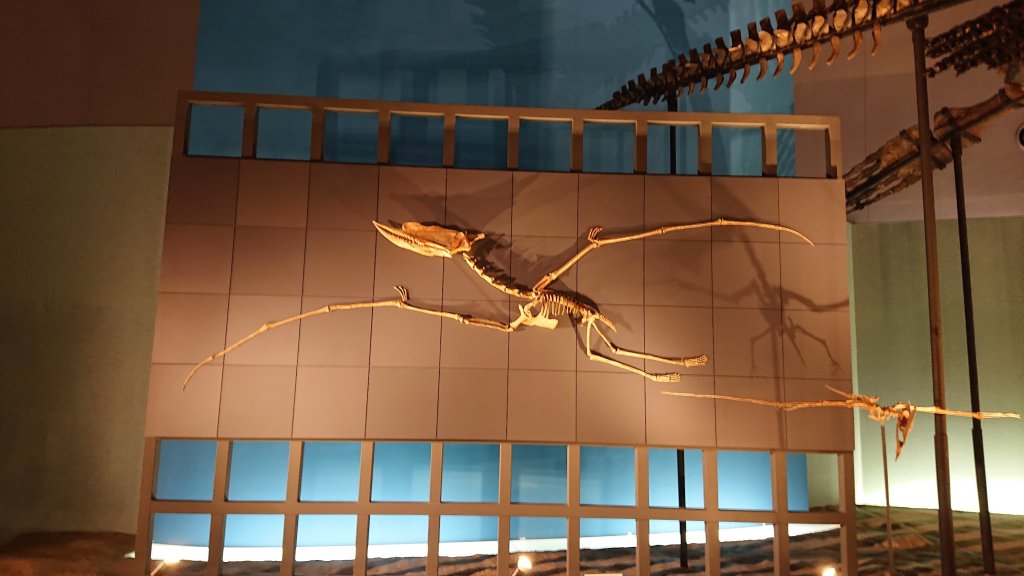
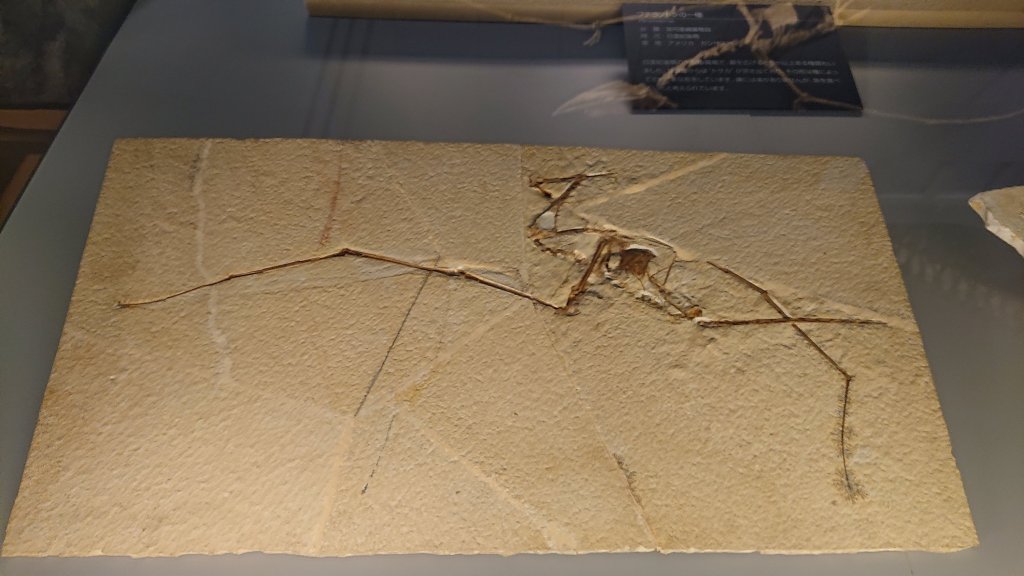
Reconstructed skeleton of Tapejara wellnhoferi.Reconstructed skeleton of Dsungaripterus weii.Rhamphorhynchus muensteri
Pterosaurs have variety of beaks. these difference were made by their own food.
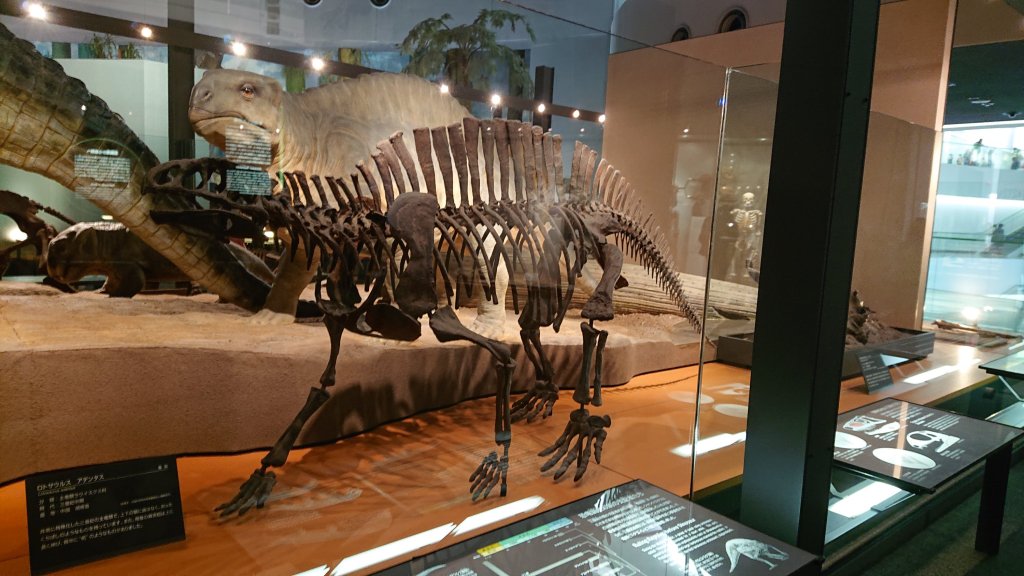
Reconstructed skeleton of Lotosaurus adentus.
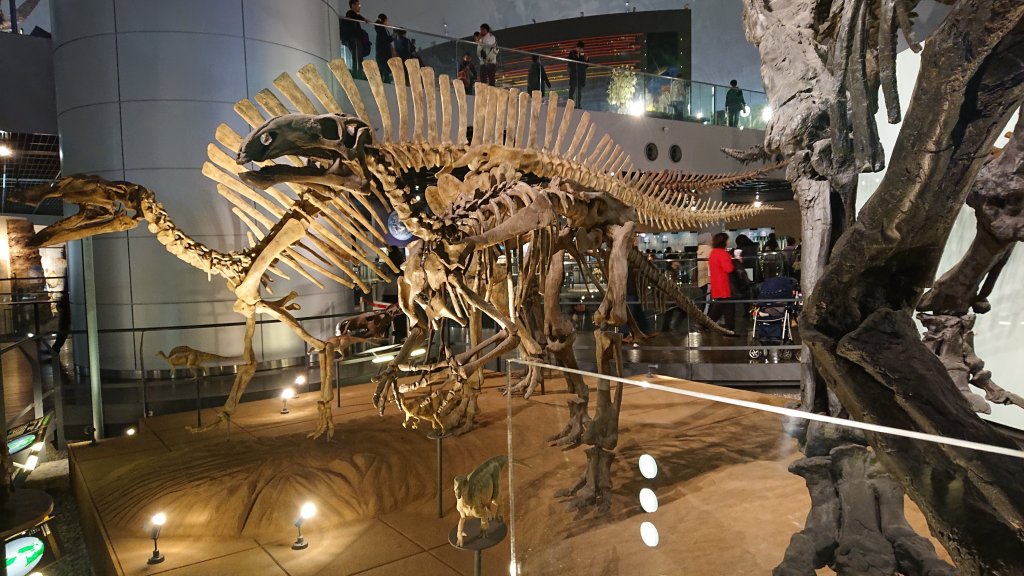
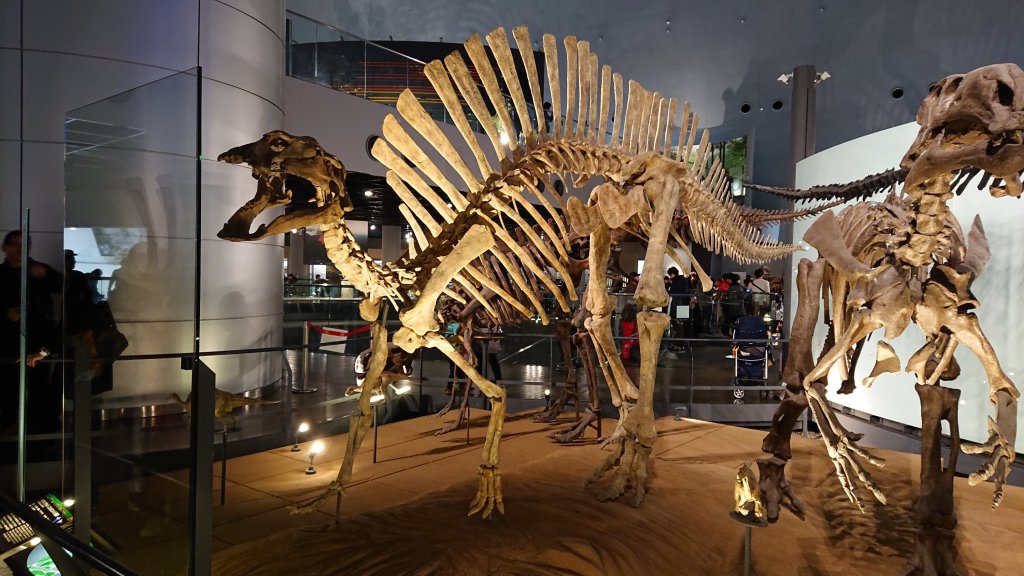
Lotosaurus adentus has no tooth so it was a herbivore. it had a “sail” on the back.
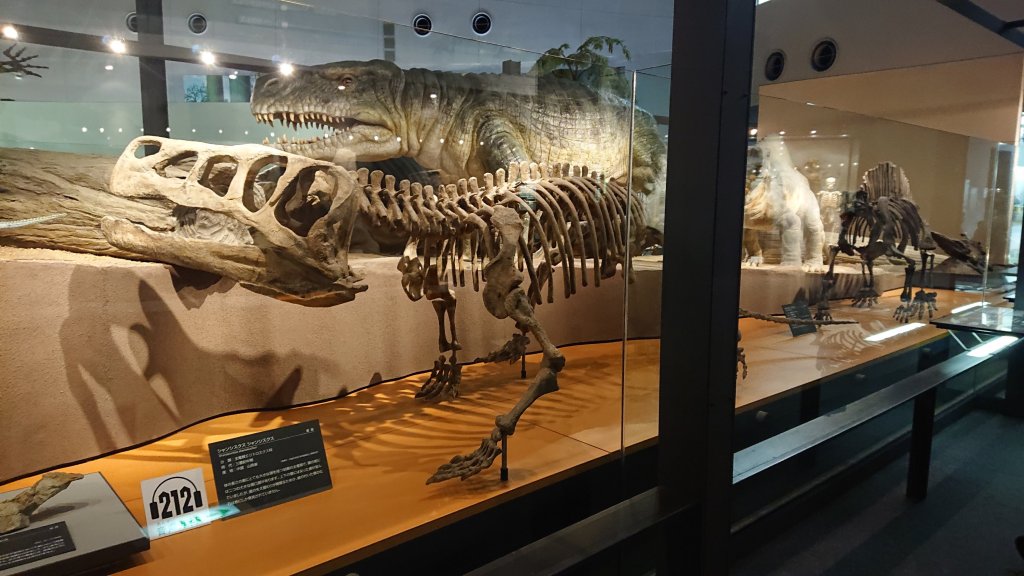
Reconstructed skeleton of Shansisuchus shansisuchus.
Shansisuchus shansisuchus‘s name is quite unique as the scientific name of prehistoric animal. I have never heard such names of other prehistoric lives.
Thank you for reading! Next time, I’ll write about Cenozoic animals.
I’m sorry to be late. Today, I’ll write about Paleozoic animals.
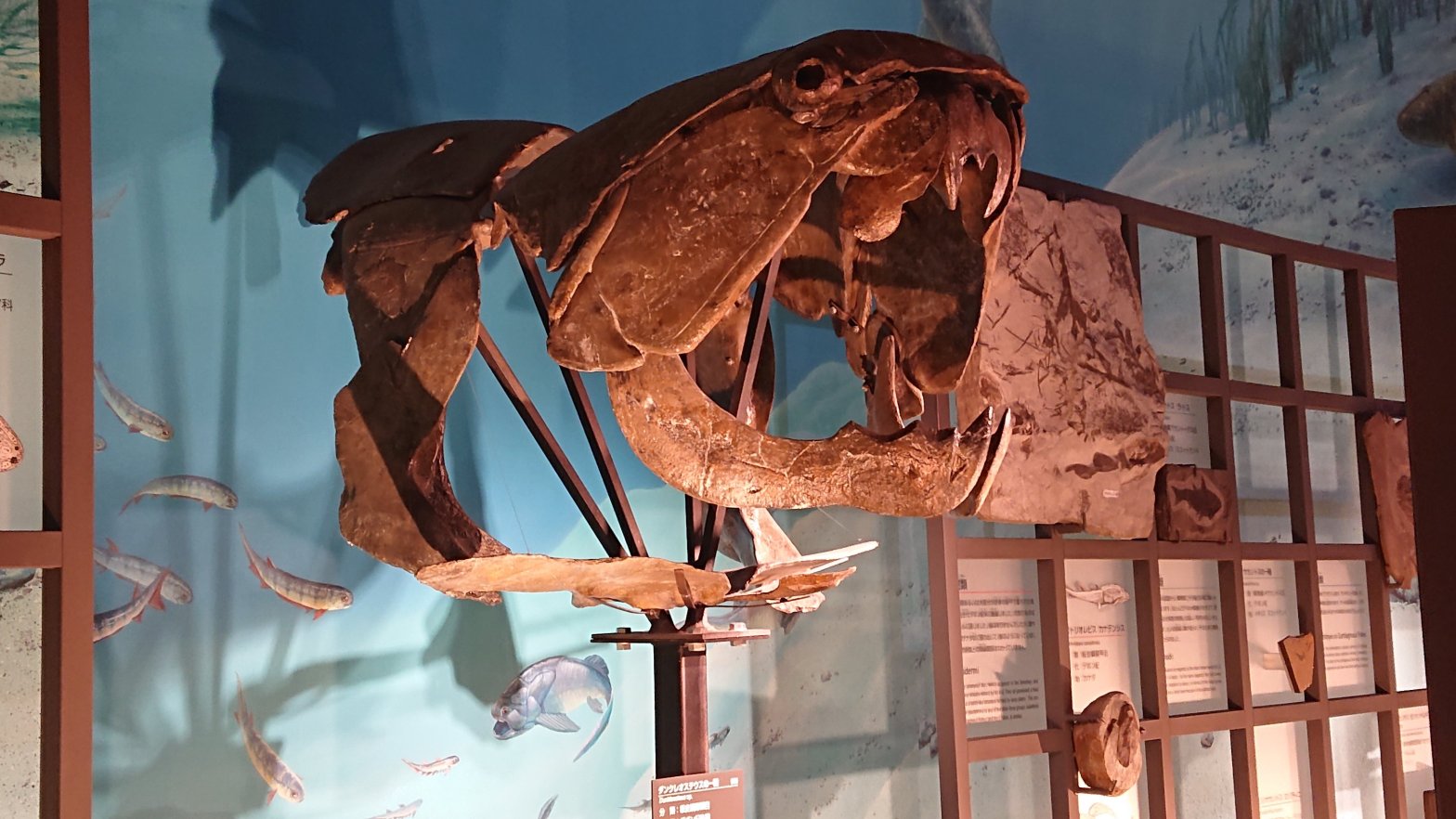
Dunkleosteus sp.
This Dunkleosteus sp. is small as Dunkleosteus, but it looks scary. Dunkleosteus is one of the model of new fossil Pokemons.
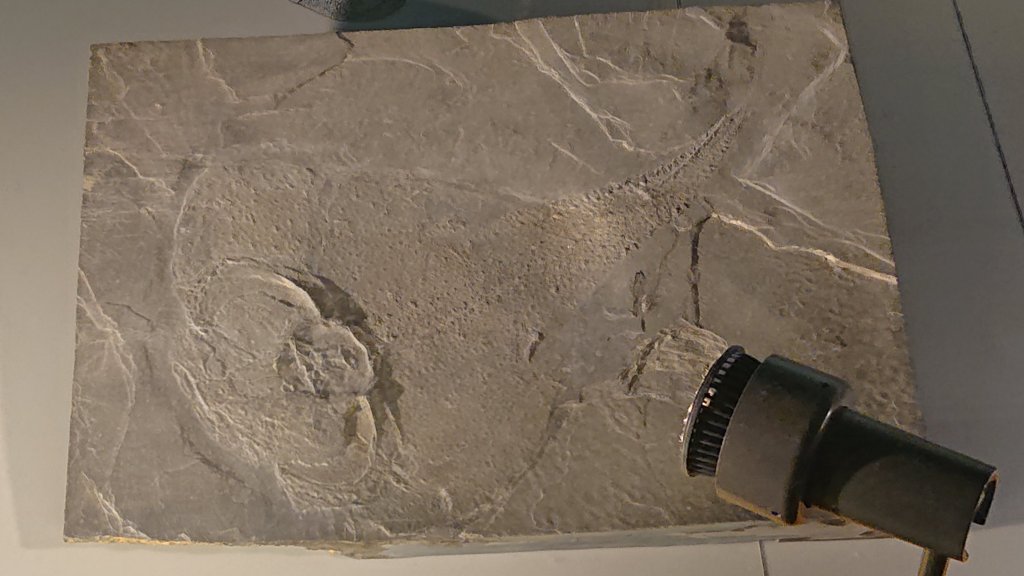
Gemuendina stuertzi
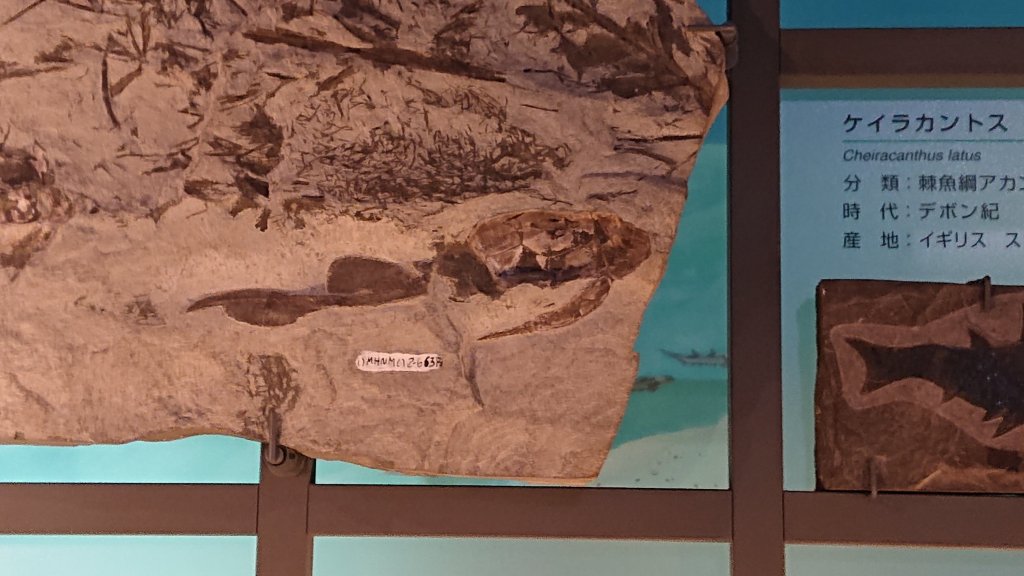
Gemuendina stuertzi looks like a ray, but it is a placodermi, the prehistoric armored fishes like Dunkleosteus or Bothriolepis.
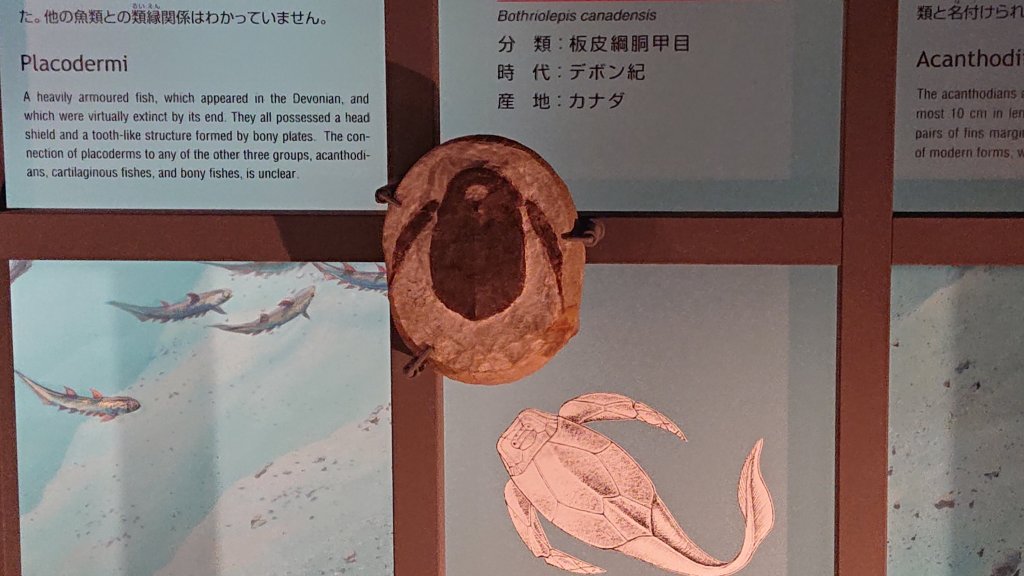
Bothriolepis canadensis
Bothriolepis canadensis has fins like crab’s legs. In lower specimen, there is not only hard front but also soft hind of the body.
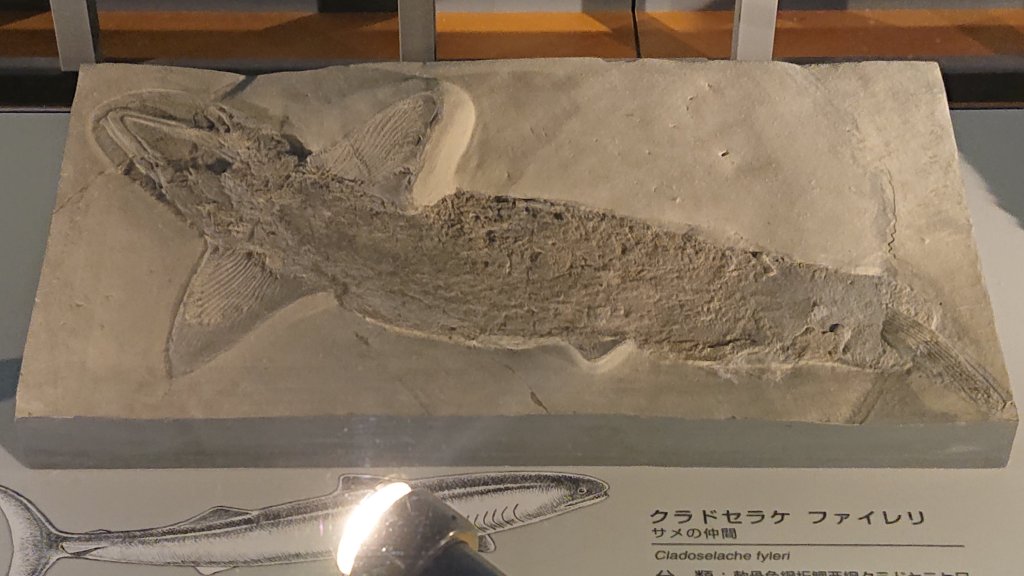
Cladoselache fyleri
Cladoselache fyleri looks like a shark, but for recent study, it is not a shark.
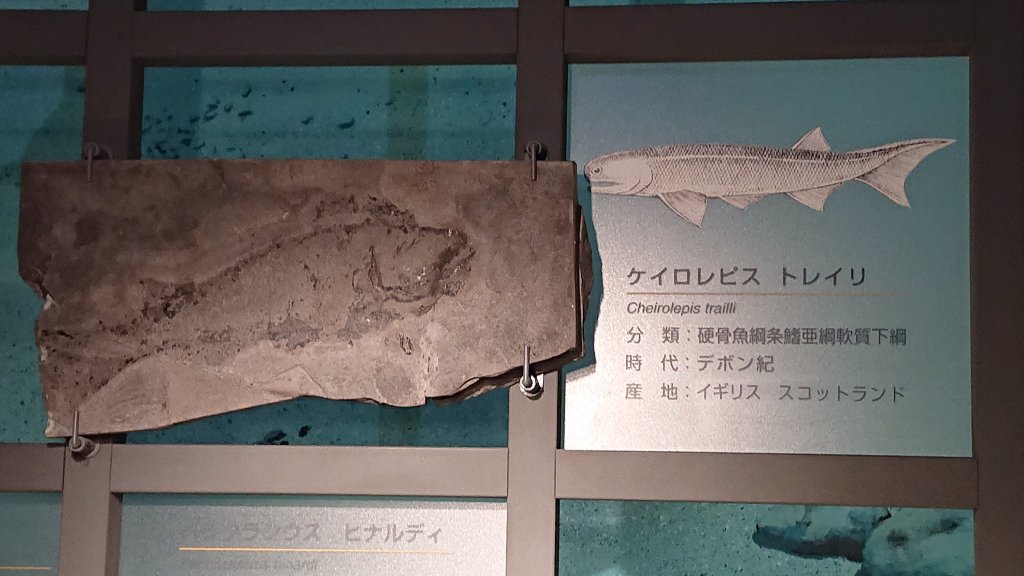
Cheirolepis trailli
Cheirolepis trailli is the early ray-fined fish, the fish group including fish on your dish. different to most of modern fish, its tail is not upper and lower symmetry.
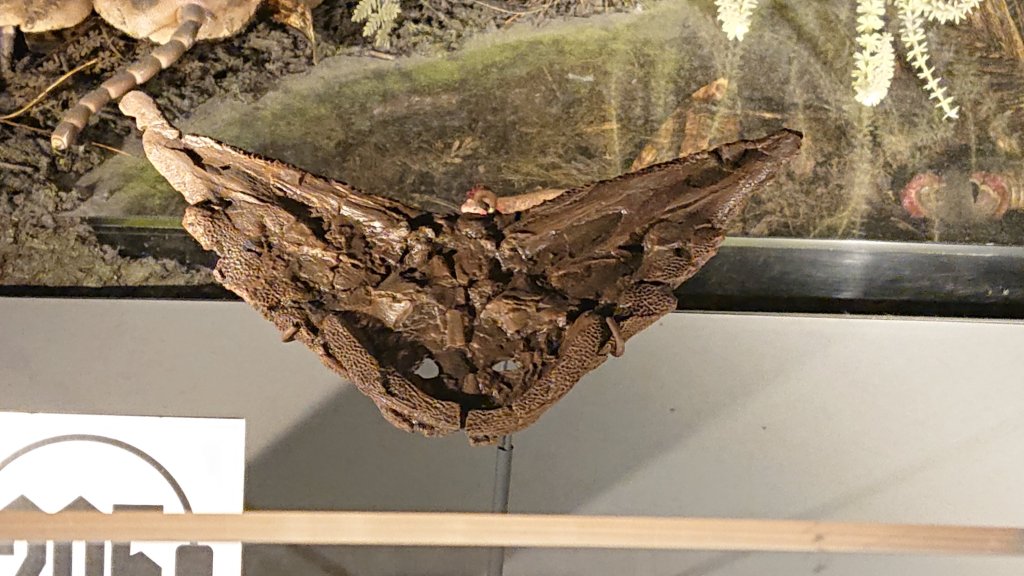
Skull of Diplocaulus magnicornis.
Diplocaulus magnicornis has the head like a boomerang. I think it is one of the most unique skull ever known.
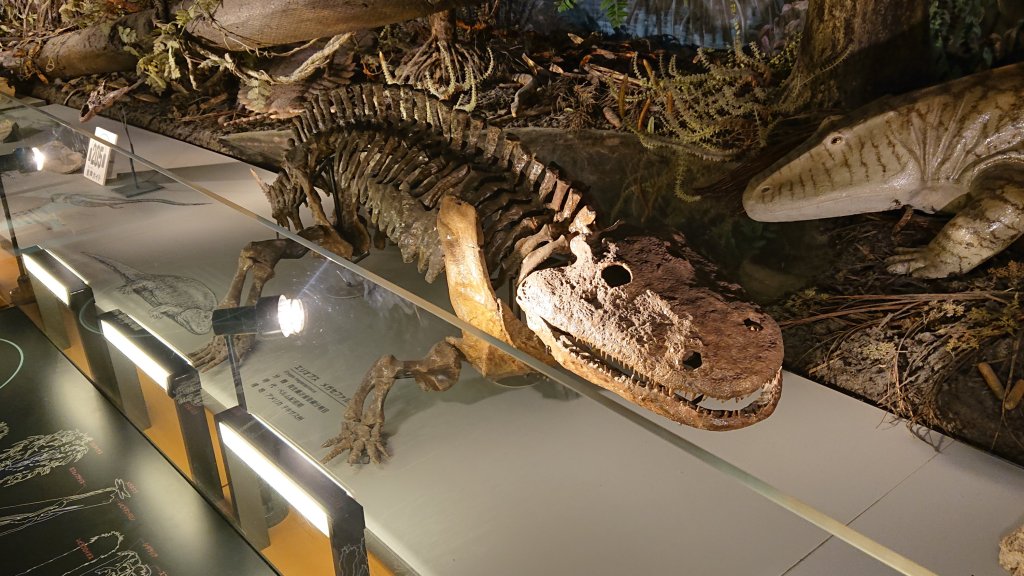
Reconstructed skeleton of Eryops megacephalus.
Eryops megacephalus is very big and massive. Then, it was the age of amphibians.
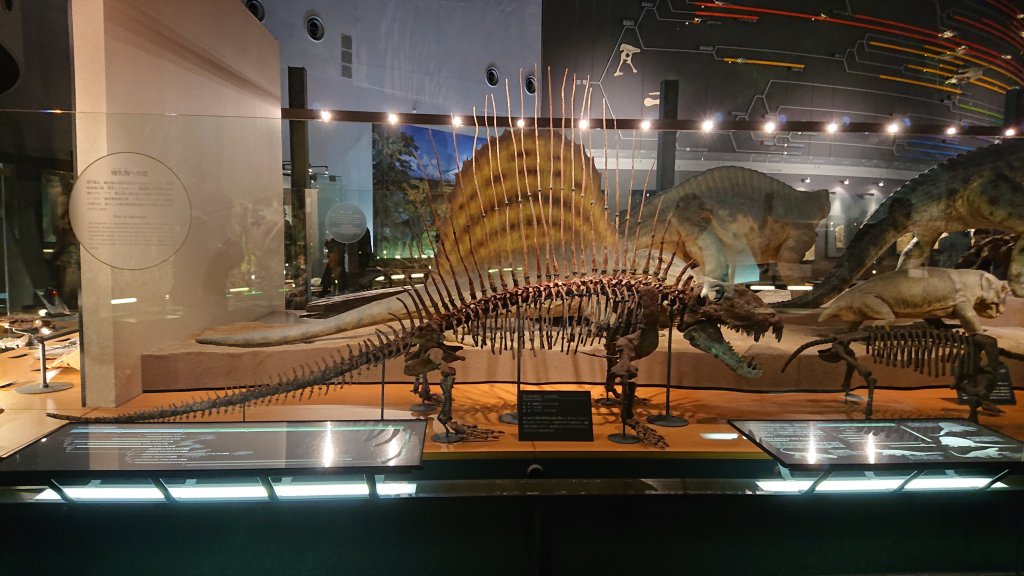
Reconstructed skeleton of Dimetrodon limbatus.
Dimetrodon limbatus has the huge “sail”. It would be used to make its body warmer.
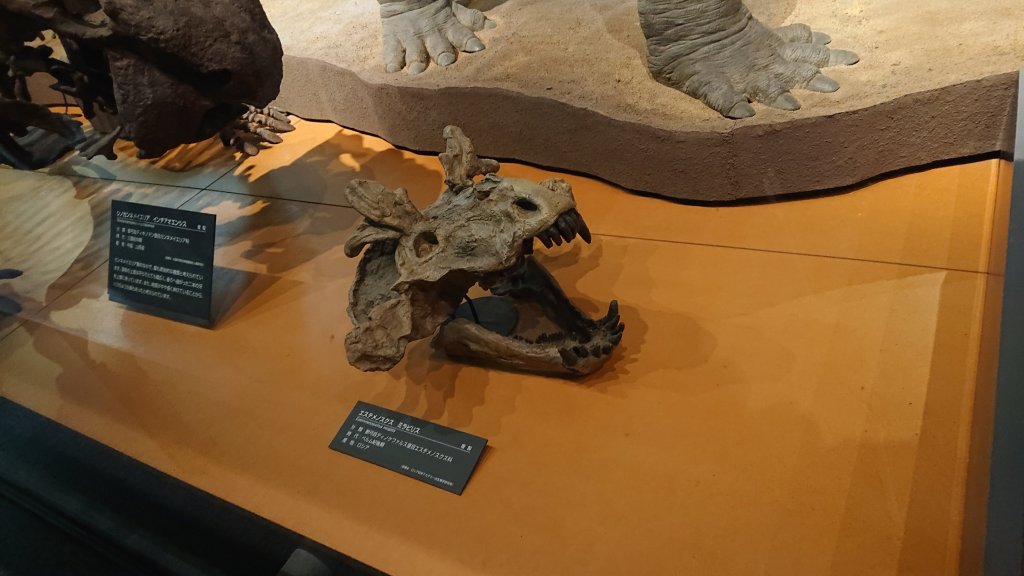
Skull of Estemmenosuchus mirabilis.
Estemmenosuchus mirabilis has unique skull. It has big fangs, but it was a herbivore.
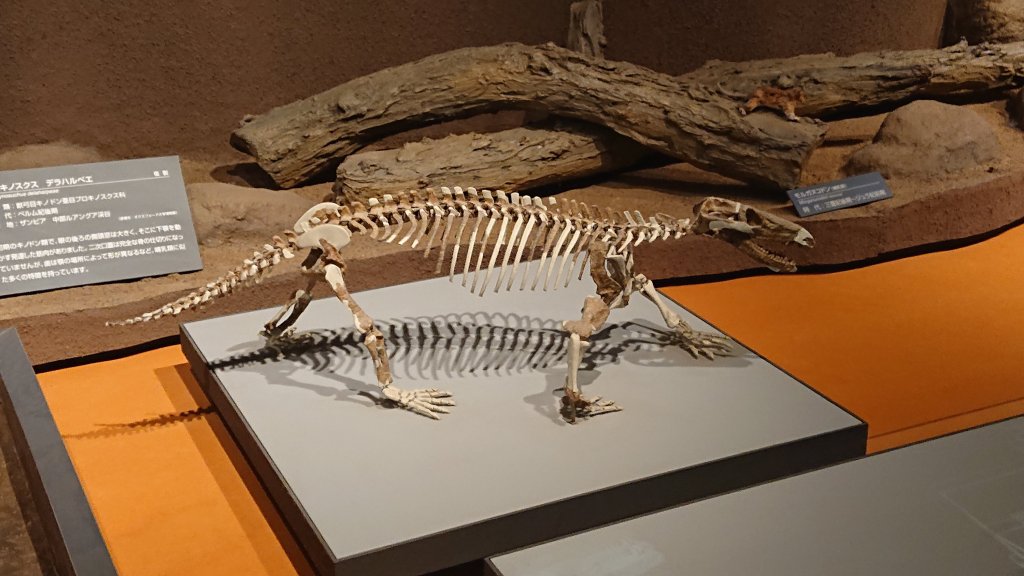
Reconstructed skeleton of Procynosuchus delaharpeae.
Procynosuchus delaharpeae is very close to mammals. Its skeleton is also similar to mammals’
Thank you for reading! Next time, I’ll write about Mesozoic animals.
I’m sorry to be late. Today, I’ll write about dinosaurs from Japan and Asia.
In this museum, there are cast of dinosaurs all over Japan. No other museums I know has such many Japanese dinosaur fossils.
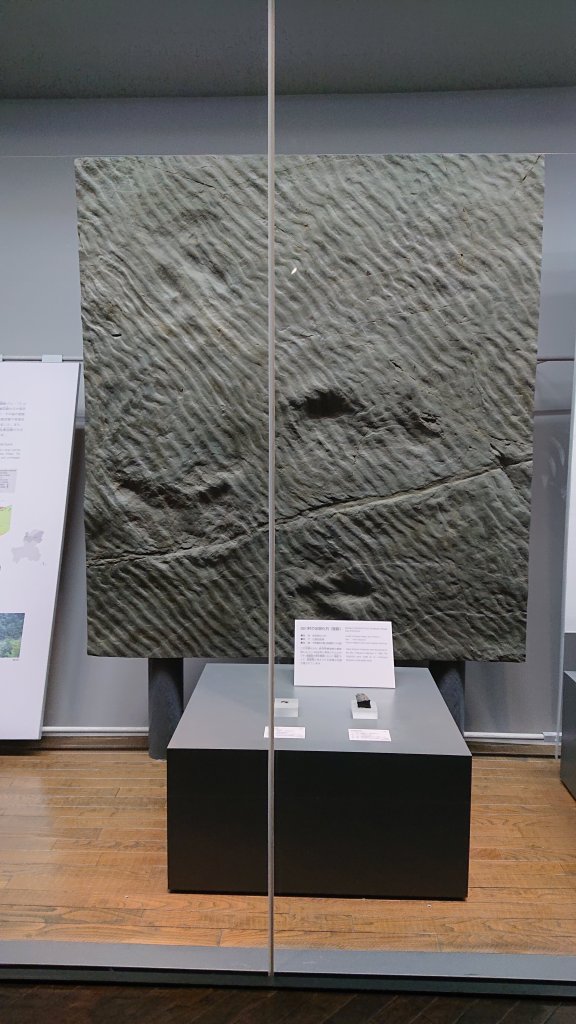
Cast of the footprint fossils from Kagidani Formation.
There are ripple marks on the footprints because they were made on the bed.
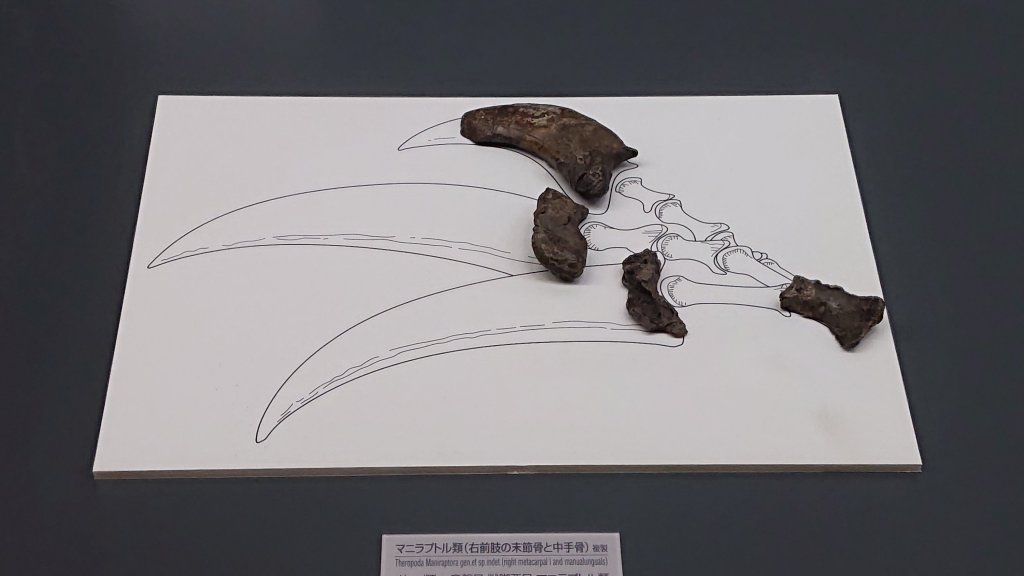
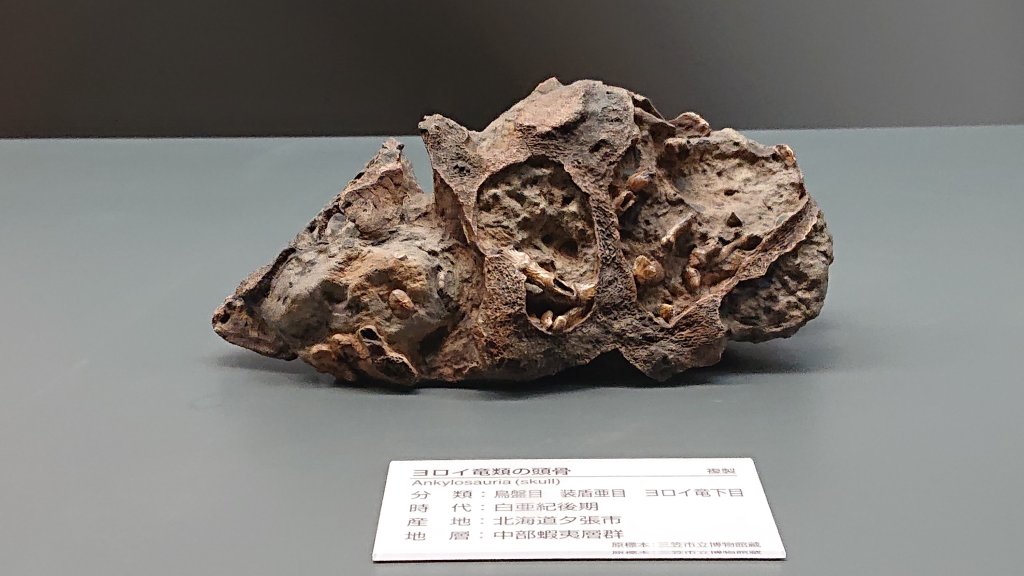
Cast of the maniraptoran right metacarpal and manualunguals from Upper Ezo Group.Cast of the nodosaurid skull from Middle Ezo Group.
Ezo Group is the stratigraphic group that Kamuysaurus was found from. These dinosaurs might lived with Kamuysaurus.
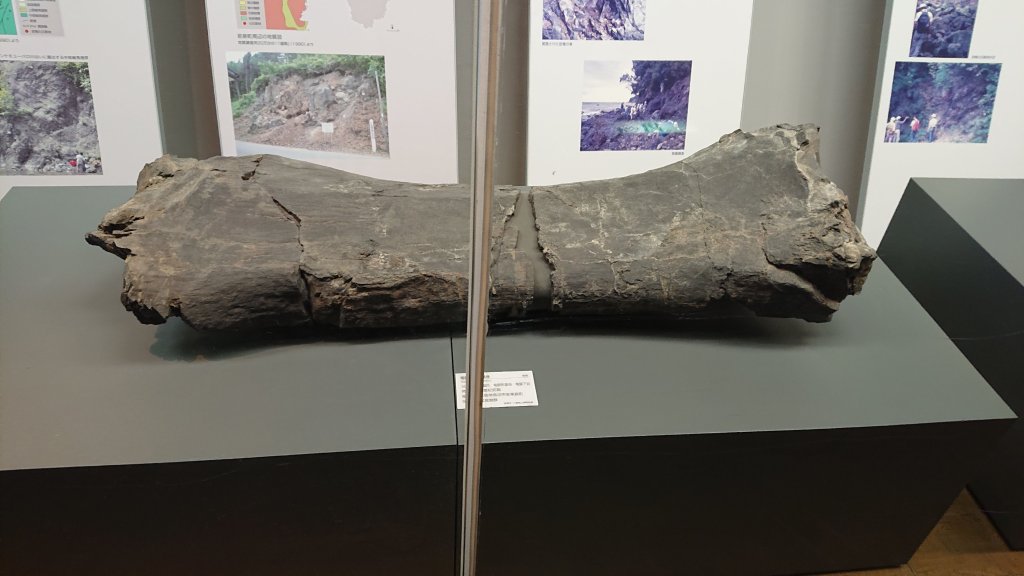
Cast of the titanosaurid femur from Matsuo Group.
This titanosauridae nicknamed “Tobaryu” is the model of Toba, the character in the video game series “Fossil Fighters”.
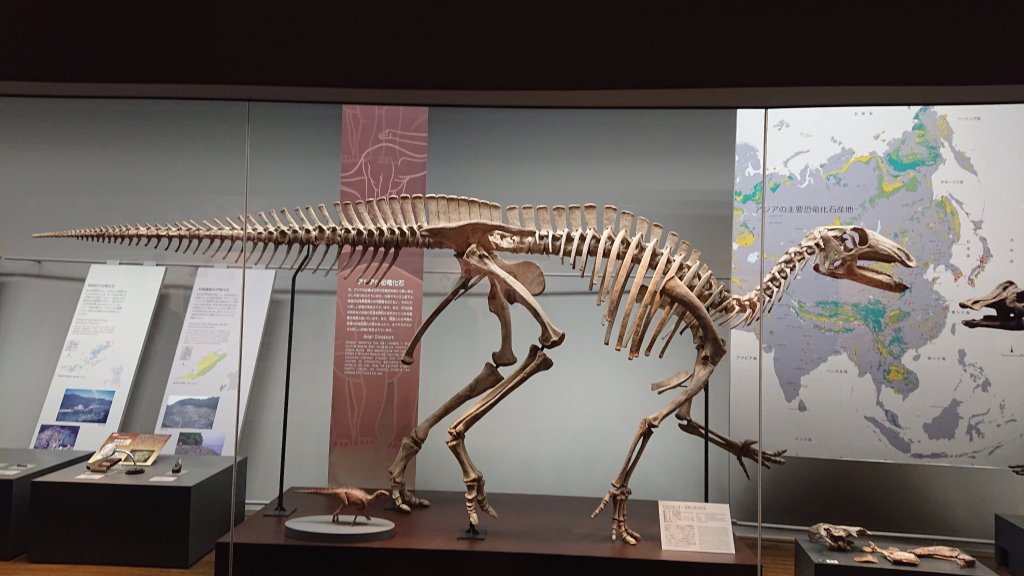
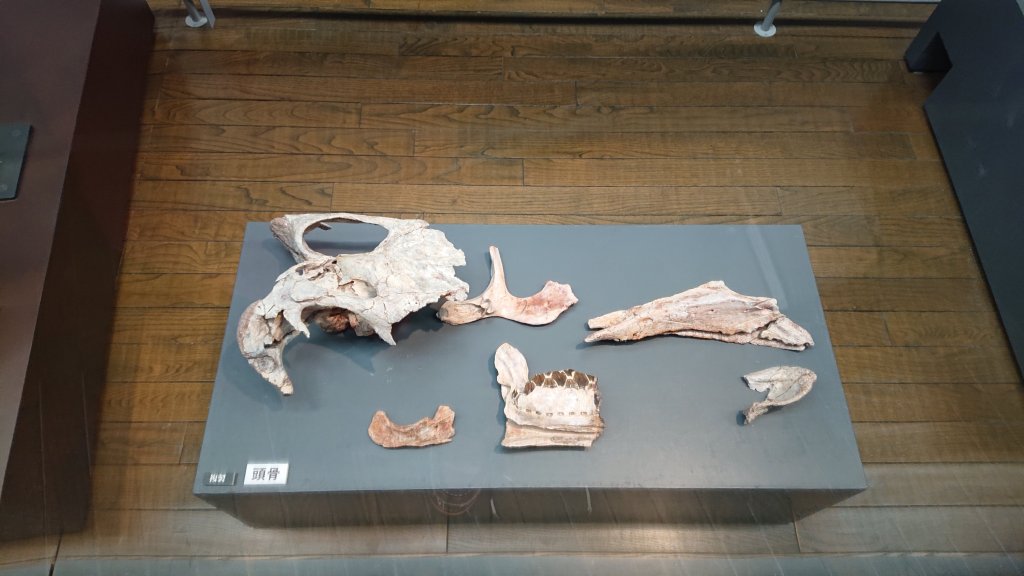
Reconstructed skeleton of Sirindhorna khoratensis.Skull of Sirindhorna khoratensis.
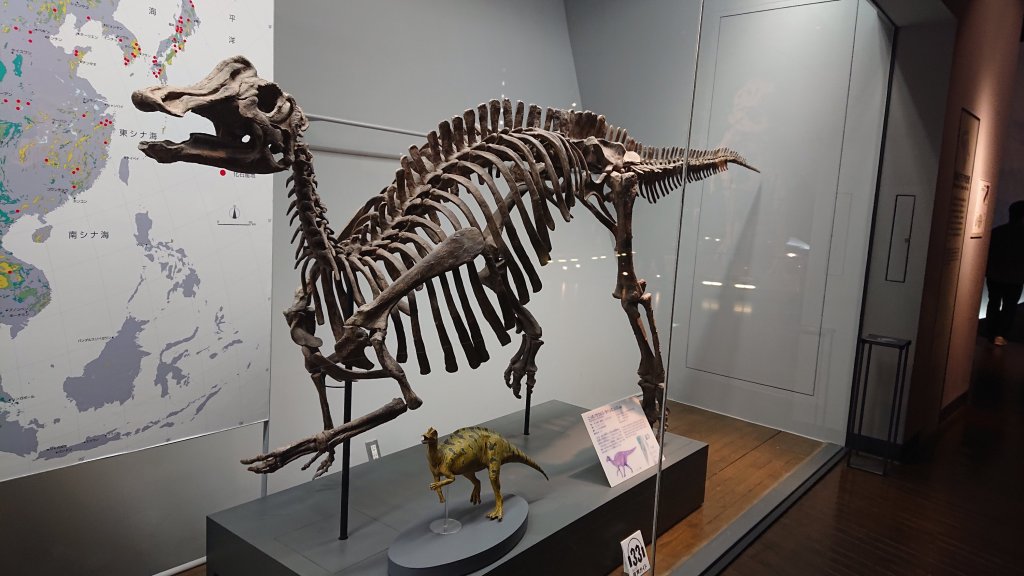
Sirindhorna khoratensis is relative to Fukuisaurus. Both the dinosaurs from Japan and Thailand are quite similar each other.
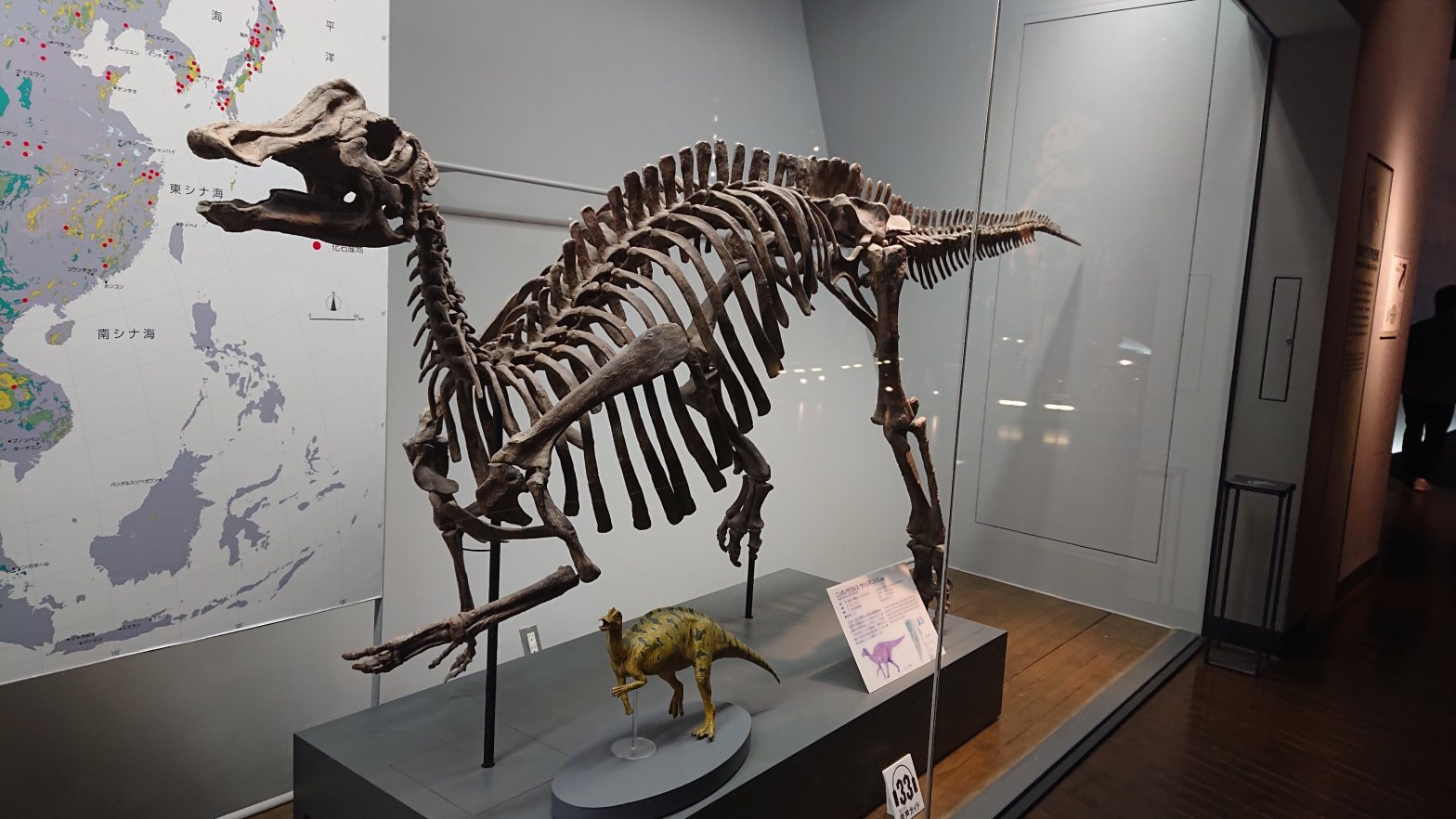
Reconstructed skeleton of Nipponosaurus sachalinensis.
Nipponosaurus sachalinensis was found from Southern part of Sakhalin Island. Now, it is in Russia, but it was a part of Japan when it was found so it was named as “Japanese lizard”.
Thank you for reading! Next time, I’ll write about Paleozoic fossils.
Near the museum, there is Kitadani Formation, the geographic formation of Aptian, Early Cretaceous. Then, there is the swamp near the river and a lot of lives like dinosaurs, crocodiles and turtles lived there.
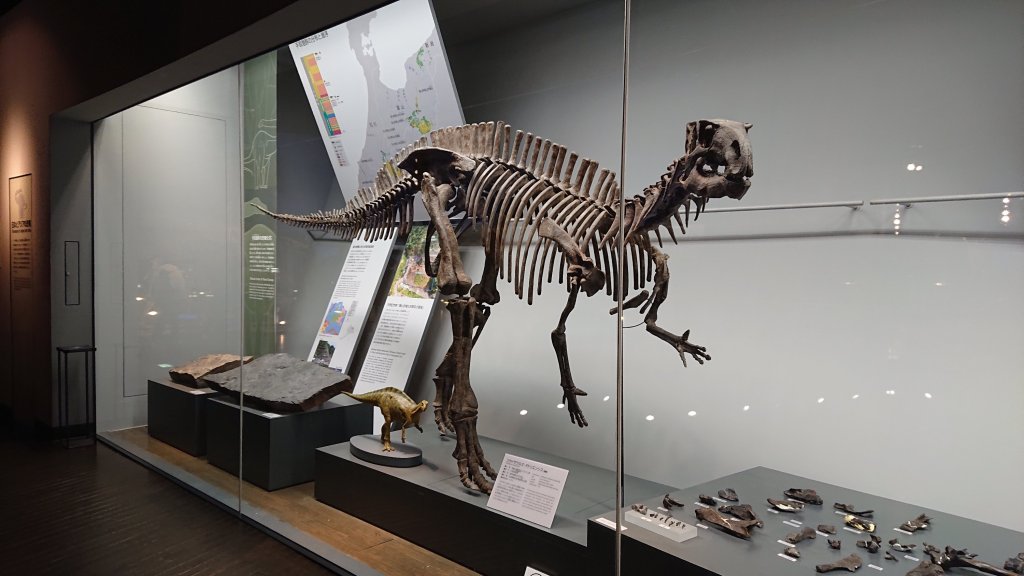
Reconstructed skeleton of Fukuisaurus tetoriensis.Holotype of Fukuisaurus tetoriensis.
Fukuisaurus tetoriensis is the basal hadrosauriformes. It is relative to Iguanodon, but it doesn’t have pleurokinesis, the character seen in hadrosauriformes’ maxilla to be moved to outside when they bit.
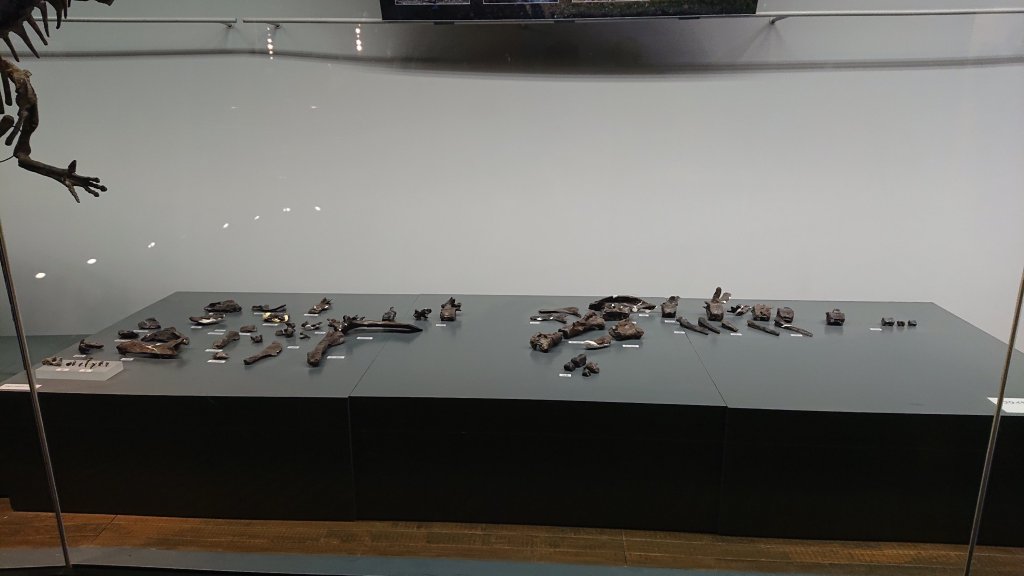
Holotype of Koshisaurus katsuyama.
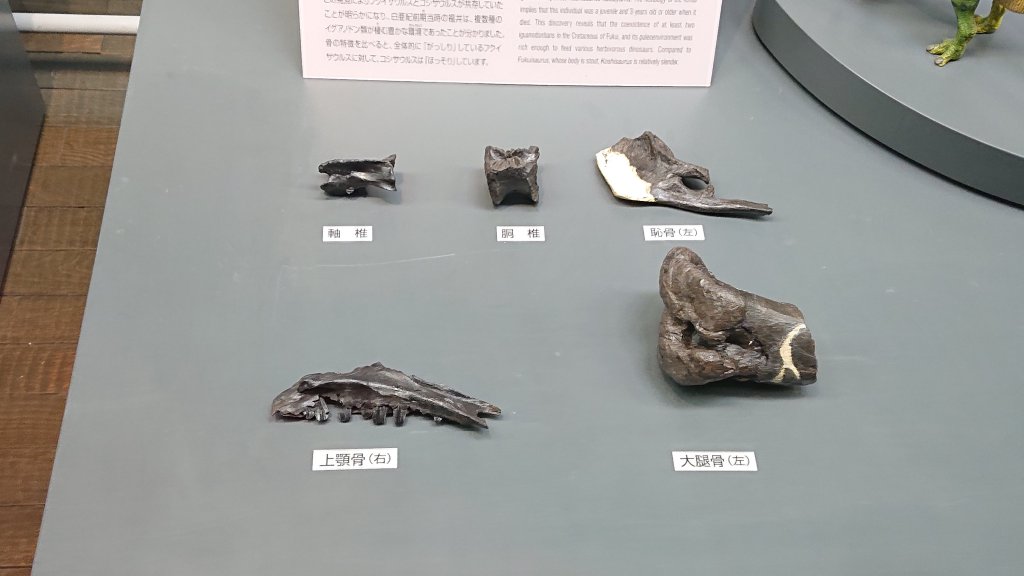
Koshisaurus katsuyama is the basal hadrosauroidea. “Koshi” is the old name of the area including Fukui. Both the Fukuisaurus and Koshisaurus lived together. It shows that there was so rich environment then.
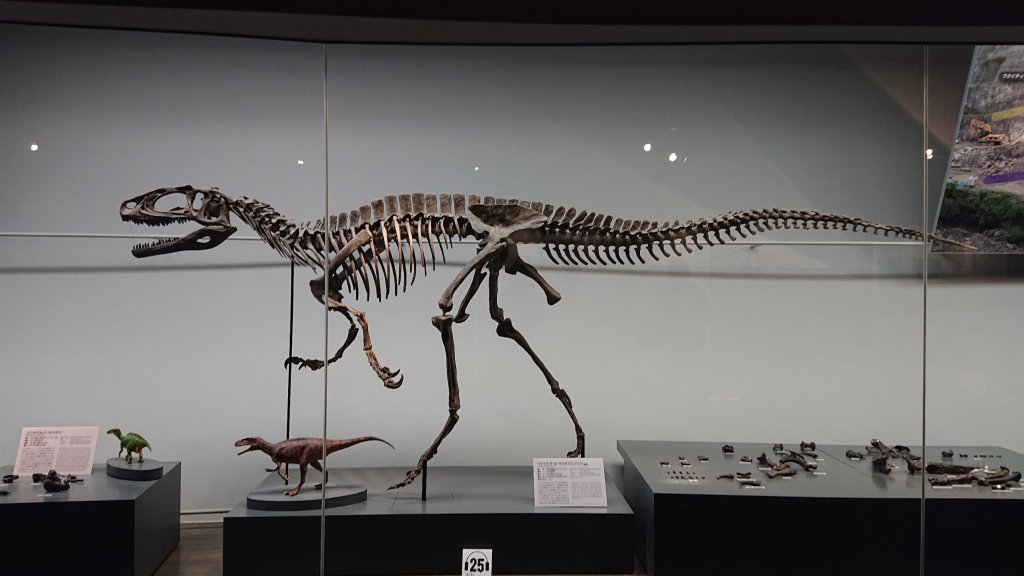
Reconstructed skeleton of Fukuiraptor kitadaniensis with artifact parts based on Sinraptor.Holotype of Fukuiraptor kitadaniensis.
Fukuiraptor kitadaniensis is the basal megaraptora, but its reconstructed skeleton was based on Sinraptor because it was thought to be relative to it at first.
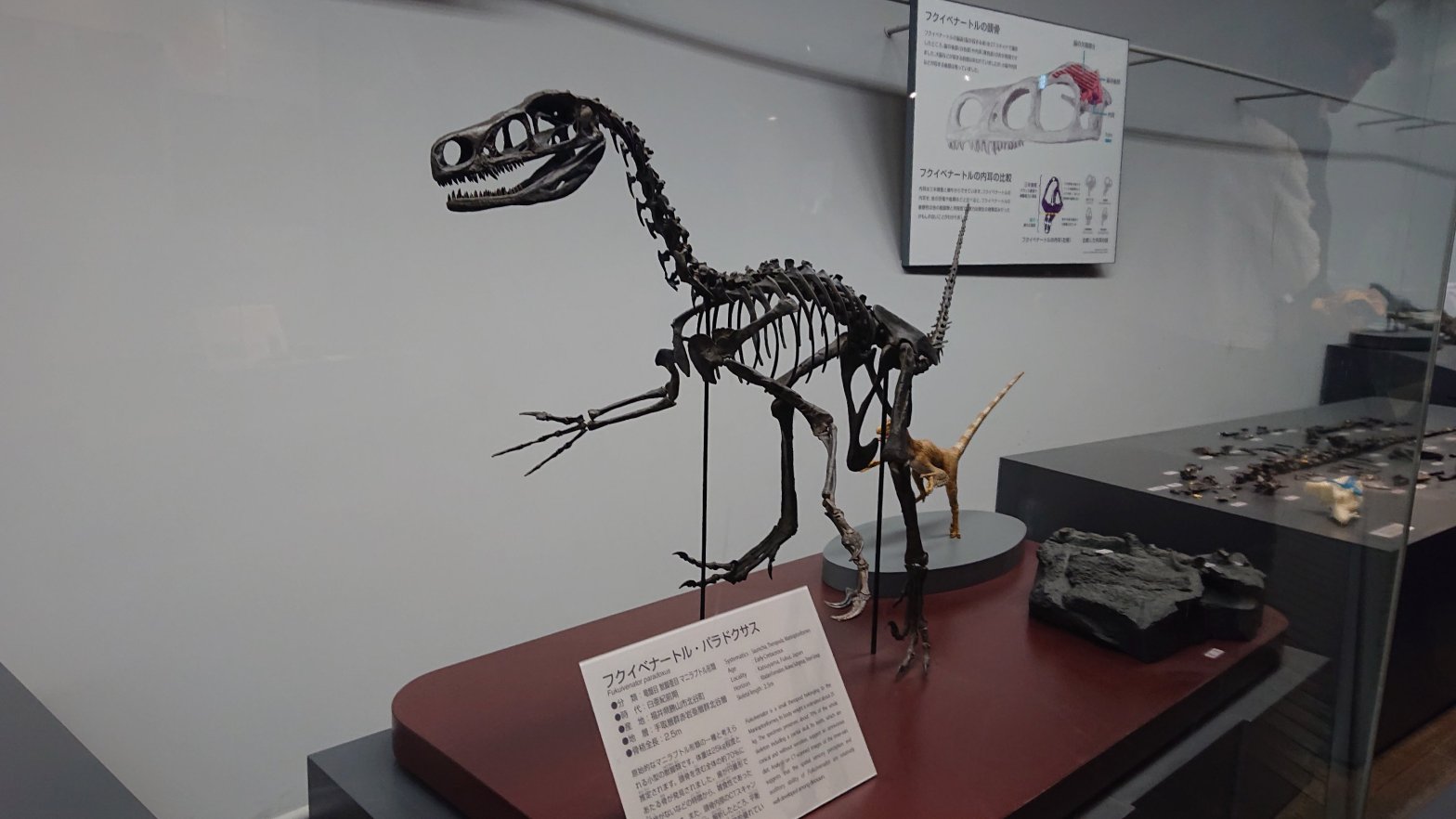
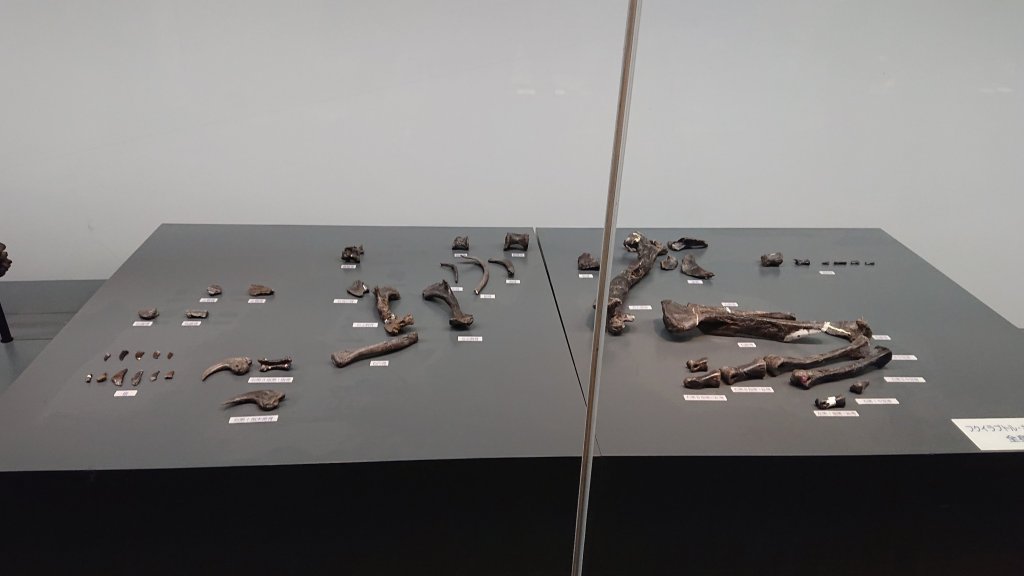
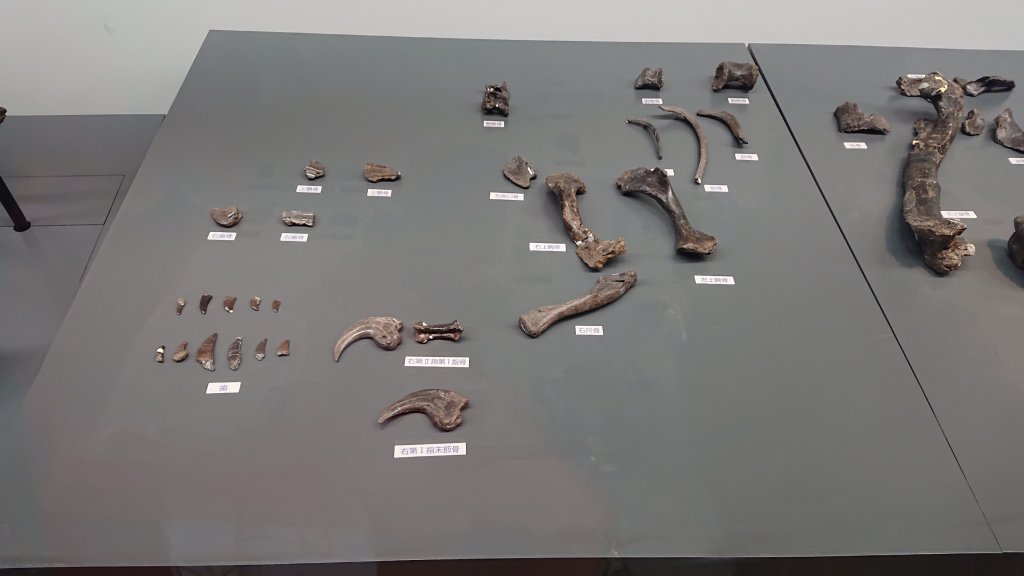
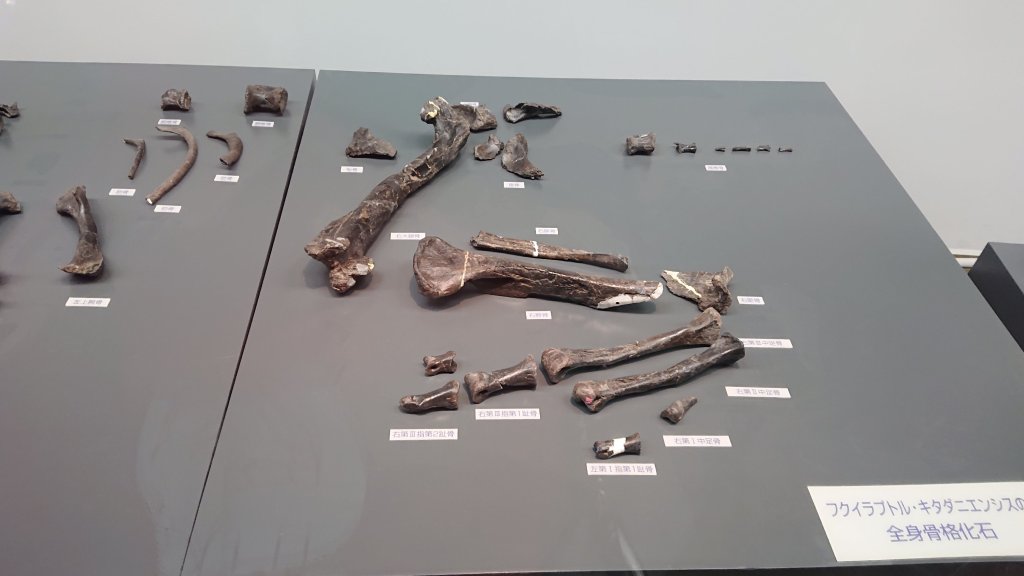
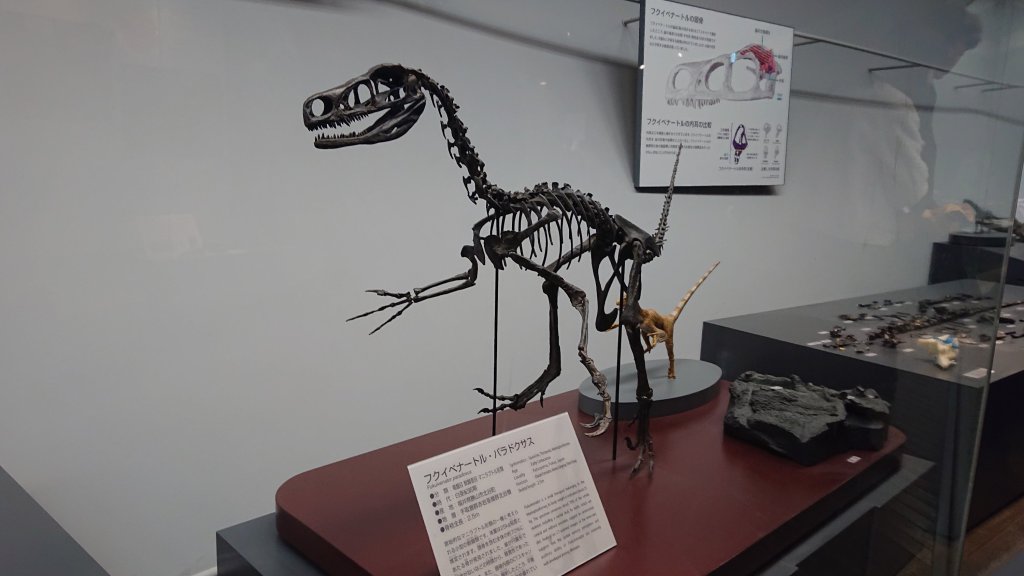
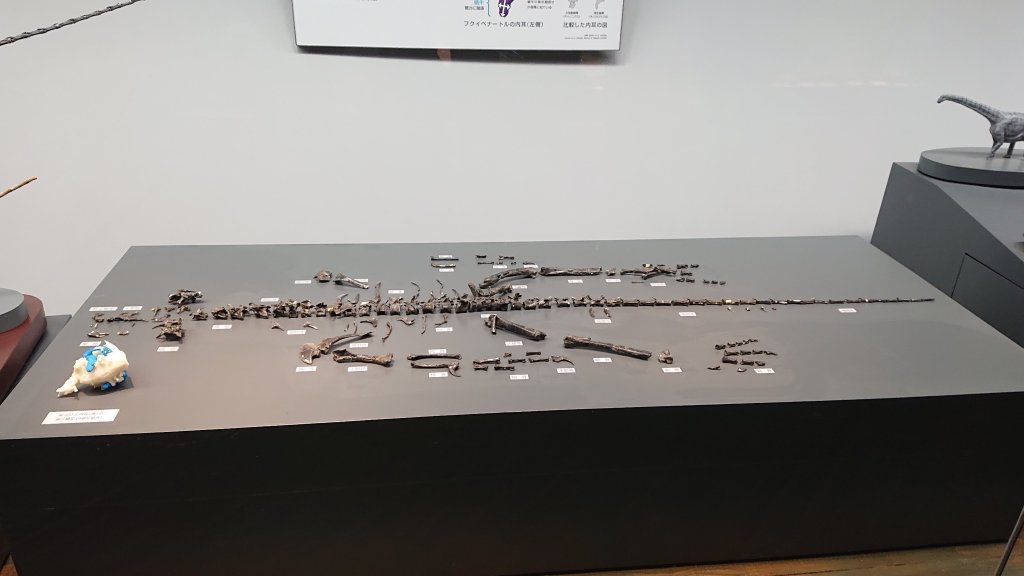
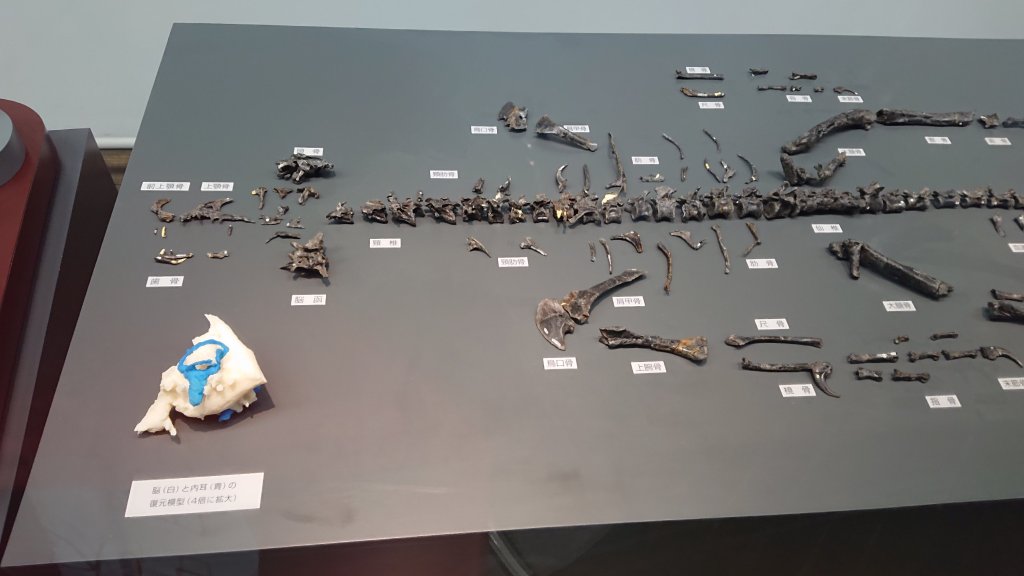
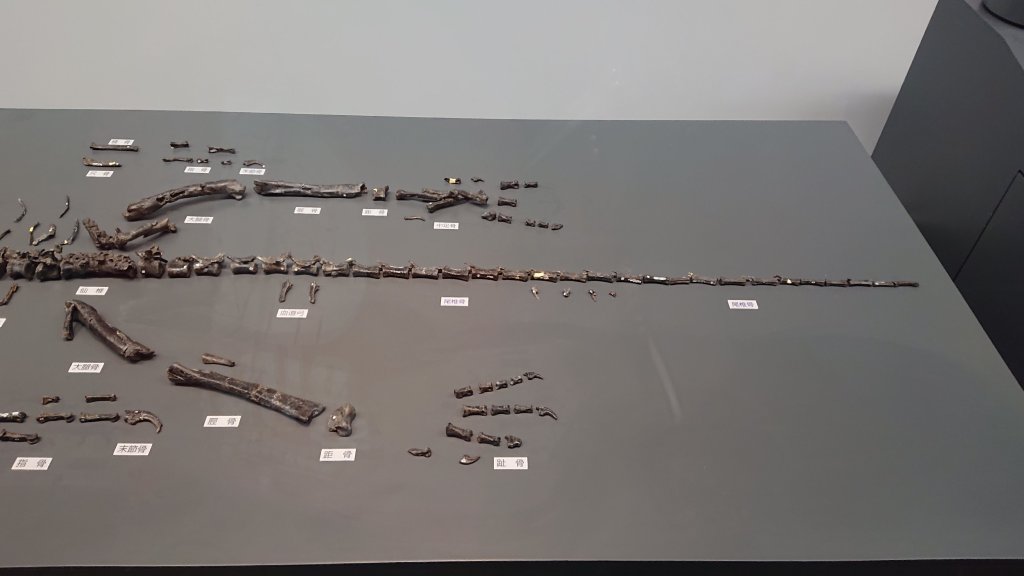
Reconstructed skeleton of Fukuivenator paradoxus.Holotype of Fukuivenator paradoxus. Lower left is the the model of its brain (white) and inner ear (blue) enlarged to four times.
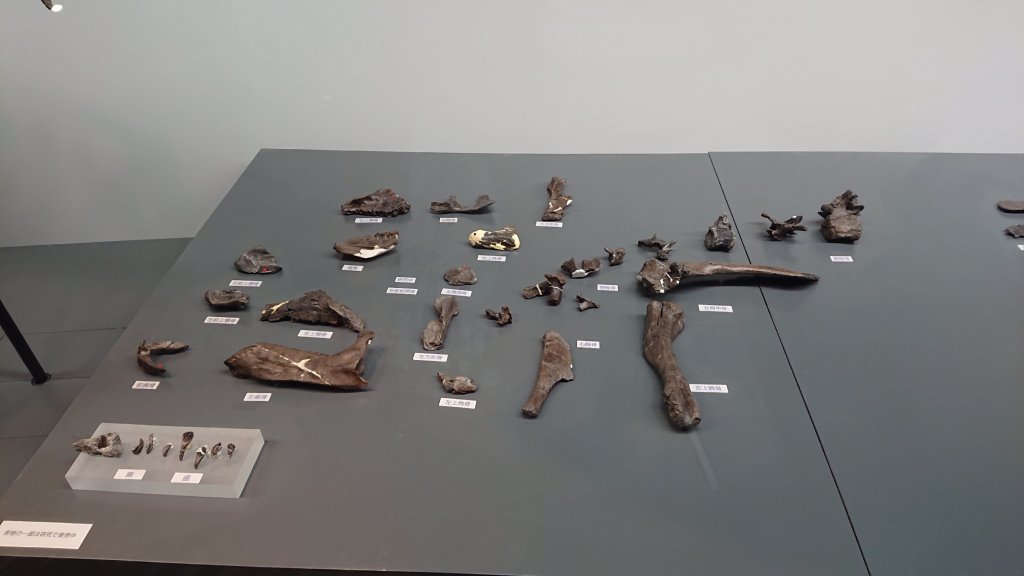
Fukuivenator paradoxus is the coelurosaur dinosaur. It has both the old and new points. Its teeth are not serrated so it would be omnivorous. For research of its inner ear, it had good sence of balance and hearing.
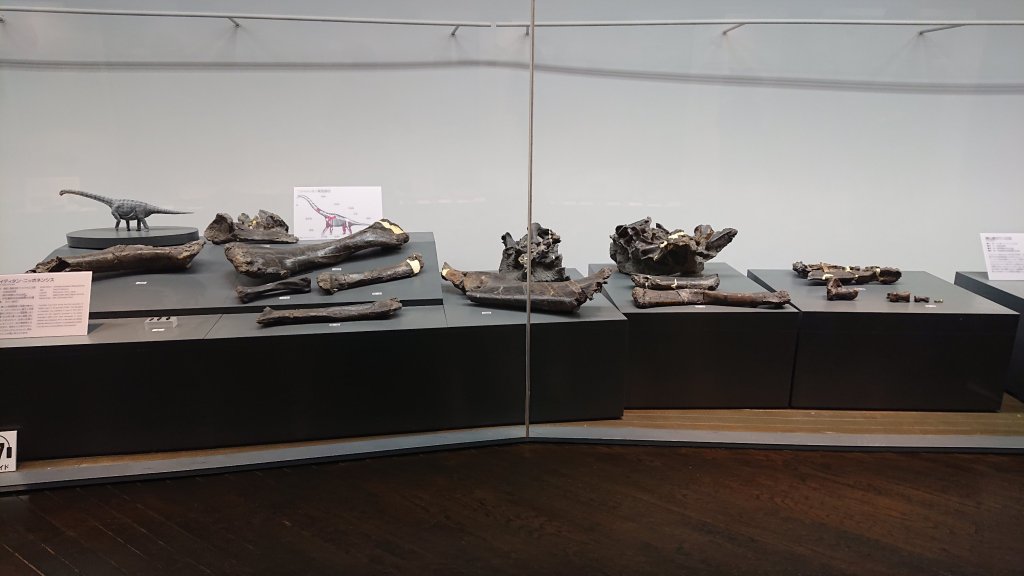
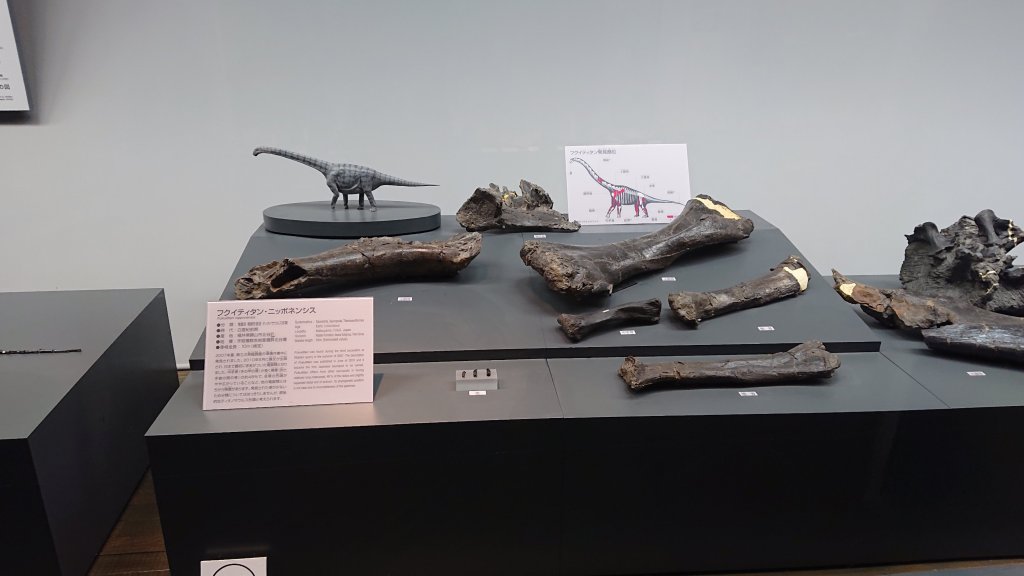
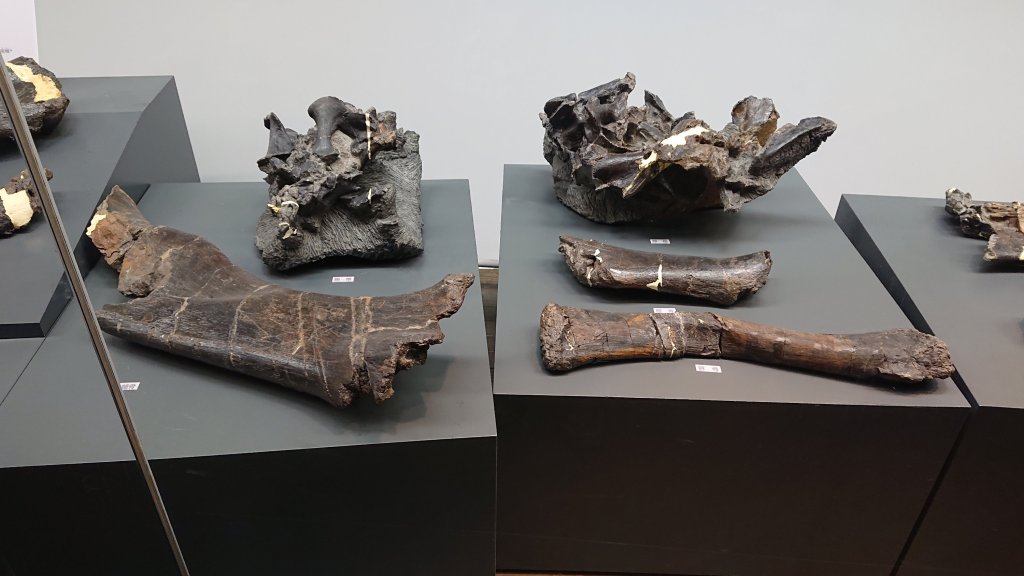
Holotype of Fukuititan nipponensis.
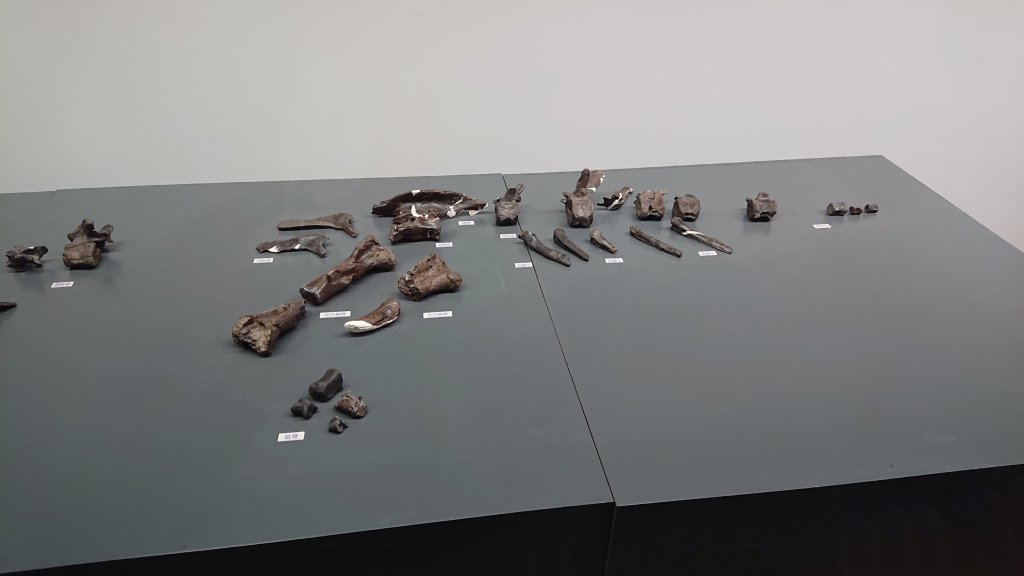
Fukuititan nipponensis is the titanosauriform. It is the biggest animal from Kitadani Formation.
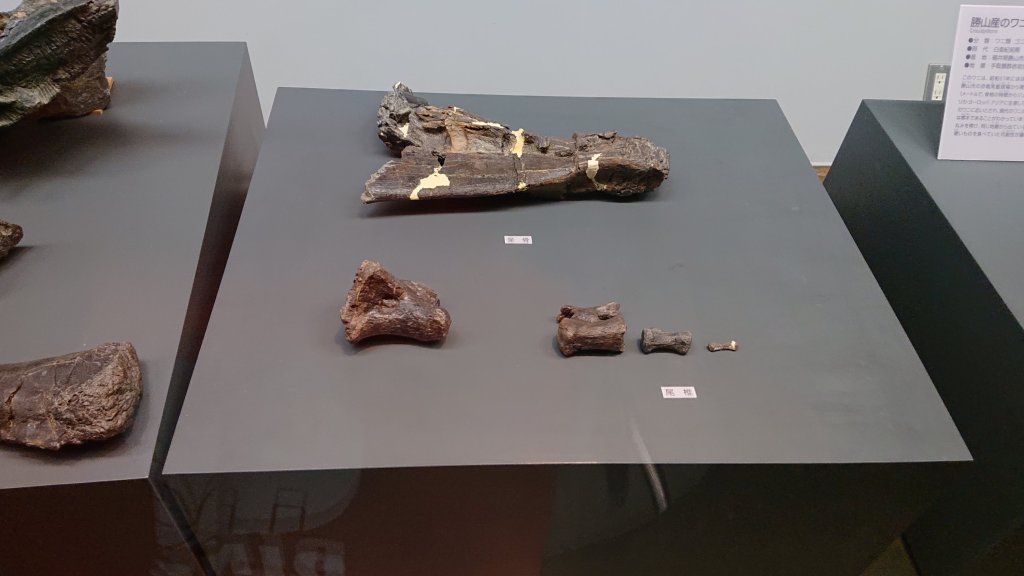
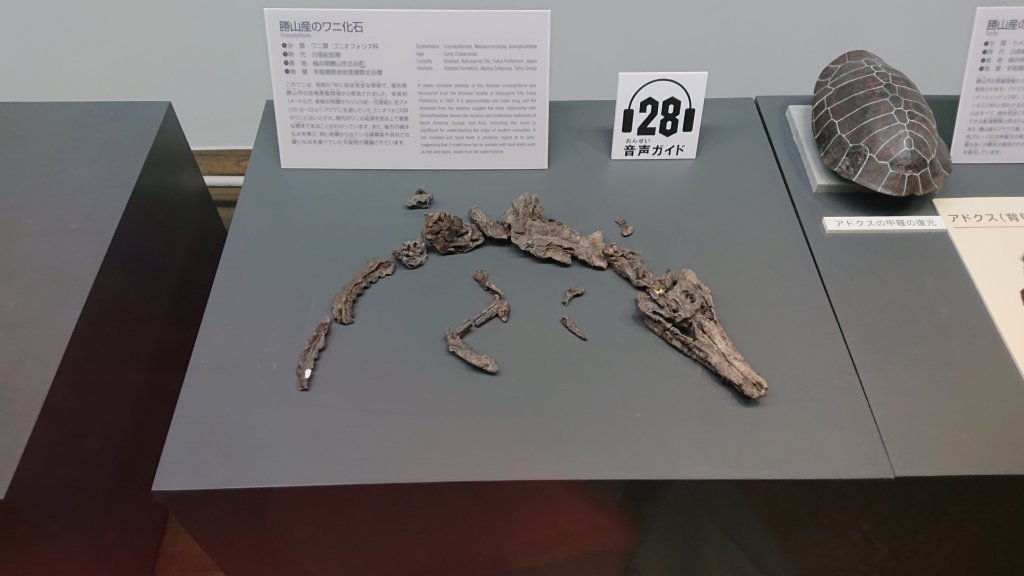
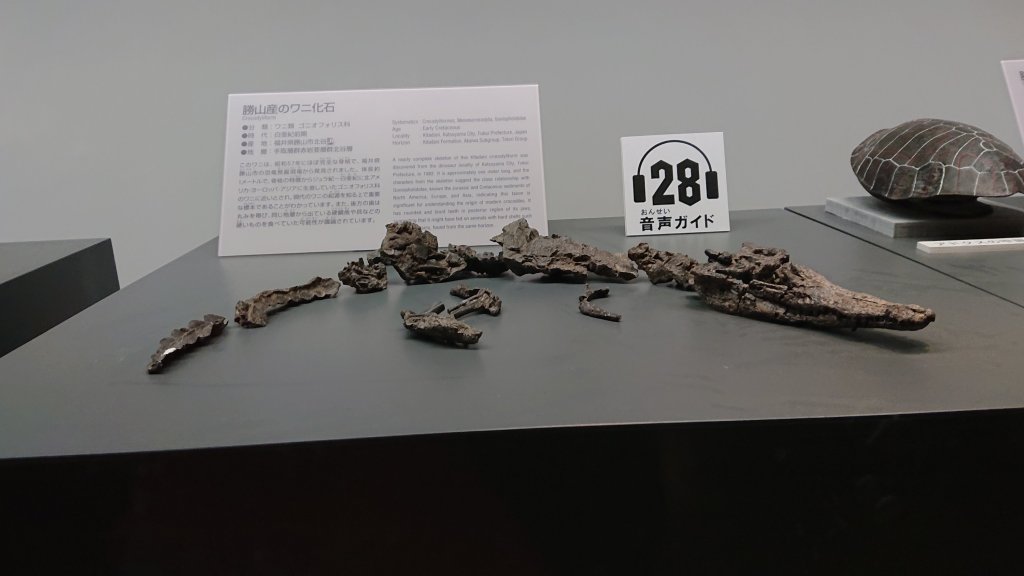
Goniopholid crocodile from Kitadani Formation.
Goniopholid crocodile is the first fossil from Kitadani Formation. Its back teeth are roundish, so it would eat hard prey like shellfish and fish with hard scale.
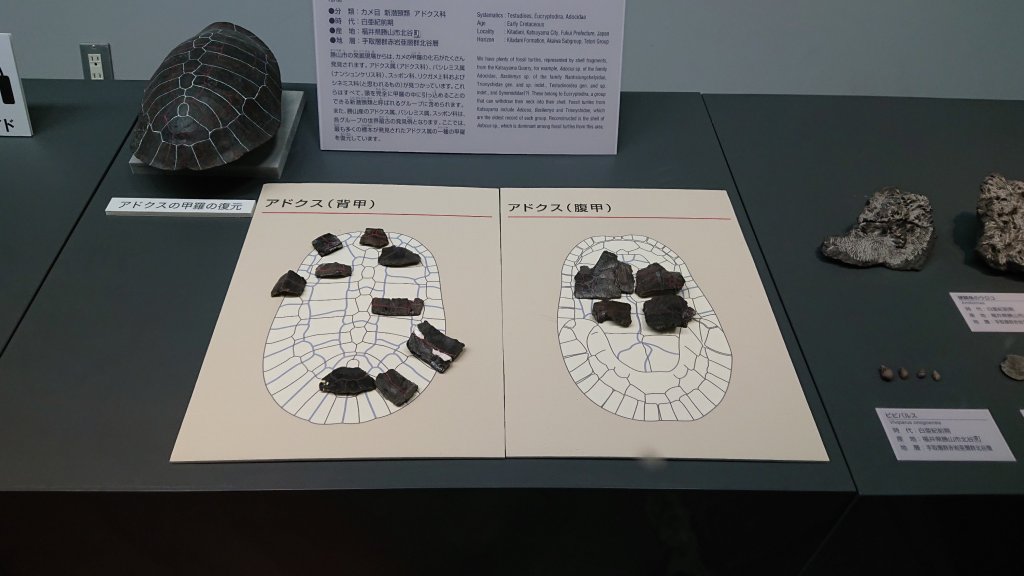
Adocus sp. from Kitadani Formation.
There was variety of turtles and tortoises like Adocus, Basilemys, sinemydidae, softshell turtle and testudinoidea lived there. Adocus, Basilemys and softshell turtle are the oldest record in the world.
Thank you for reading! Next time, I’ll write about dinosaurs from Japan and Asia.
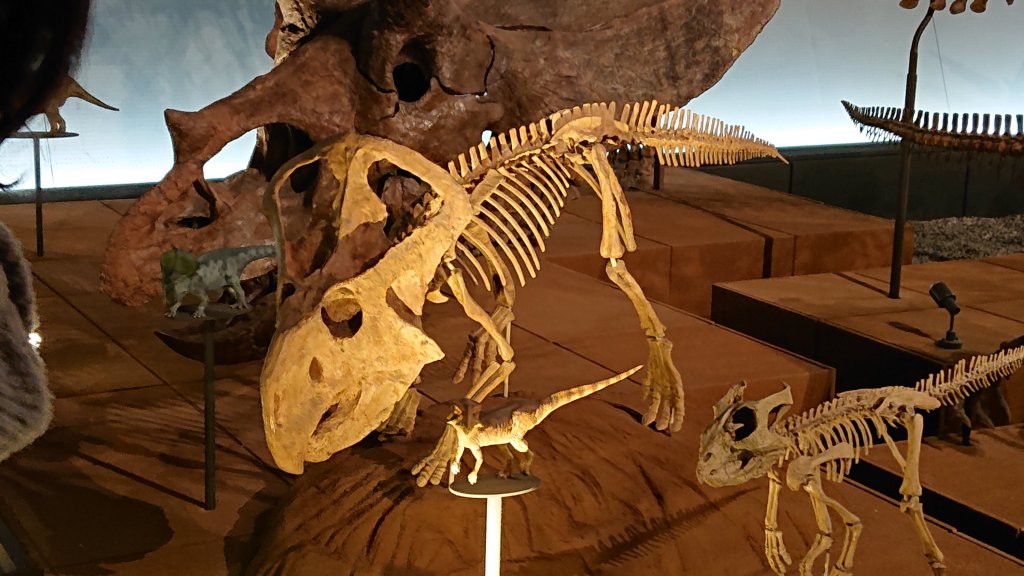
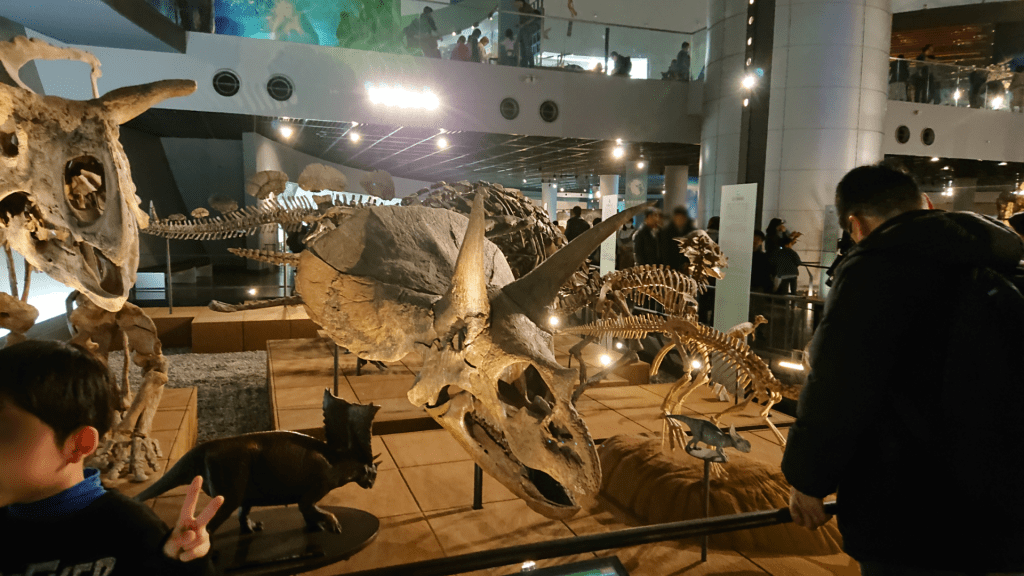
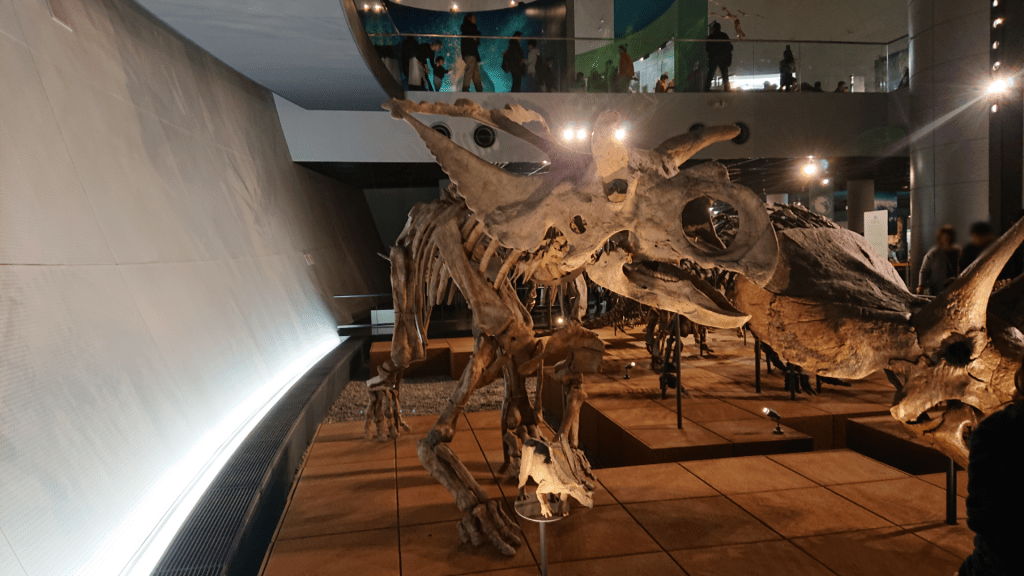
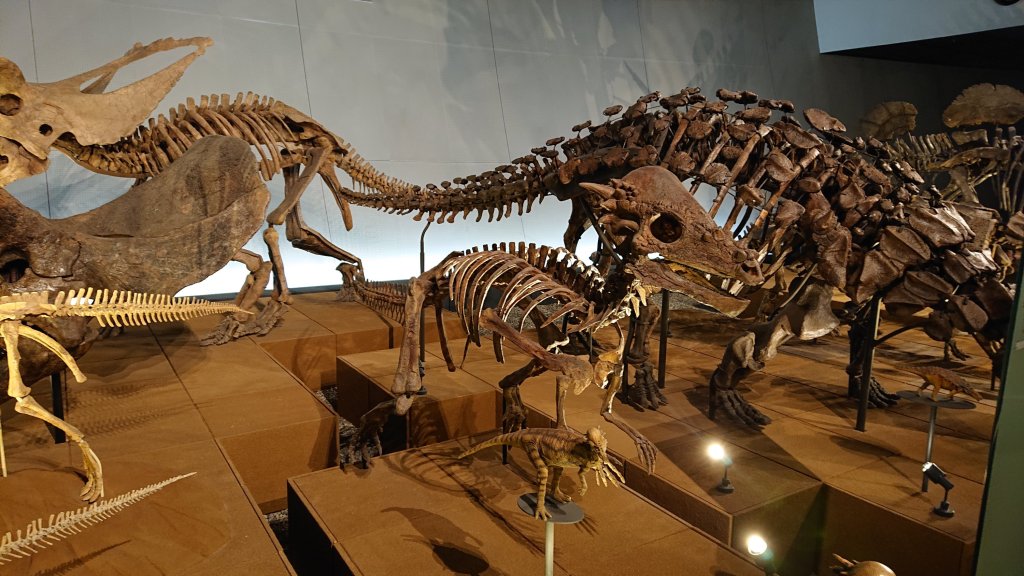
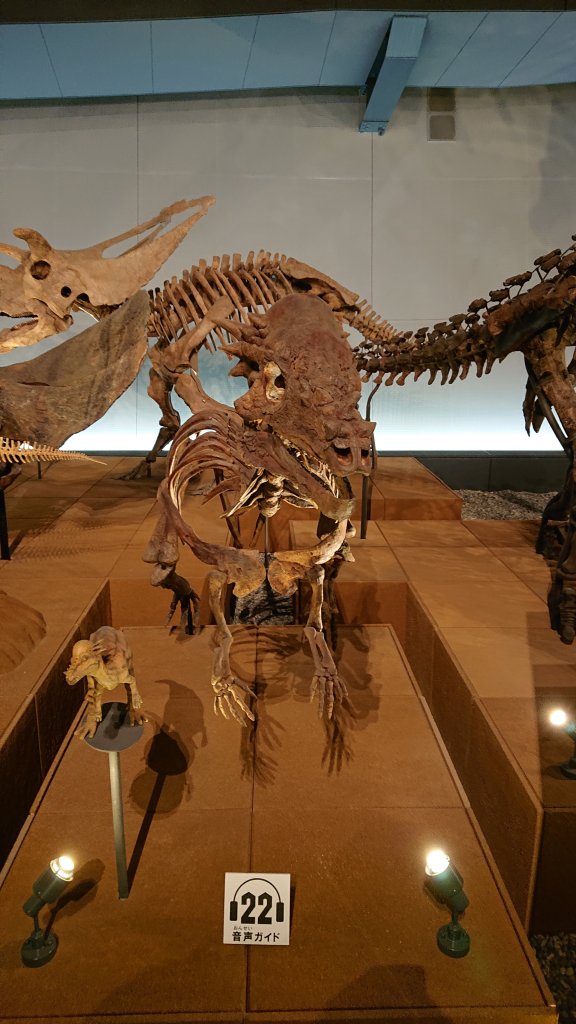
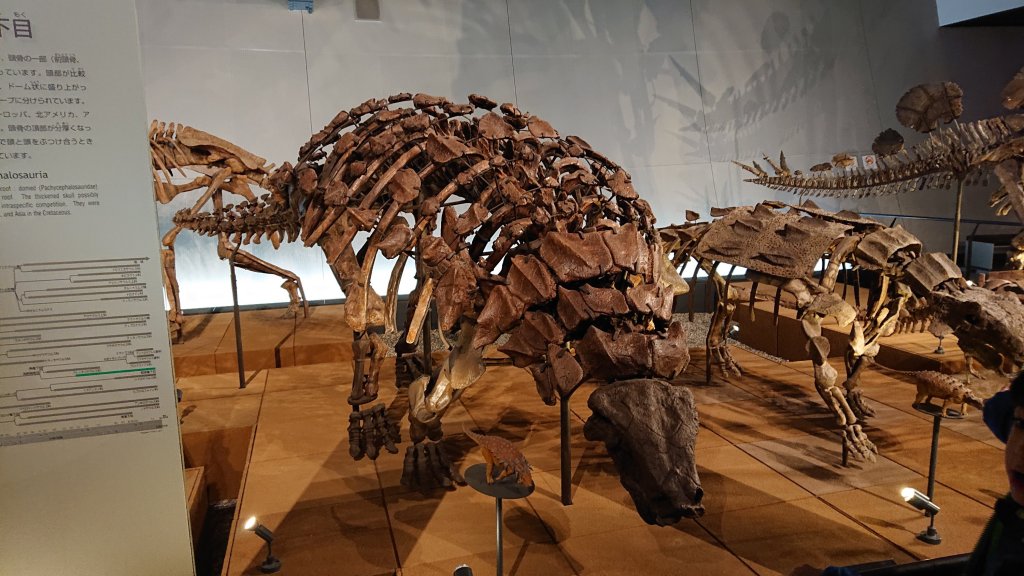
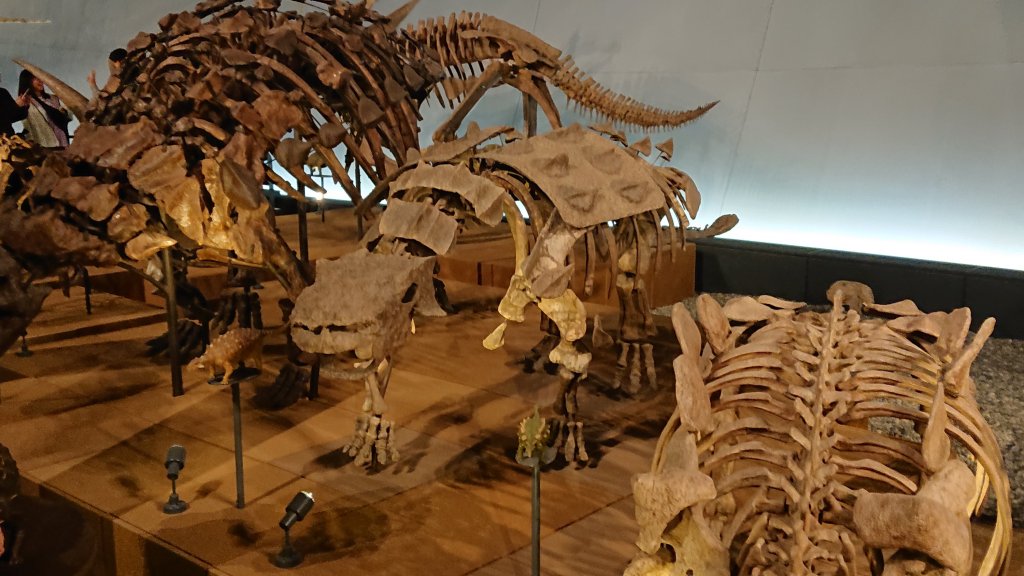
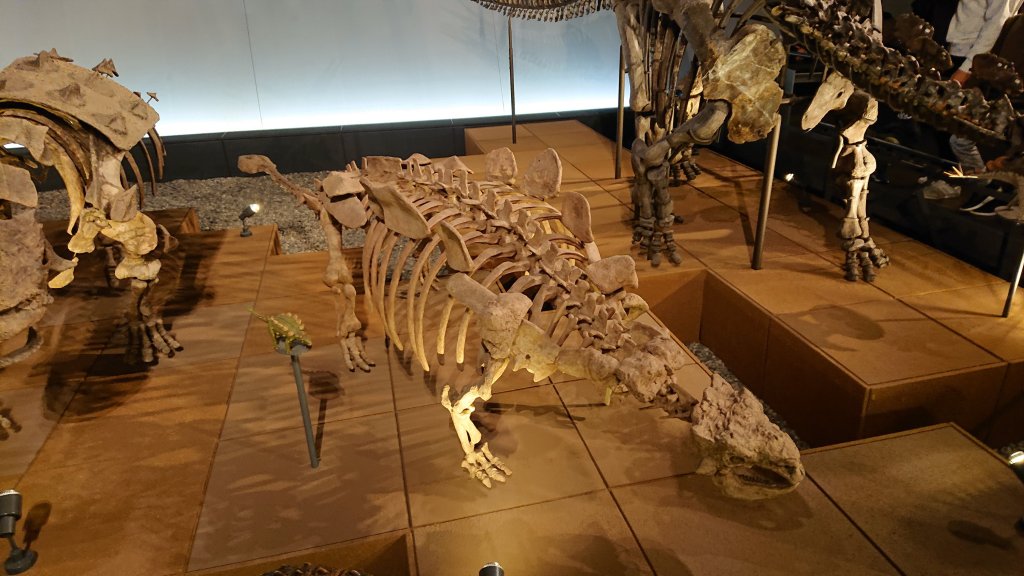
Today, I’ll write about marginocephalan and thyreophoran dinosaurs.
Reconstructed skeleton of Archaeoceratops oshimai.
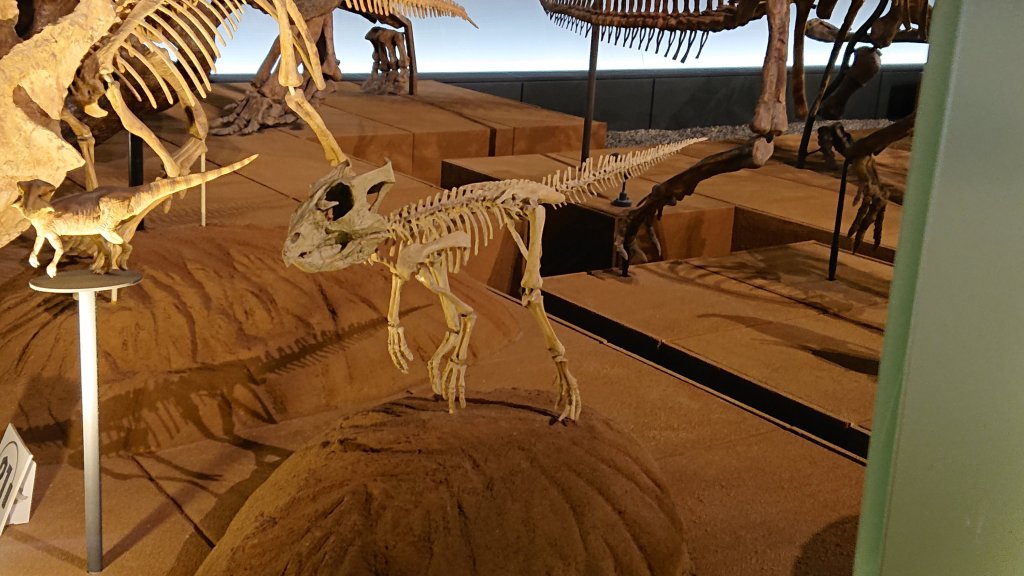
Archaeoceratops oshimai is the early ceratopsia, so it has neither frill nor horn.
Reconstructed skeleton of Protoceratops andrewsi.
Protoceratops andrewsi also has no horn, but for fighting dinosaurs fossil, it fought with strong jaws.
Reconstructed skull of Triceratops sp.
Triceratops sp. is the biggest, most famous, and last ceratopsia, but there is no hole on its frill. it is quite different to other ceratopsia.
Reconstructed skeleton of Medusaceratops lokii. artifact parts arebased on Chasmosaurus.
For caption, it is Albertaceratops nesmoi. But it was found in Montana, so it would be Medusaceratops lokii. Artifact parts like frill are reconstructed like Chasmosaurus because it was thought a species of Chasmosaurus at first.
Reconstructed skeleton of Pachycephalosaurus wyomigensis.
Pachycephalosaurus wyomigensis has a body like a barrel to receive its long intestine.
Reconstructed skeleton of Edmontonia sp. with real fossil.
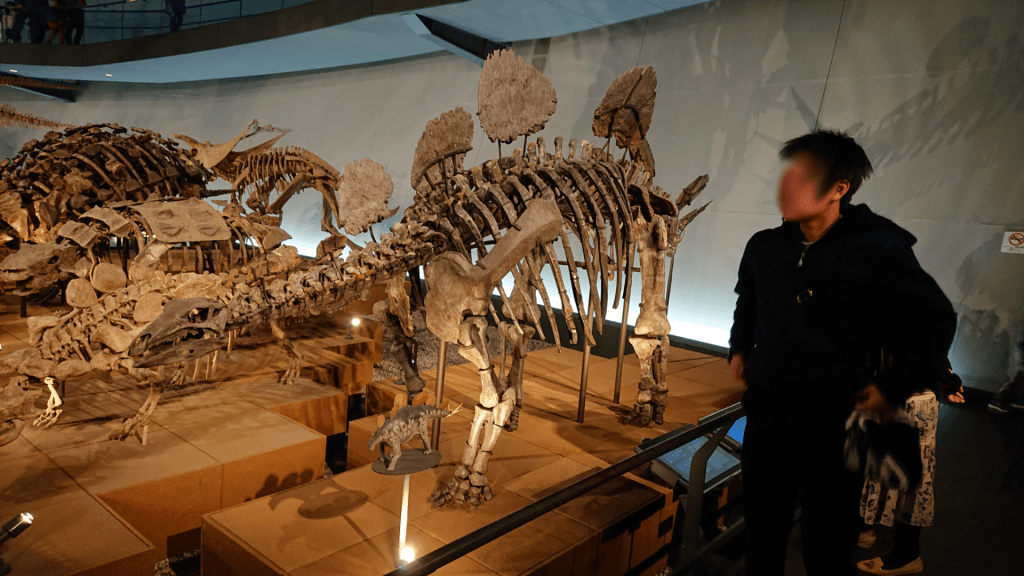
Edmontonia sp.‘s spikes points front. they looks like strong weapons.
Reconstructed skeleton of Euoplocephalus tutus.
It is Euoplocephalus tutus for caption, but I don’t know whether it is really Euoplocephalus or not. What do you think?
Reconstructed skeleton of “Crichtonsaurus bohlini”.
“Crichtonsaurus bohlini” is not valid name. This skeleton has osteoderms in two rows, but there is no evidence about them.
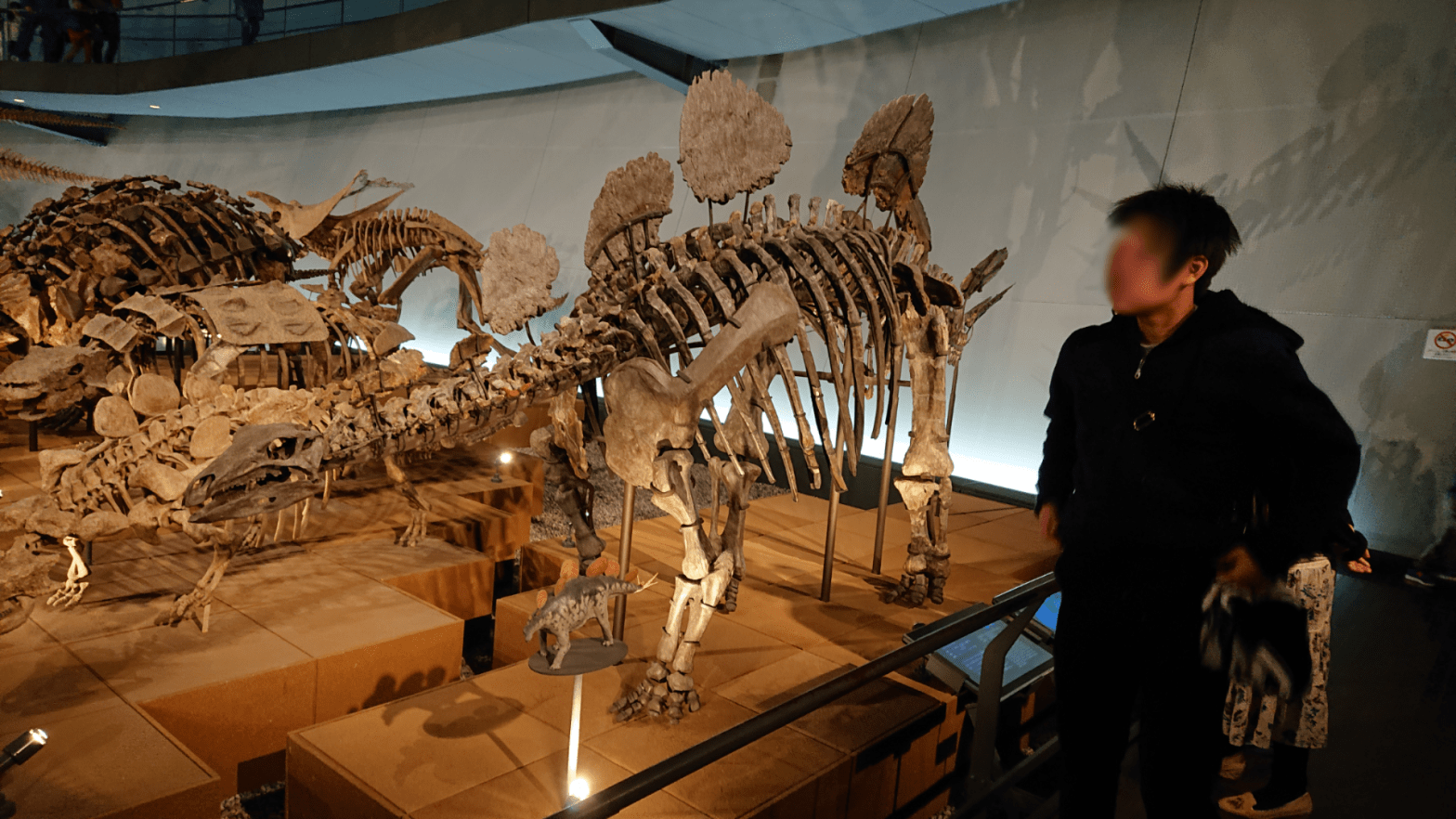
Reconstructed skeleton of Hesperosaurus mjosi with real holotype.
This Hesperosaurus mjosi is real holotype. It is one of the specimen to see in the museum.
Thank you for reading! Next time, I’ll write about dinosaurs in Fukui.
Lufengosaurus huenei had been included in prosauropods, the group with same ancestor to sauropods but not connected to them directly. But now, prosauropods are broken and they are thought to be connected to sauropods directly.
Reconstructed skeleton of Bellusaurus sui.
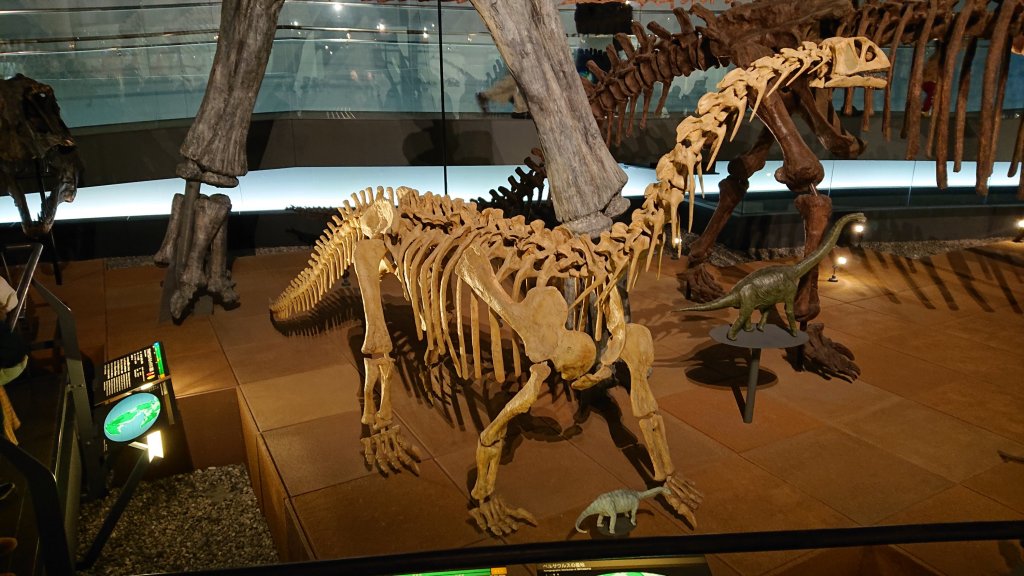
Bellusaurus sui is 4.5m long. It is very small as sauropod because it is juvenile. Adult specimen has never found.
Reconstructed skeleton of “Kunmingosaurus wudingensis”.
“Kunmingosaurus wudingensis” have been 66 years since it was found, but it has never been described yet. This name isn’t officially.
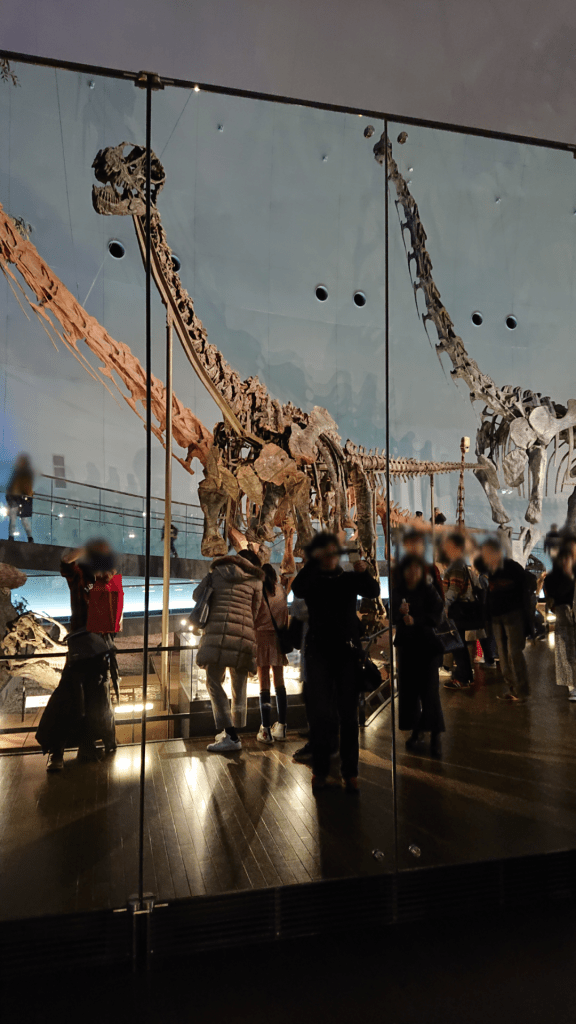
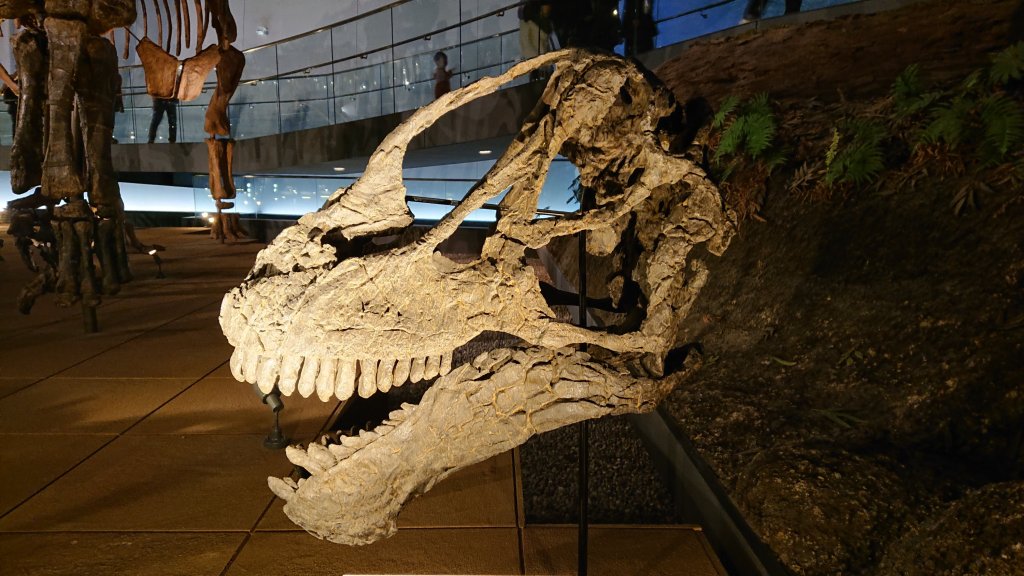
Reconstructed skeleton of Camarasaurus sp. with real fossil. This photo was taken through mirror.Reconstructed skull of Camarasaurus sp.
This Camarasaurus sp. is real fossil. This specimen is researched now.
“Welcome to Jurassic Park.”
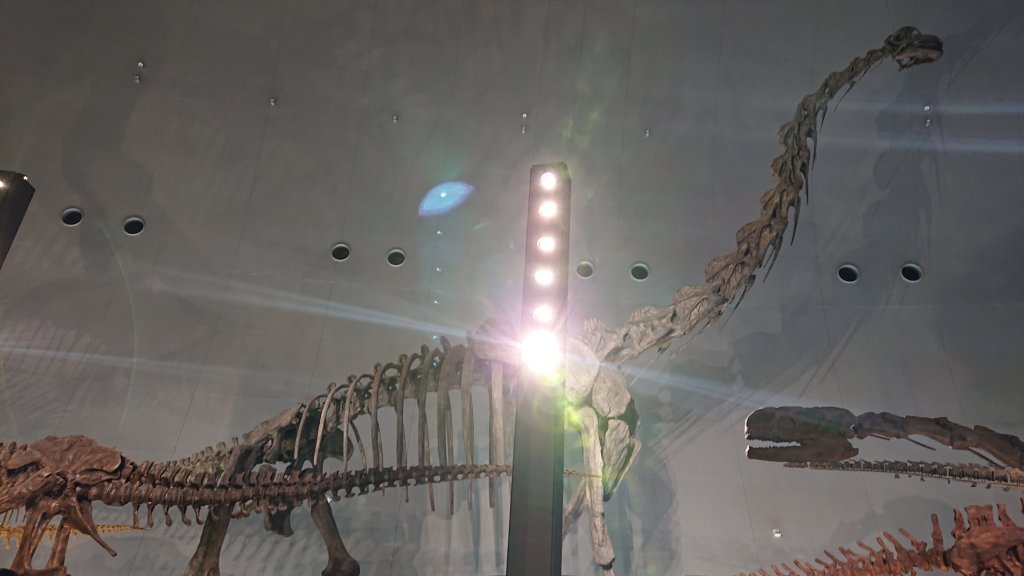
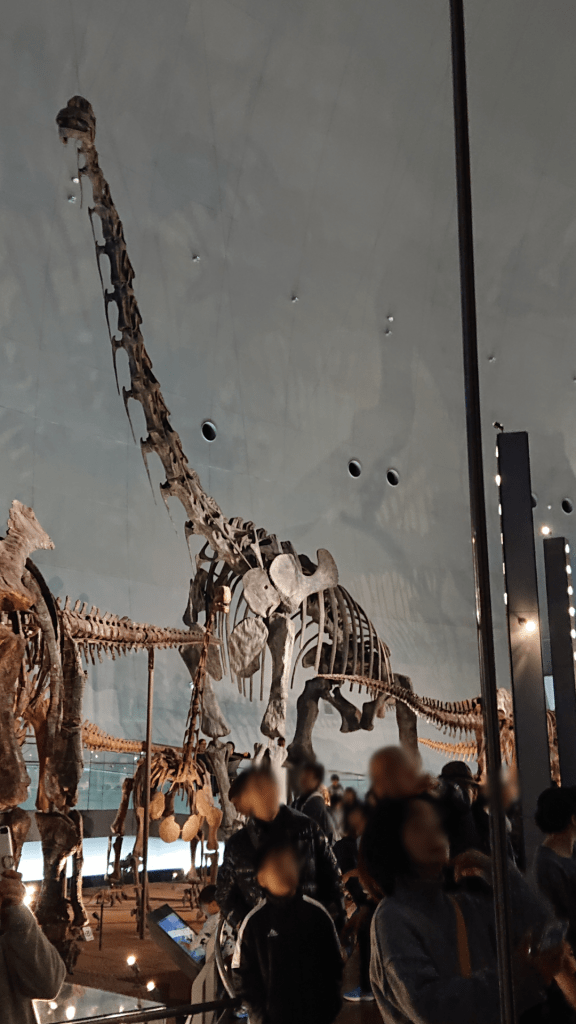
Reconstructed skeleton of Brachiosaurus altithorax. This photo was taken through mirror.
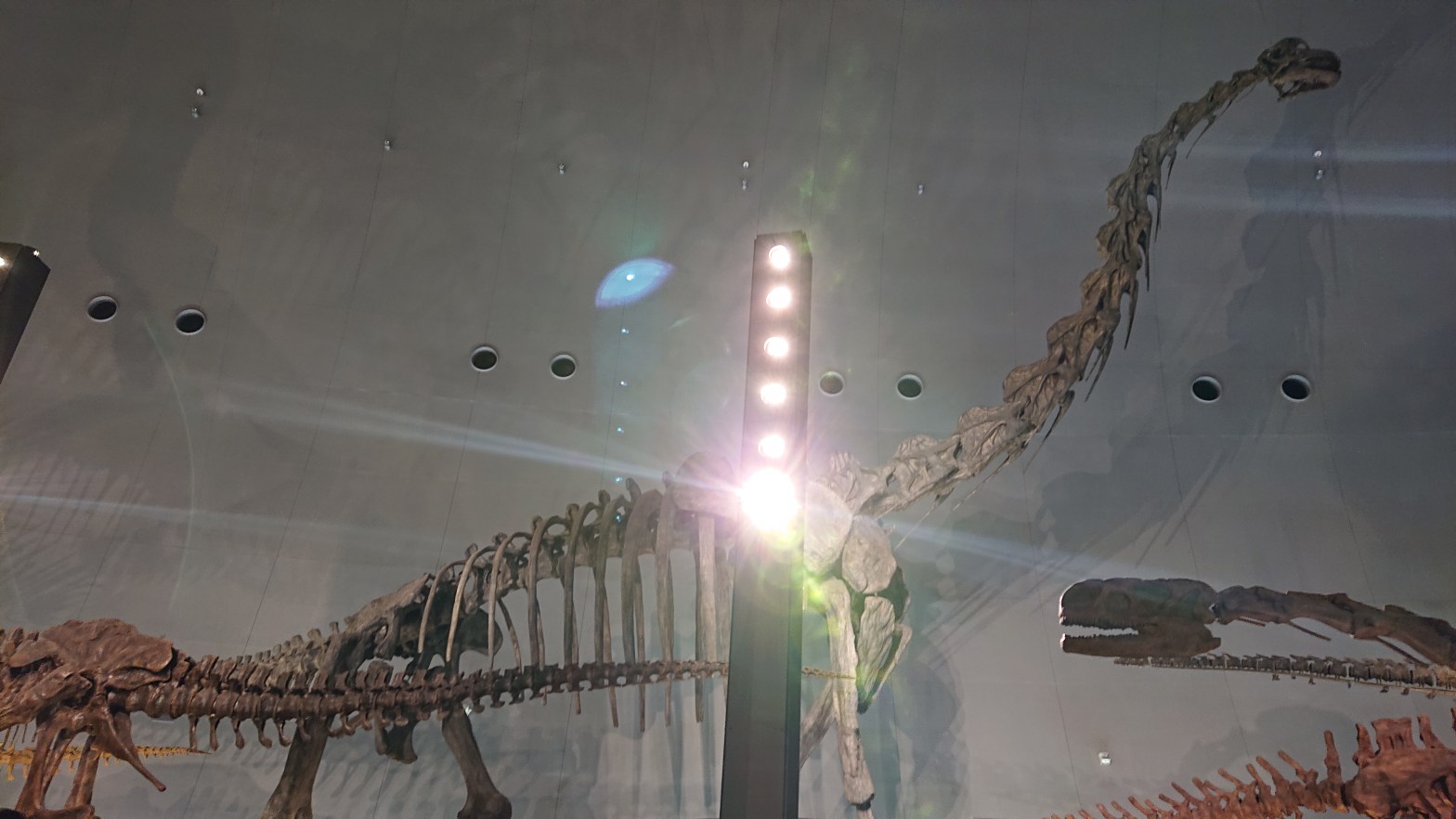
Brachiosaurus altithorax is the biggest animal in this museum. It is very huge!
Thank you for reading! Next time, I’ll write about ornithopods.
I’m sorry to be late. Today, I’ll write about theropods.
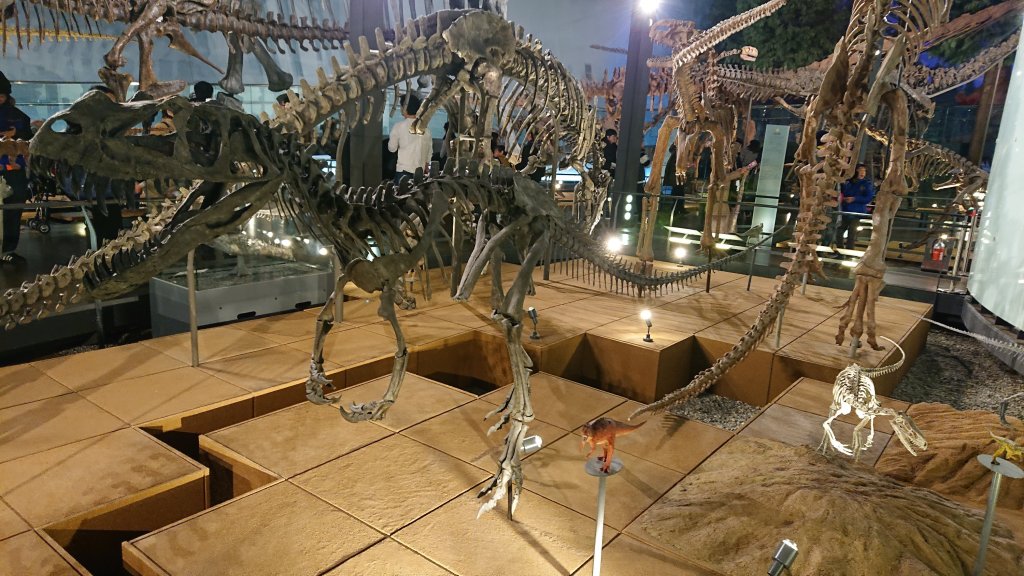
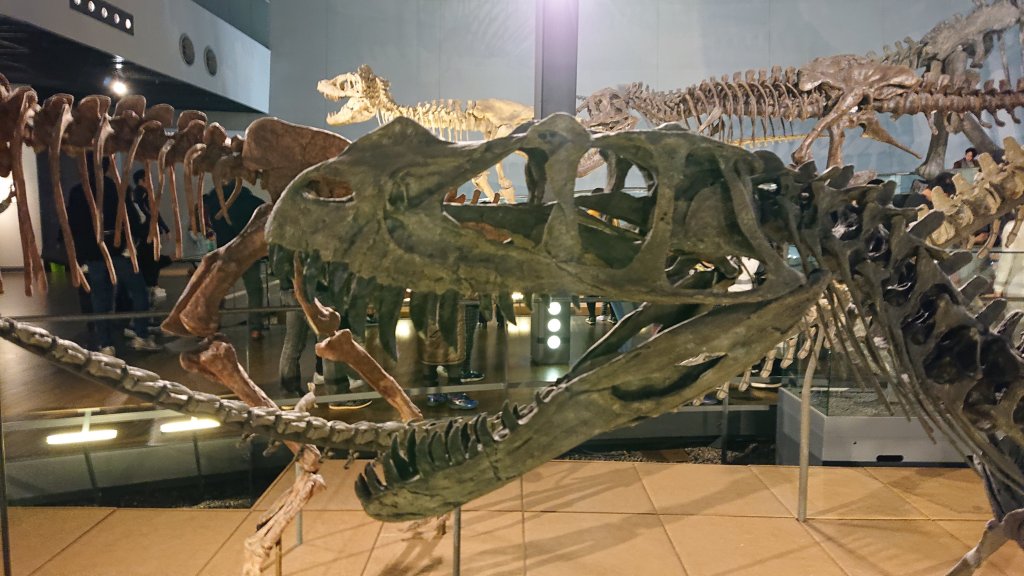
Reconstructed skeleton of Ceratosaurus nasicornis.Skull of Ceratosaurus nasicornis.
Ceratosaurus nasicornis is seen its long teeth very well.
Reconstructed skeleton of Sinosaurus triassicus.
Sinosaurus triassicus had been called Dilophosaurus sinensis until 2013. Its two crest is similar to Dilophosaurus‘s.
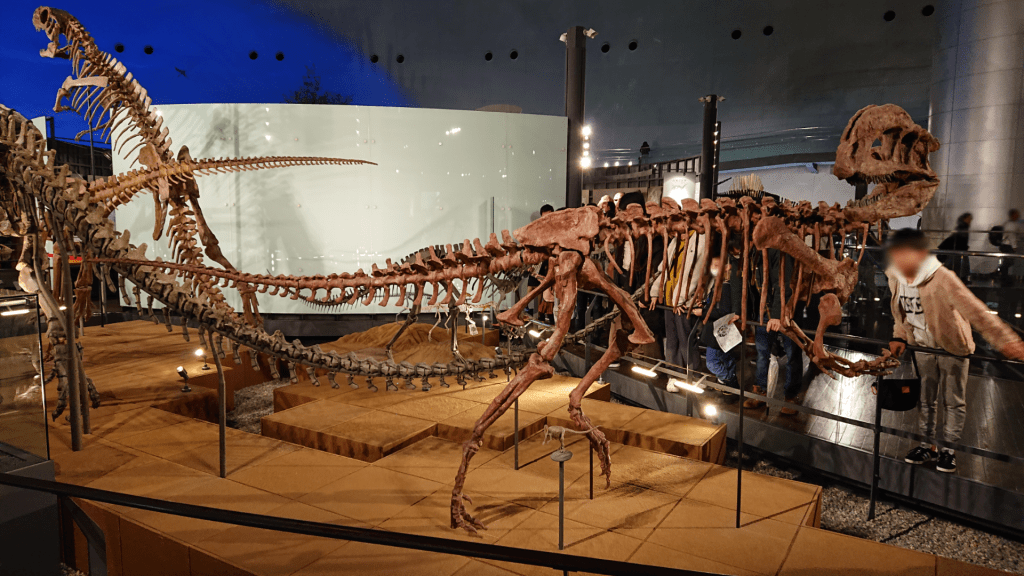
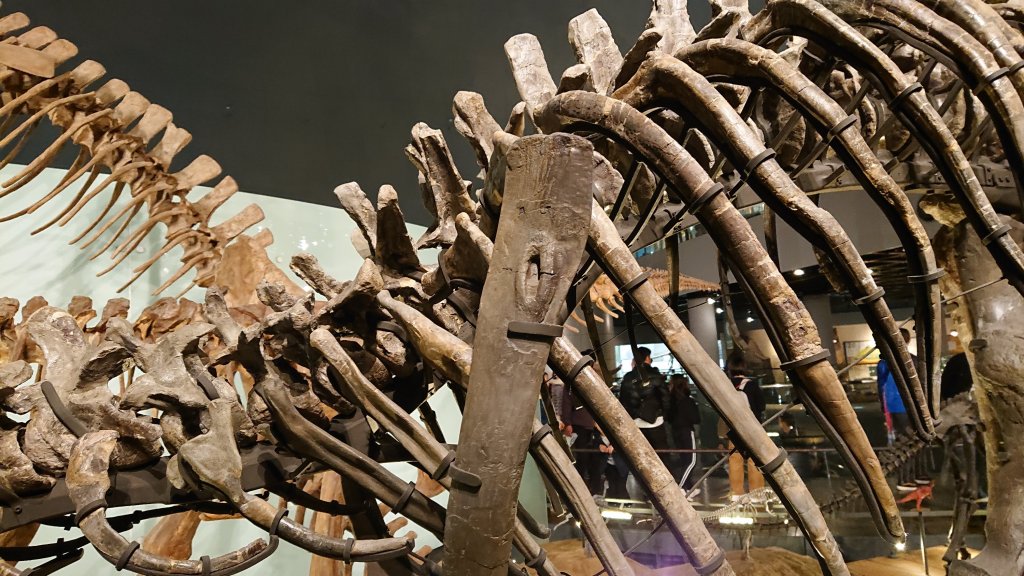
Reconstructed skeleton of Allosaurusfragilis used real fossil.Skull of Allosaurus fragilis used real fossil.An injury on the scapula by stegosaurid
This Allosaurus fragilis has an injury hurted by stegosaurid on its scapula. It might fought hardly.
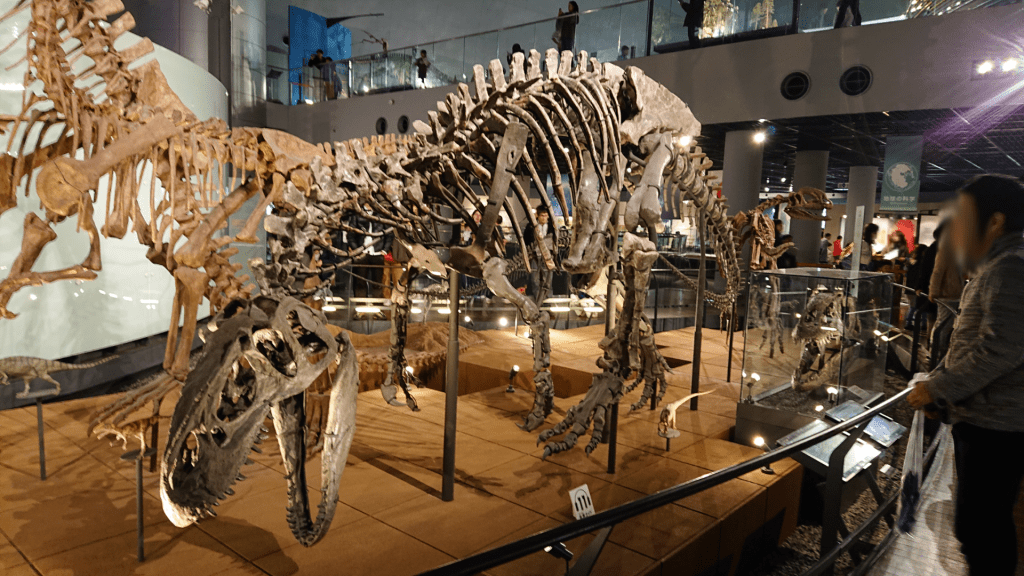
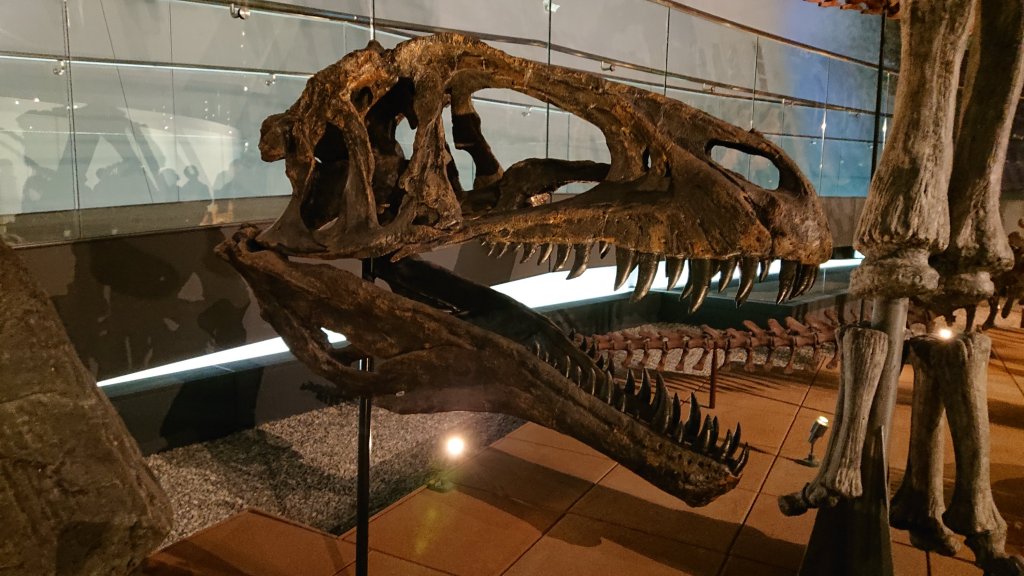
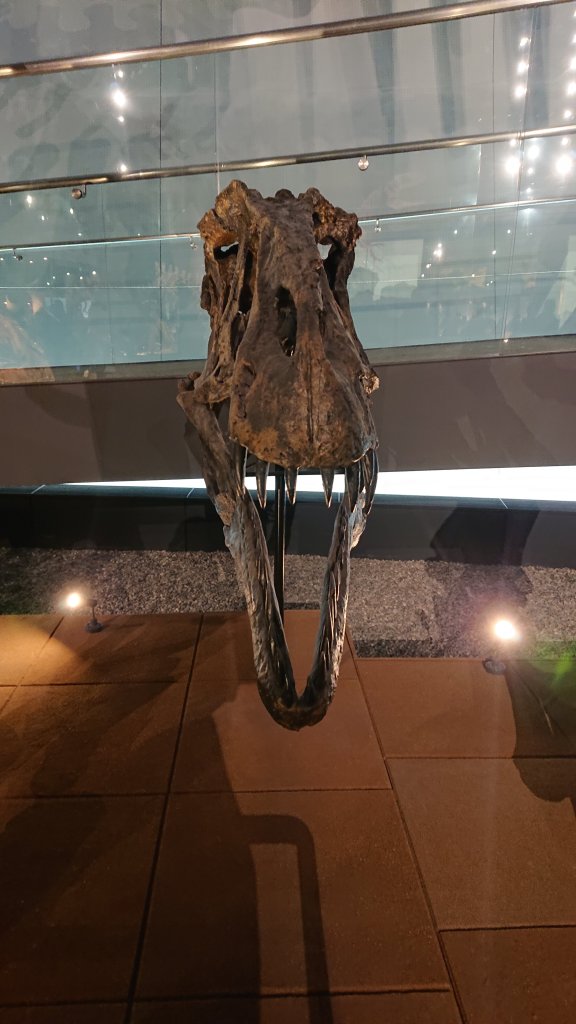
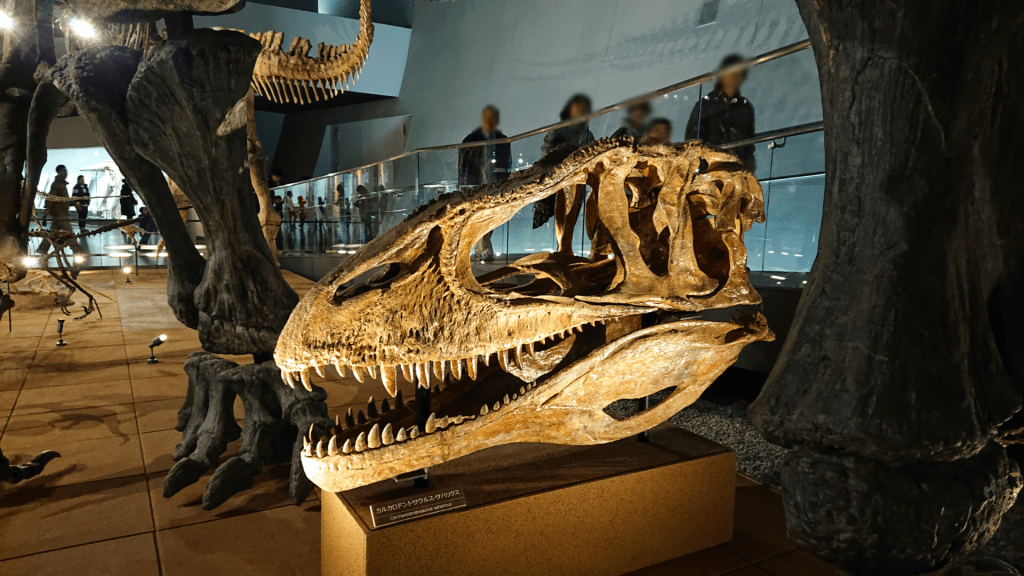
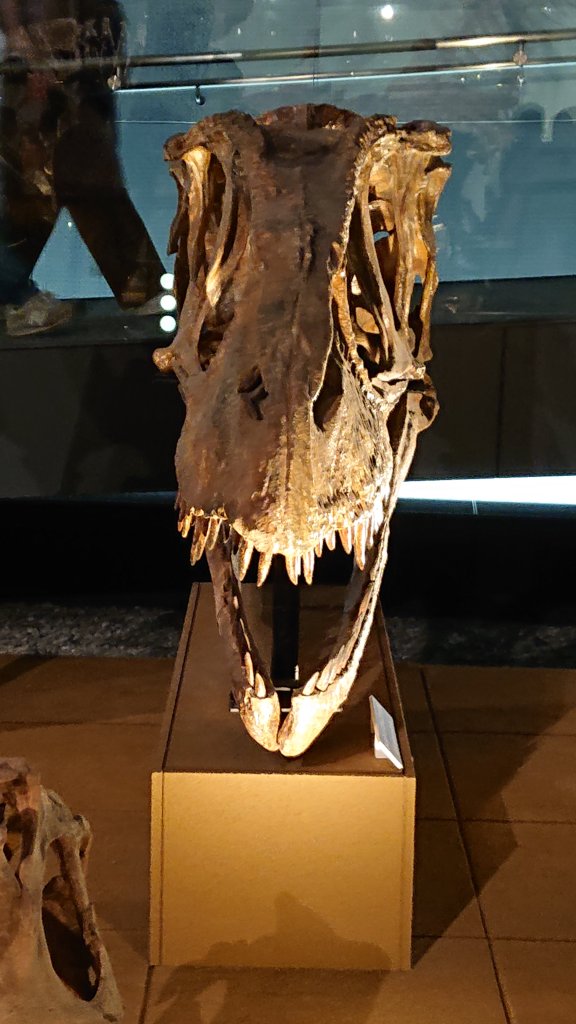
Skull of Acrocanthosaurus atokensis.Front view of Acrocanthosaurus skull.Skull of Carcharodontosaurus saharicus.Front view of Carcharodontosaurus skull.
Acrocanthosaurus atokensis and Carcharodontosaurus saharicus are carcharodontosaurid dinosaurs. We can see bump above their each eye.
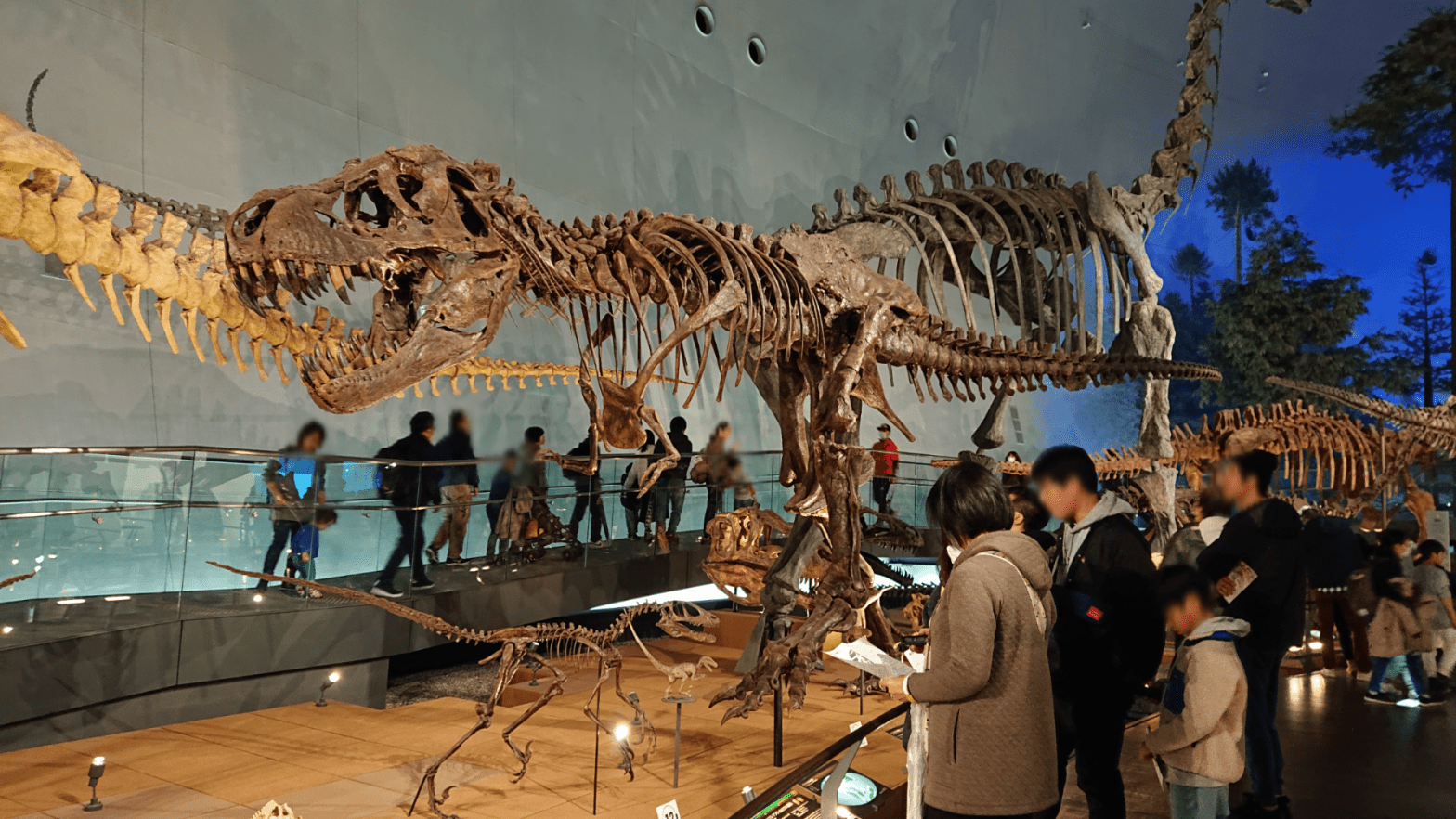
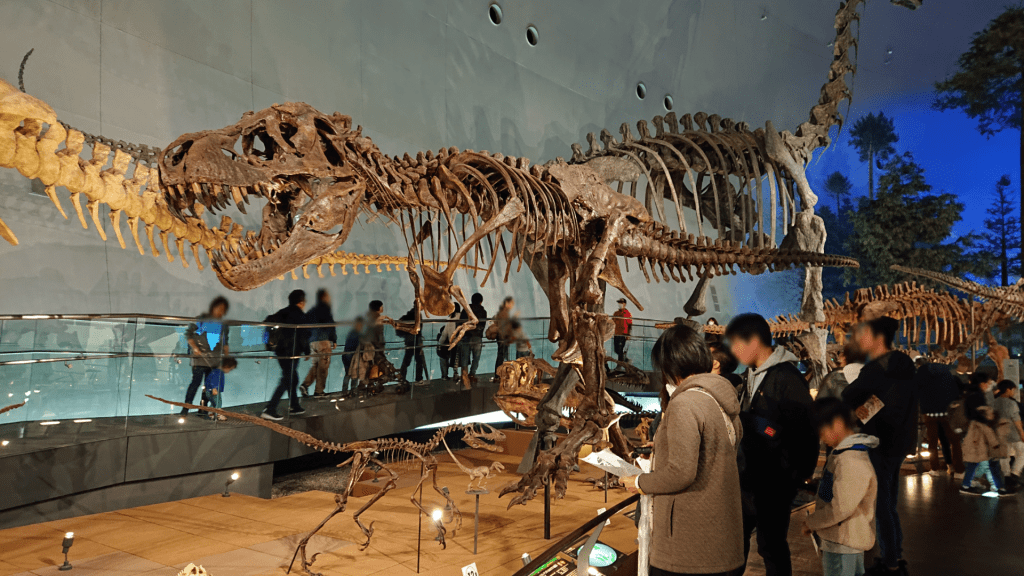
Reconstructed skeleton of Tyrannosaurus rex.
Tyrannosaurus rex has a big head, but also has small hands. It is uncertain how they are used.
Thanks for reading! Next time, I’ll write about sauropodomorphs.



 Japanese Dino-mania