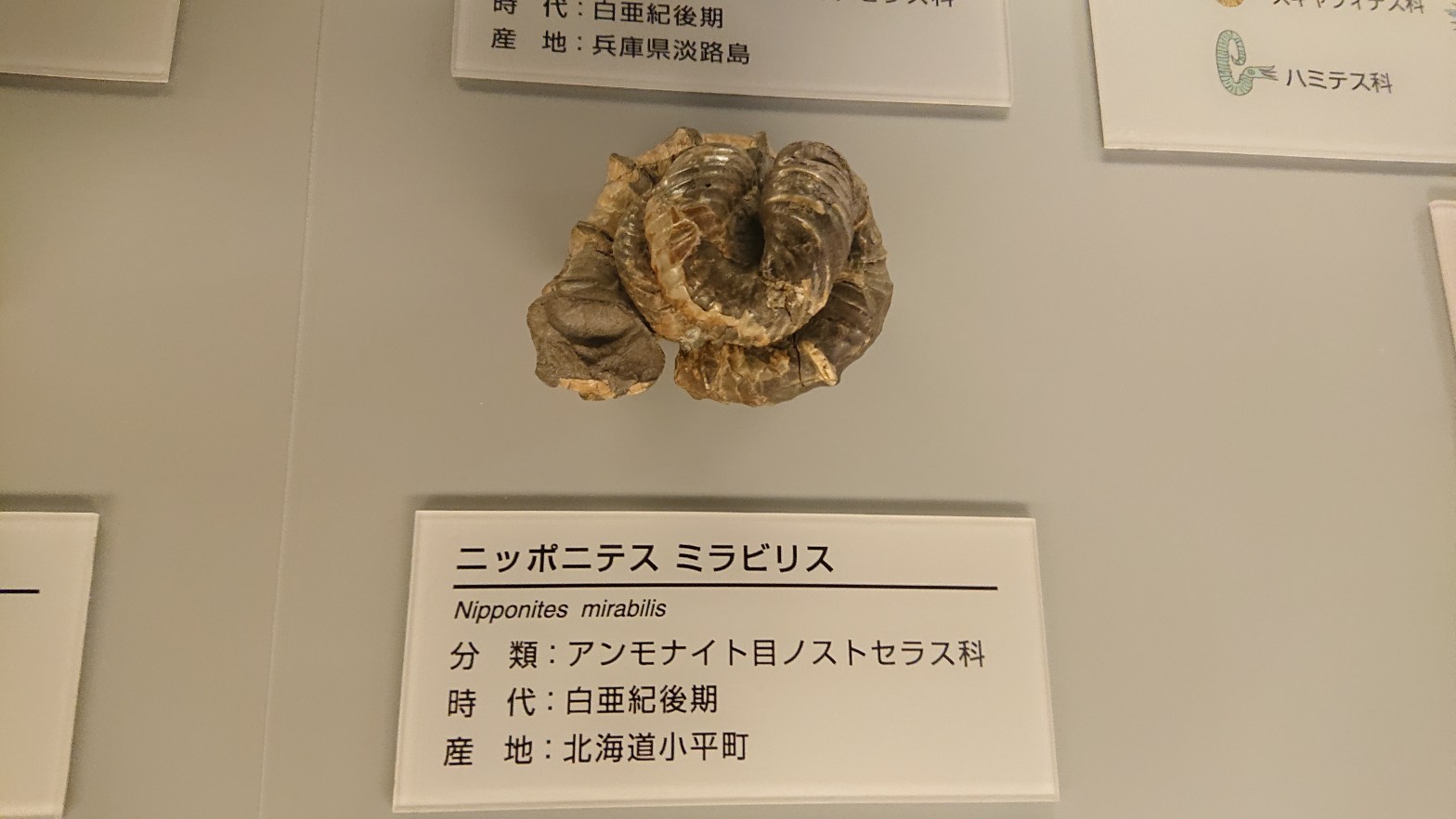
Japanese unique ammonites: Fossil day in Japan

I am sorry to rest writing the report of planet shark. It is the fossil day in Japan today! The reason is that Nipponites, representative prehistoric animal in Japan was recorded first today of 1904. Nipponites is very unique ammonite, so I will write about Japanese unique ammonites today. Japanese ammonites are famous for their …

Planet Shark report(1)

On September 22th, I visited the exhibition “Planet Shark: Predator or Prey” in WA Maritime Museum. There were a lot of specimens of sharks. This exhibition will be held until November 10th. If you are interested in sharks, you should visit. Megalodon (Carcharodon megalodon, Charcharocles megalodon or Otodus megalodon) is the largest predator shark ever …

Perth Zoo report(6): Reptile Encounter

I am sorry to be late. This is the final report about Perth Zoo. I will write about reptiles today. Pebble-mimic dragon (Tympanocryptis cephalus) is very cute. I had not seen it before, but It became one of the cutest reptiles that I know. Southern pygmy spiny-tailed skink (Egernia depressa) looks like a small dragon. …

Perth Zoo report(5): Asian Rainforest

I’ll write about Asian tropical animals today. Sumatran orangutan (Pongo abelii). “Orangutan” means “forest man”. He is our relative. Asian elephants (Elephas maximus) are second-largest animals on the ground. Bull has great tusks, but female does not have them. Sumatran tiger (Panthera tigris smatrae) is the smallest tiger, but he is big because tigers are …

Perth Zoo report(4): Amazonia & Primate Trail

I’ll write about South American animals today. Galapagos tortoises (Chelonoidis nigra) are the largest tortoise in the world. They are huge. They are not in Amazonia nor Primate Trail, but I write here. South American coati (Nasua nasua) is relative to racoons. Procyonidae has variety of animals like racoons, cacomistle, kinkajou, or it. Pygmy marmoset …

Perth Zoo report(3): African Savannah

I’ll write about African animals today. African painted dogs (Lycaon pictus) are very actively. Hamadryas baboons (Papio hamadryas) have red hips.Their rostrums stick out, so Their faces are similar to carnivoras’. African lion (Panthera leo senegalensis) was sleeping. Her charisma was broken. Southern white rhinoceros (Ceratotherium simum simum) was also sleeping. I could not watch …

Perth Zoo report(2): Australian Wetland

I am sorry to be late. I’ll write mainly about Australian waterfowls. Black-necked storks (Ephippiorhynchus asiaticus) never moved. They have as much patience as shoebill. Black swan (Cygnus atratus) is big, but it is common waterfowl in Australian lakes. Yellow-billed spoonbill (Platalea flavipes) has longer legs and beak like spoon or spatula, but it is …

Perth Zoo report(1): Main Lake & Australian Bushwalk

I visited Perth Zoo on August 31th. I’ll write reports about there from today. Southern cassowary (Casuarius casuarius) is the animal that I wanted to see the best. He has very big and scary claws on each second toes. Bush stone-curlew (Burhinus grallarius) is slenderer than I thought. It lives in dry land while most …

Caversham Wildlife Park report(3)

This is the final report of Caversham Wildlife Park. I’ll write about lizards. Frilled dragon (Chlamydosaurus kingii) is the most famous Australian lizard in Japan. I can see his frill clearly while it is closed. Central bearded dragon (Pogoma vitticeps). I think it is one of the cutest reptiles without turtles. I wanted to see …

Caversham Wildlife Park report(2)

I’ll write about Cockatoos today. Gang-gang cockatoo (Callocephalon fimbriatum, left) and pink cockatoo (Lophochroa leadbeateri, right). They hold a fruit when they eat it.I feel Gang-gang cockatoo has a funny name. Eclectus parrots (Eclectus roratus). Red one is female and green one is male. There are so many birds whose male and female has different …

Design a site like this with WordPress.com
Get started