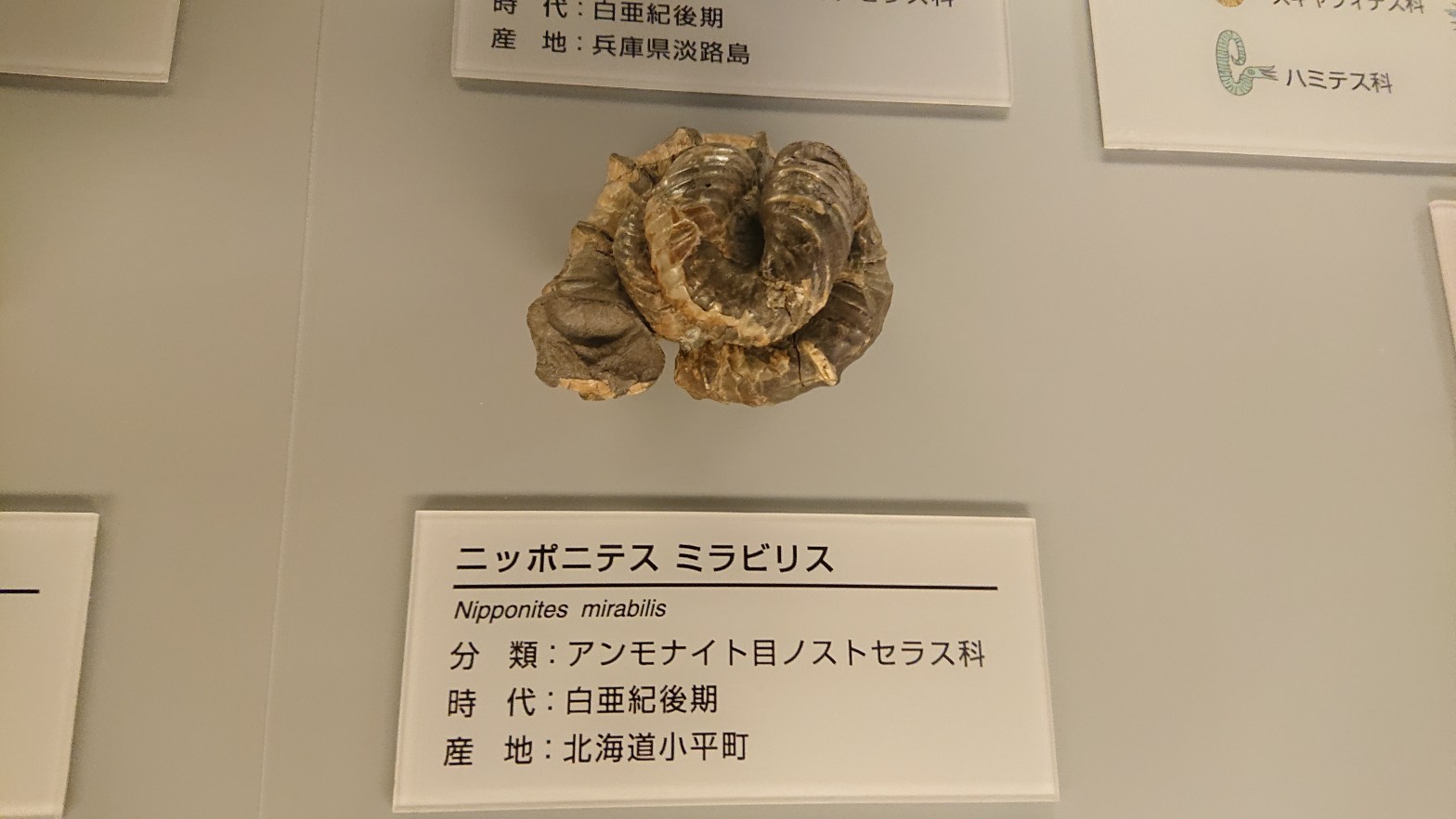
I am sorry to rest writing the report of planet shark. It is the fossil day in Japan today! The reason is that Nipponites, representative prehistoric animal in Japan was recorded first today of 1904. Nipponites is very unique ammonite, so I will write about Japanese unique ammonites today.
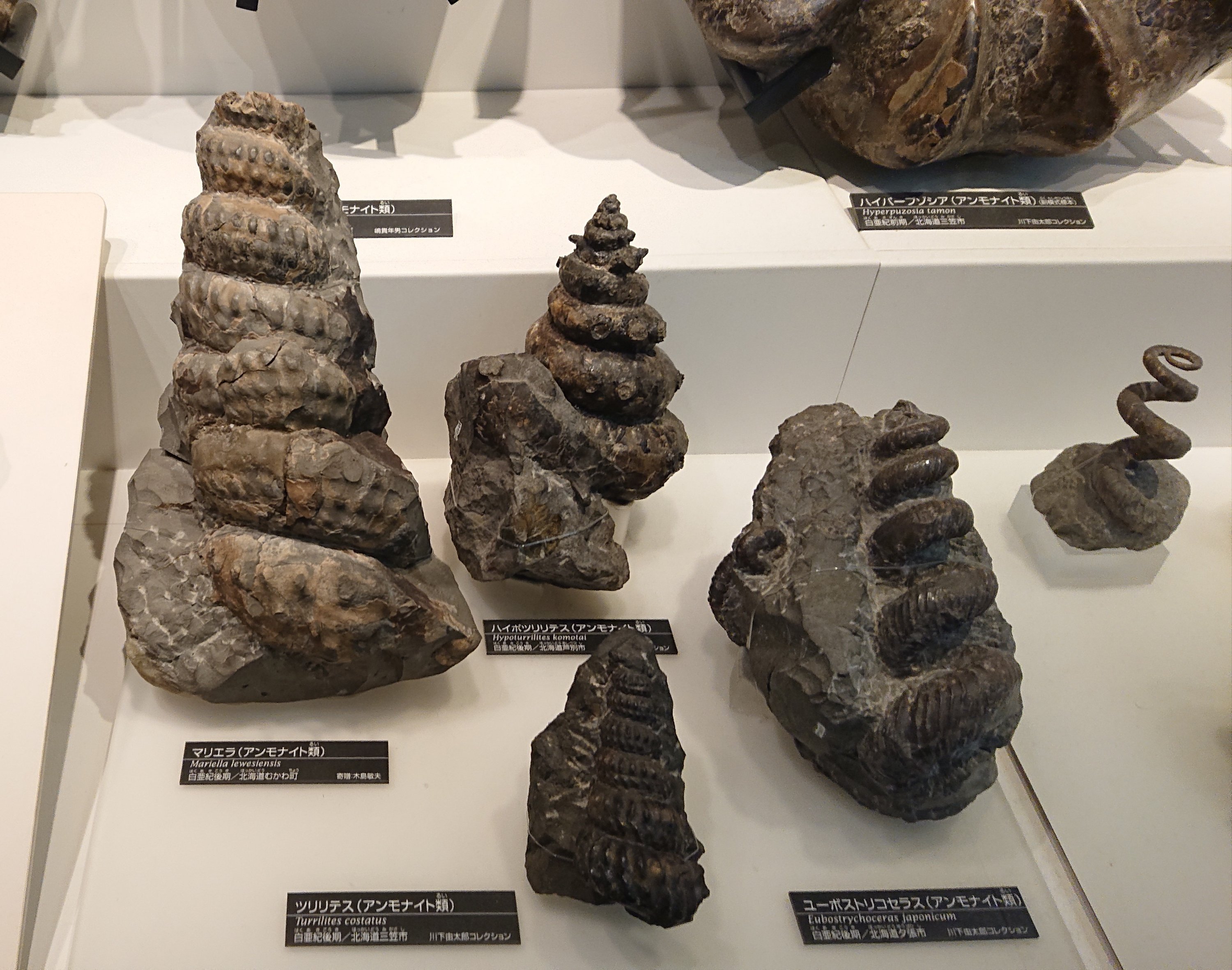
Upper(left to right): Mariella lewesiensis and Hypoturrilites komotai
Middle: Eubostrychoceras japonicum
Lower: Turrilites costatus
This photo was takenin Natural Museum of Nature and Science in Tokyo.
Japanese ammonites are famous for their unique shells. Ammonite’s shell is commonly similar to nautilus’s, but many Japanese ammonites have different shells.
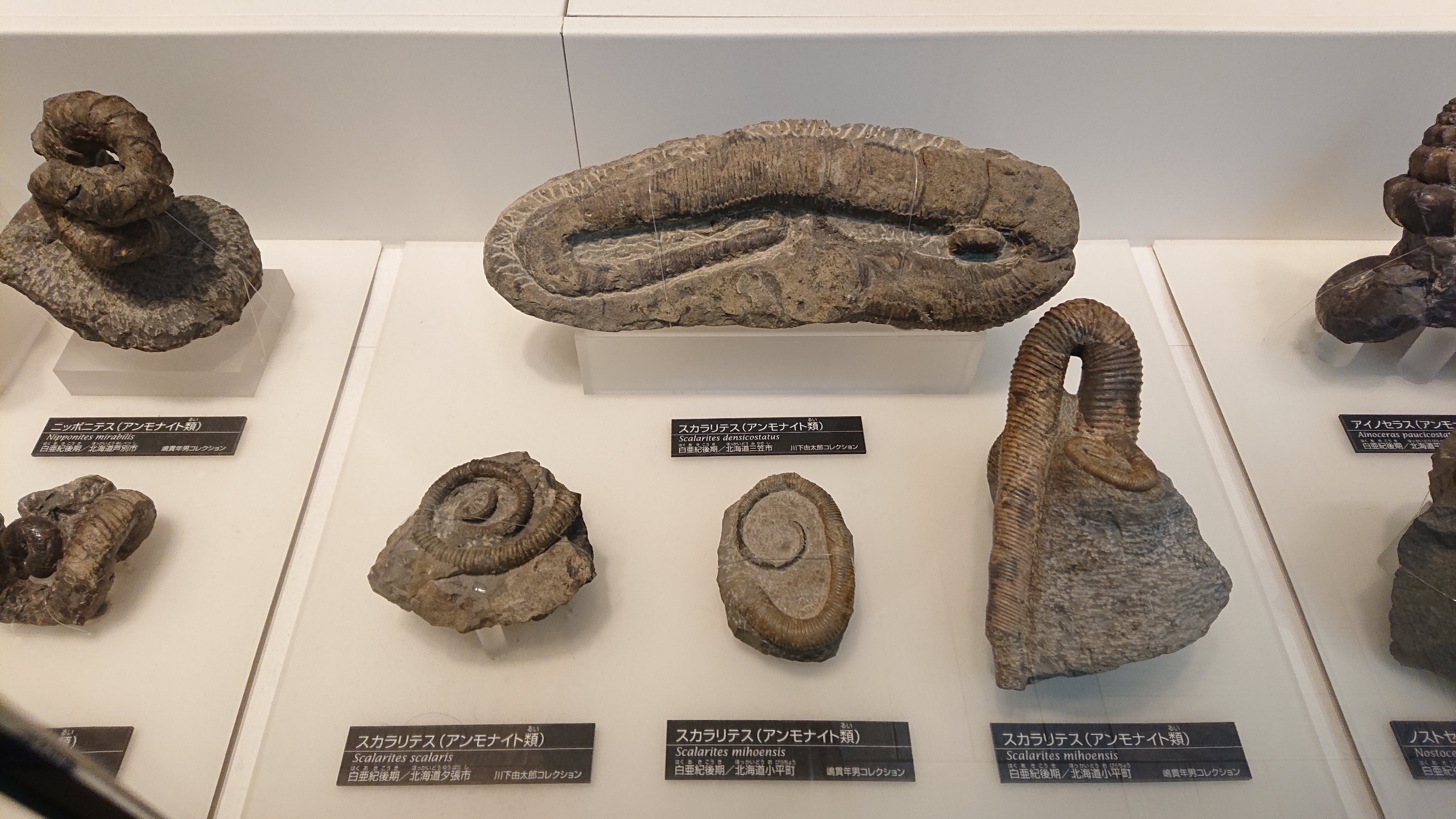
Upper: Scalarites densicostatus
Lower(Left to right): Scalarites scalaris and Scalarites mihoensis
This photo was taken in Natural Museum of Nature and Science.
They are called “unusually coiled ammonites” in Japan, but they are not freak and all of them are coiled regularly.
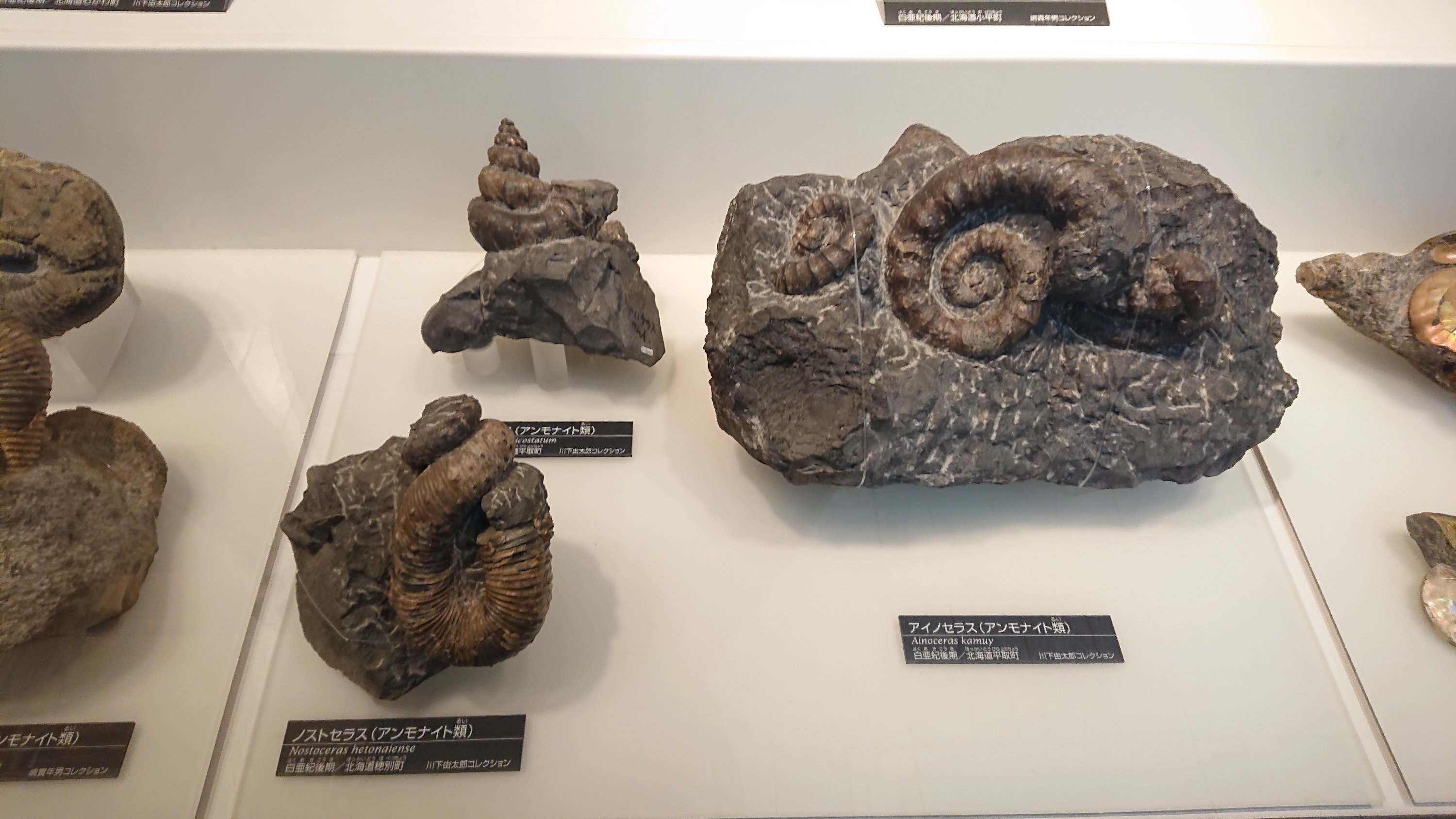
Upper(left to right): Ainoceras paucicostatum and Ainoceras kamuy
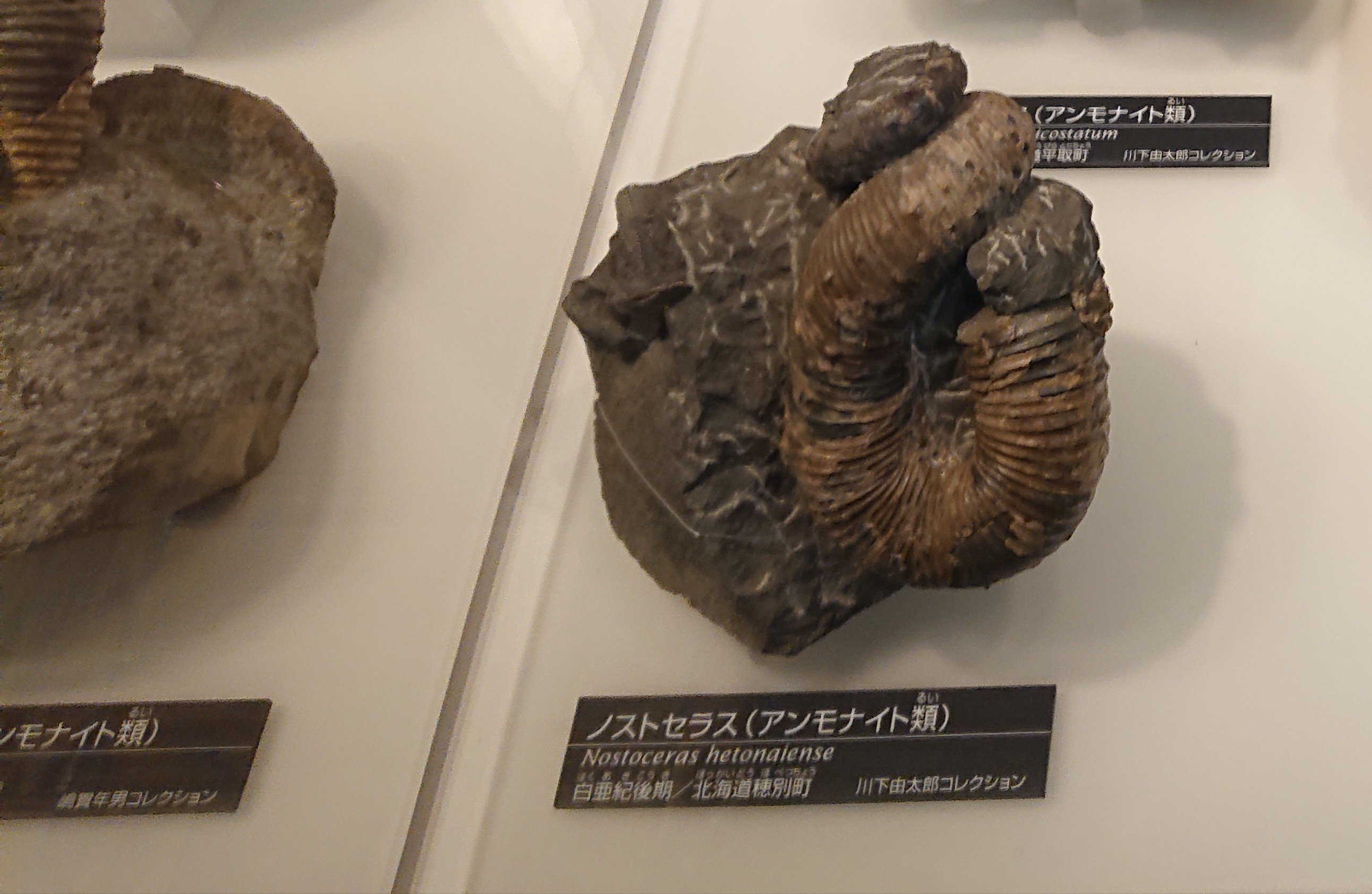
Lower: Nostoceras hetonaiense
In Natural Museum of Nature and Science
Why did they have such unique shells? Because they had to keep their posture with growing.
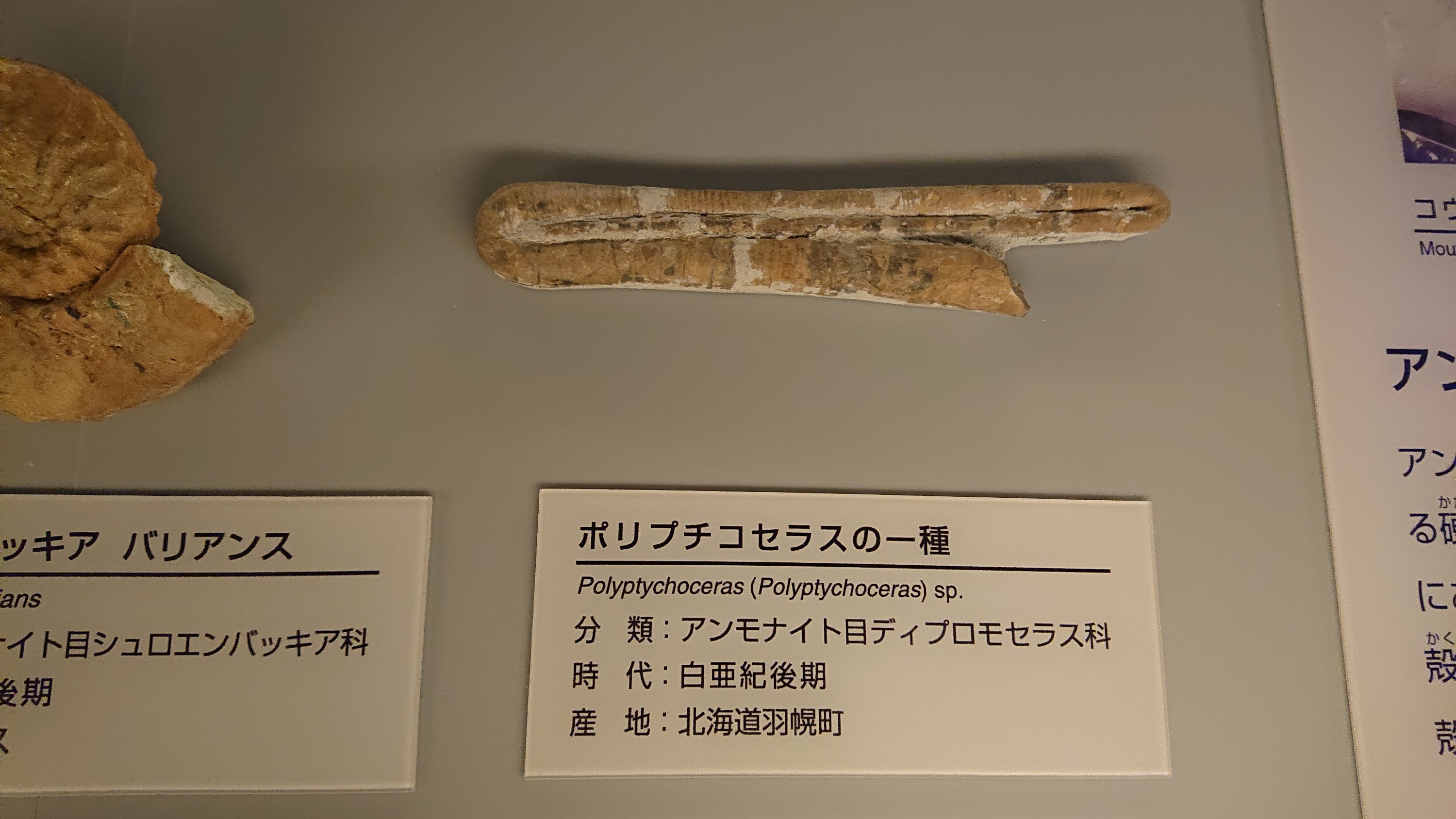
This photo was taken in Fukui Prefectural Dinosaur Museum.
“Unusually coiled ammonites” lived in Late Cretaceous, about 100 to 66 million years. ago. They are mainly found in Yezo Group, the strata in Hokkaido, and Izumi Group, the strata between Osaka and Ehime.
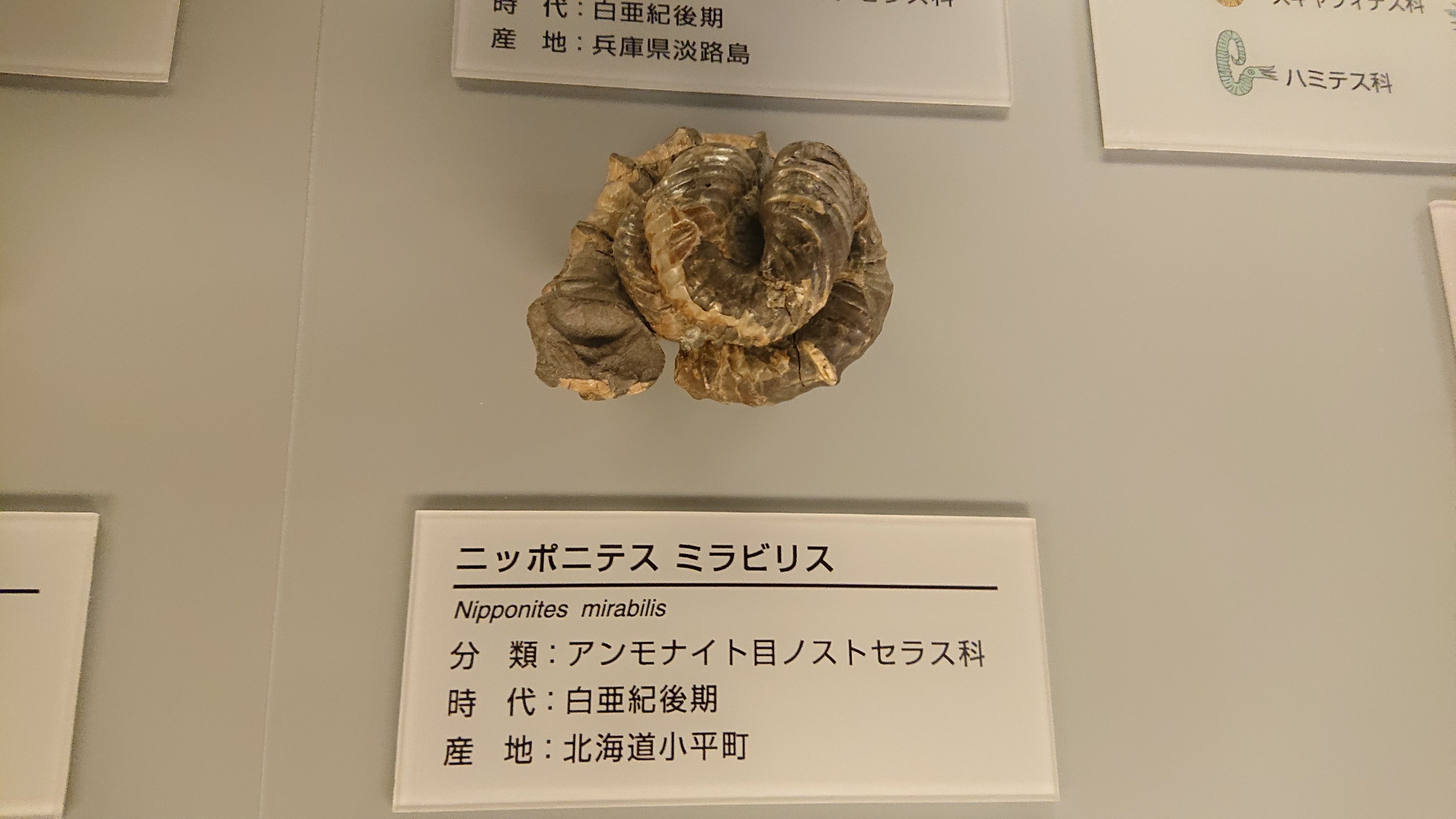
Nipponites is the most famous Japanese ammonite. It is found in Yezo Group. Its shell looks to coiled irregularly and complexly, but it is coiled regularly.It grew with switch how to coil to vertically, right and left regularly.
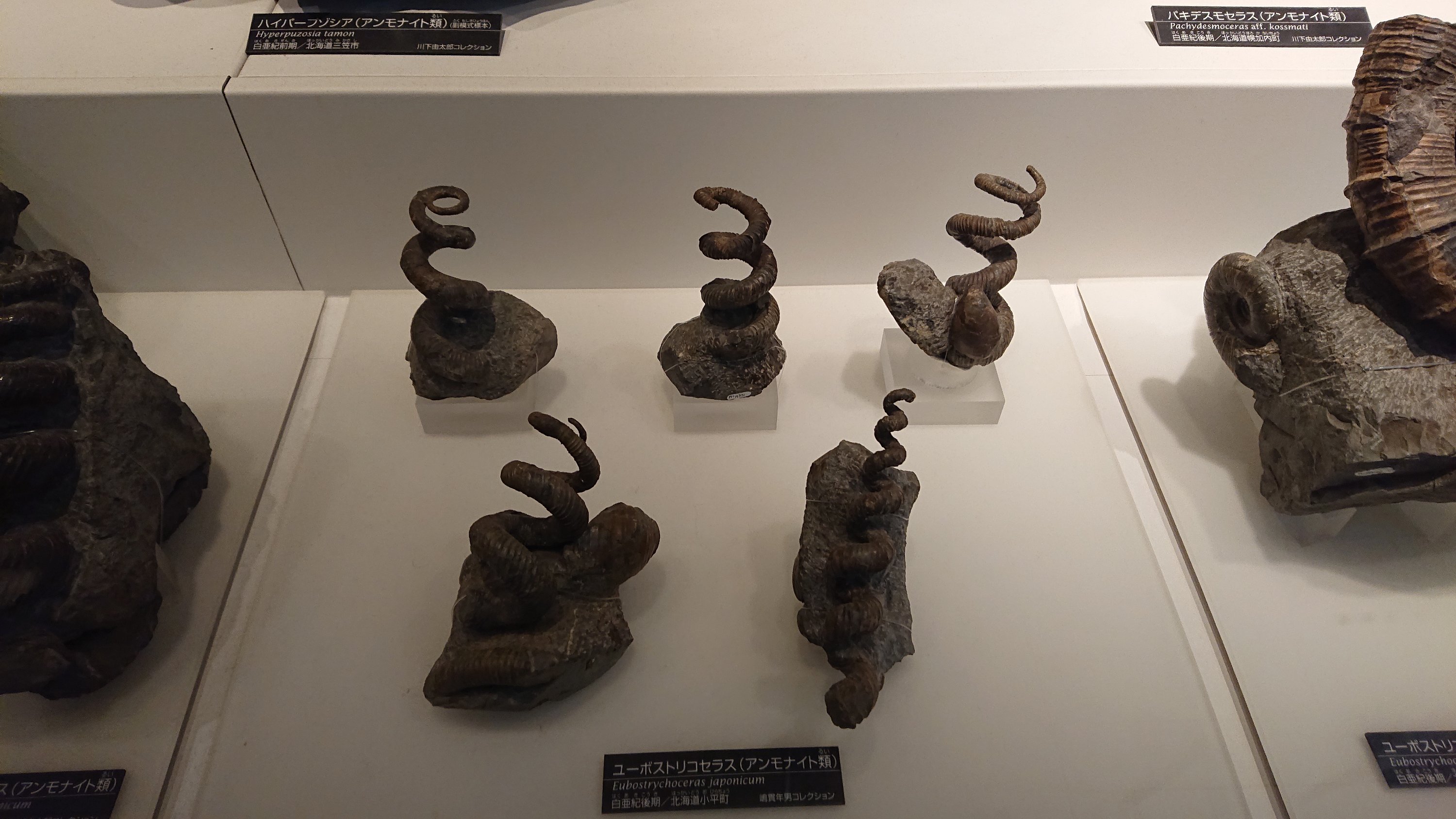
Eubostrychoceras is from Yezo Group. it has a spiral shell. It looks very different to Nipponites, but to surprised, it is relative to Nipponites. The research with computer simulation shows that it is easy to change growing of Eubostrychoceras to it of Nipponites.
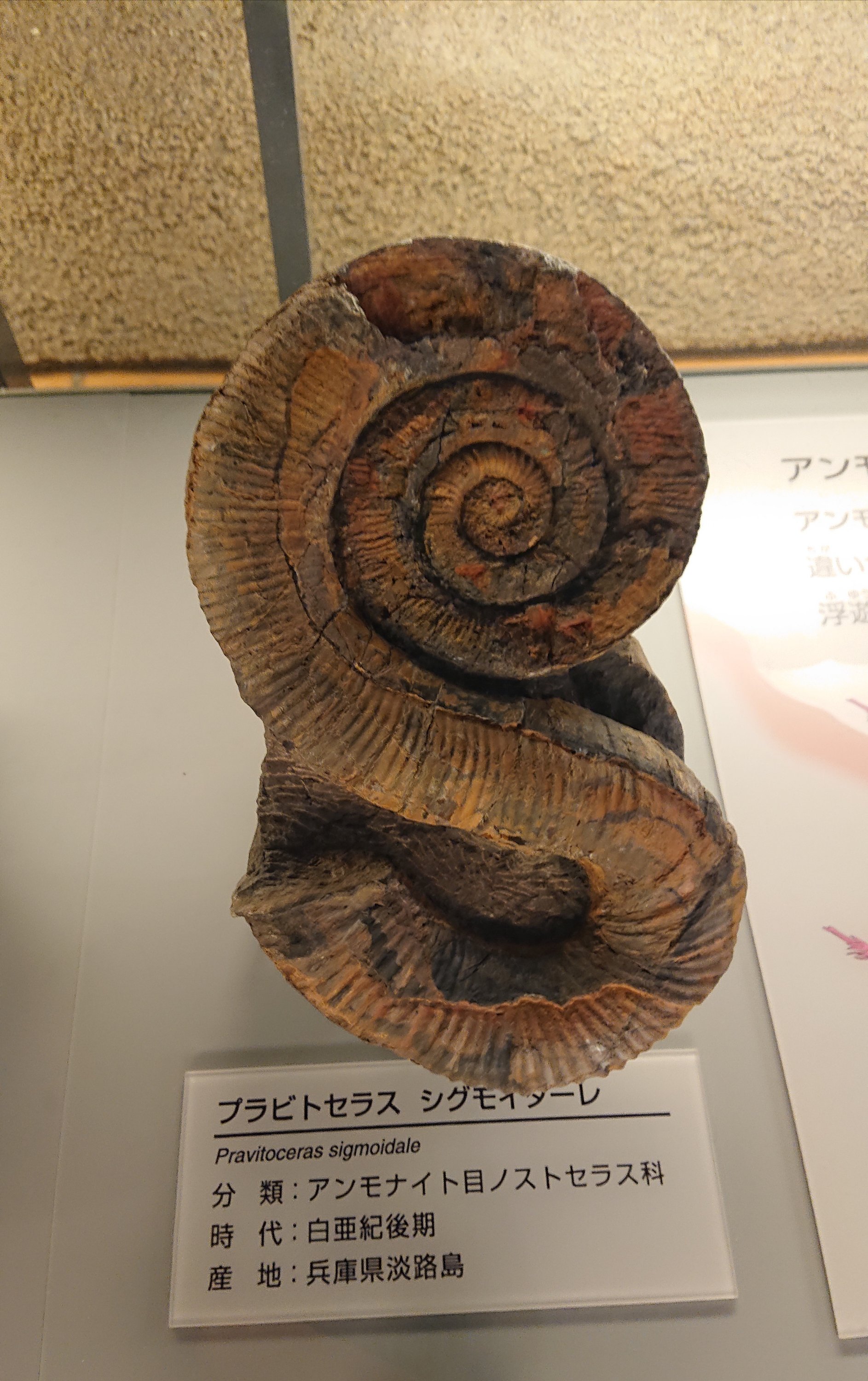
Pravitoceras is found in Izumi Group. At first, its shell grew as commonly ammonite, but finally, it changed growing direction. To surprise, it is relative to Nostoceras while it looks very different. The middle type fossil between them is found.
They are parts of all. There were a lot of unique ammonites in Japanese sea. If you have a chance to visit science museum in Japan, you should see them.
 Japanese Dino-mania